Reported by Weng Patrick Atokor | journalist at Weng Global
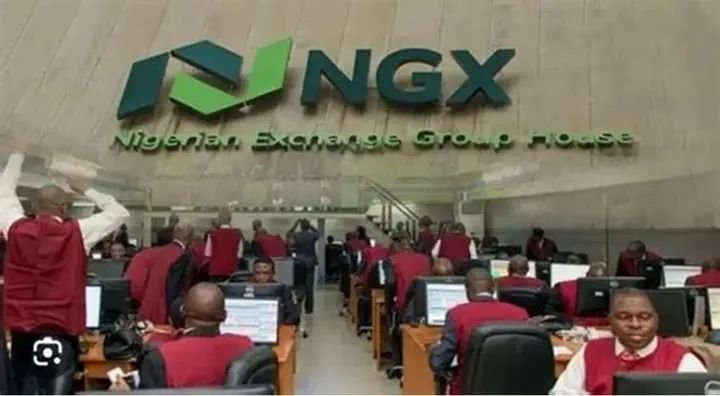
The Nigerian Exchange Limited (NGX) closed Monday’s trading session on a bearish note, with the equities market losing N106.24 billion in market capitalisation as continued selling pressure weighed on investor sentiment.
The decline extended the Nigerian stock market’s losing streak to five consecutive sessions, reflecting increased profit-taking and weakness across key sectors, particularly banking and insurance stocks.
According to market data, the NGX All-Share Index (ASI) fell by 0.07 per cent to close at 242,454.65 points, compared with 242,619.20 points recorded at the previous trading session.
Similarly, equity market capitalisation declined from N156.62 trillion to N156.52 trillion, representing a loss of N106.24 billion in investors’ wealth.
Five consecutive sessions of decline
Monday’s performance marked the fifth consecutive trading session in which the Nigerian equities market closed lower.
Market data showed that the ASI has fallen by 2.44 per cent over the five-session period, declining by 6,075.10 points from 248,529.75 points on August 10 to 242,454.65 points on August 17.
Within the same period, market capitalisation dropped by approximately N3.90 trillion, from N160.42 trillion to N156.52 trillion.
The sustained decline suggests that investors have increasingly opted to lock in gains following the strong rally recorded by the Nigerian equities market earlier in the year.
While profit-taking is a normal feature of an active stock market, the continued decline across several sessions has raised concerns about the immediate direction of equities and the ability of the market to regain its recent momentum.
Banking and insurance stocks weigh on market
The bearish performance was particularly evident in the banking and insurance segments.
The NGX Banking Index closed at 2,536.29 points, while the NGX Insurance Index settled at 1,112.05 points. The NGX Industrial Index, however, remained virtually unchanged at 10,378.76 points.
Other major market indicators also recorded modest declines. The NGX Main-Board Index closed at 10,910.62 points, while the NGX 30 Index settled at 8,890.47 points. The NGX Premium Index also slipped to 28,662.38 points.
The pressure on banking and insurance stocks is significant because both sectors account for a substantial portion of trading activity and market value on the Nigerian bourse.
A sustained sell-off in major companies within these sectors can therefore have an outsized effect on the overall market index and investor wealth.
Trading activity weakens
Beyond the decline in the benchmark index, trading activity also showed signs of moderation.
According to market data, 1.33 billion shares changed hands during Monday’s session, representing a 5.89 per cent decline in volume.
Market turnover fell sharply by 49.40 per cent to N22.93 billion, while the number of deals increased by 16.25 per cent to 45,494.
The combination of lower trading volume and turnover with a higher number of transactions indicates that market activity remained substantial, but the value of transactions was considerably lower than in the preceding session.
Market breadth also remained negative, with 36 stocks recording losses compared with 18 gainers. This indicates that the weakness was relatively broad rather than being caused by only a handful of heavily capitalised companies.
Not all stocks recorded losses
Despite the broader bearish sentiment, some stocks recorded strong gains during the session.
Trans-Nationwide Express led the gainers, rising by 9.86 per cent to N3.12 from N2.84. AVA Capital followed with a 9.72 per cent increase to N7.90, while Thomas Wyatt Nigeria gained 9.09 per cent to close at N3.00.
Legend Internet also advanced by 8.75 per cent to N4.35, while Dangote Sugar Refinery rose by 8.60 per cent to N70.10.
However, the gains were insufficient to reverse the broader market decline.
RT Briscoe emerged as the biggest decliner, falling by 9.91 per cent to N10.45 from N11.60. Fortis Global Insurance also dropped by 9.89 per cent to N2.37 from N2.63.
The mixed performance shows that investors are still identifying opportunities in individual stocks even as broader market sentiment remains cautious.
What is driving the bearish sentiment?
One of the major factors behind the recent weakness is profit-taking.
After a strong period of gains, some investors appear to be selling stocks to lock in profits. This can create temporary downward pressure, particularly when several investors make similar decisions at the same time.
The recent five-session decline comes after the market had reached significantly higher levels. Consequently, some investors may be reassessing their positions and waiting for better entry points before committing fresh funds.
Sector-specific weakness has also contributed to the decline, with banking and insurance stocks among those affected.
The market’s year-to-date return, however, remained positive at 55.81 per cent as of Monday, according to Nairametrics. This means that despite the recent sell-off, investors who entered the market earlier in the year are still sitting on substantial aggregate gains.
What the N106bn loss means for investors
The N106.24 billion decline in market capitalisation represents a reduction in the total market value of listed equities at the close of trading. It does not mean that N106 billion in cash was physically withdrawn from the Nigerian economy.
Instead, the decline reflects changes in share prices and the resulting valuation of listed companies.
For individual investors, however, continued price declines can translate into lower portfolio values, particularly for those holding stocks affected by the sell-off.
The current situation also highlights the importance of diversification and careful risk management. Investors who concentrate their portfolios in a single sector could experience greater volatility when that sector comes under pressure.
Outlook for the NGX
The immediate direction of the NGX is likely to depend on whether investors return to bargain hunting or continue taking profits.
A recovery in major banking, insurance and consumer stocks could help stabilise the market, while continued selling pressure could push the ASI lower.
Investors will also be watching corporate earnings, economic indicators, monetary policy developments and other market-moving factors for signals about the direction of equities.
For now, the market remains in a cautious phase. The five consecutive sessions of losses show that bearish sentiment has not yet been fully reversed, even though the market continues to record strong year-to-date gains.
The Nigerian Exchange’s latest performance therefore presents a mixed picture: investors have lost N106.24 billion in market value in the latest session, but the market remains significantly higher on a year-to-date basis.
For investors, the key question is whether the recent decline represents a temporary correction after a strong rally or the beginning of a more sustained period of weakness.
Sources: Punch, Nairametrics, NGX Group and NGX market data.