Reported by Simon yusuph,| Journalist at wengglobal
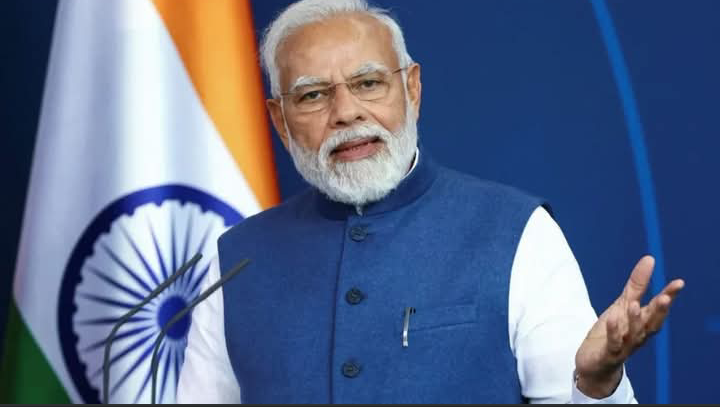
NEW DELHI, India — Indian Prime Minister Narendra Modi has announced that he is willing to forgive protesters who directed insults and harsh criticism at him during recent youth-led demonstrations sparked by exam paper leaks, unemployment, and growing concerns over opportunities for young people.
The Prime Minister’s remarks come at a politically significant moment as India continues to grapple with mounting public frustration over repeated examination irregularities, recruitment delays, and persistently high youth unemployment. His message of reconciliation is being viewed by political observers as an effort to ease tensions between the government and millions of young Indians who have taken to the streets demanding accountability and meaningful reforms.
Speaking during a public engagement, Modi acknowledged the anger expressed during the protests, emphasizing that democratic societies must allow citizens particularly young people to voice their concerns. Rather than responding with resentment, he said he preferred to forgive those who verbally abused him, stressing that the country’s future depends on rebuilding trust between citizens and their leaders.
“I forgive those who abused me,” Modi said, according to multiple Indian media reports. “Young people are the future of our nation, and their aspirations must be respected.”
His comments have generated widespread discussion across India’s political landscape, with supporters describing the statement as a gesture of statesmanship, while critics argue that forgiveness alone is insufficient without concrete policy measures to address the issues that prompted the demonstrations.
Youth Frustration Over Exam Paper Leaks
The protests erupted after a series of examination controversies reignited concerns about transparency and fairness within India’s competitive testing system.
Several high-profile entrance examinations and government recruitment tests have been affected by allegations of question paper leaks, forcing authorities to cancel or reschedule examinations. These incidents have disrupted the educational and career plans of hundreds of thousands of candidates who spend years preparing for highly competitive exams.
For many students, repeated cancellations represent more than administrative failures—they symbolize deeper governance challenges affecting education, employment, and equal opportunity.
The examination controversies have intensified public scrutiny of recruitment agencies responsible for conducting nationwide tests, prompting demands for stronger cybersecurity measures, stricter oversight, and tougher penalties for those involved in examination fraud.
Unemployment Remains a Central Concern
Alongside examination irregularities, unemployment remains one of the defining concerns among India’s youth population.
Although India remains one of the world’s fastest-growing major economies, many graduates continue to face difficulties securing stable employment. Economists have frequently noted a mismatch between educational qualifications and available jobs, while rapid technological change has transformed labour market demands.
Young protesters argue that repeated examination failures delay recruitment into public service positions and worsen uncertainty for millions of graduates seeking employment.
The demonstrations have therefore evolved beyond opposition to paper leaks, becoming broader expressions of frustration over economic opportunity, governance, and institutional accountability.
Government Response and Reform Measures
The Indian government has previously pledged to strengthen the integrity of public examinations through legislative and administrative reforms.
Authorities have introduced stricter laws targeting examination malpractice, including harsher penalties for organised cheating networks and individuals responsible for leaking confidential examination materials.
Officials have also promised greater use of digital security systems, enhanced monitoring mechanisms, and improved coordination among examination bodies to reduce vulnerabilities.
Government representatives maintain that protecting the credibility of India’s examination system is essential for maintaining public confidence and ensuring equal opportunities for deserving candidates.
Despite these assurances, many student organisations continue to demand faster implementation of reforms and more transparent investigations whenever examination breaches occur.
Political Implications
Modi’s conciliatory remarks arrive amid continued political competition and growing attention to youth issues ahead of future electoral contests.
Young voters represent one of India’s largest and most influential demographic groups. Their concerns over employment, education, and economic mobility are expected to remain central campaign issues across both national and regional elections.
Political analysts suggest that acknowledging protesters’ grievances—while choosing forgiveness over confrontation—could help soften tensions without appearing dismissive of public criticism.
Opposition leaders, however, have argued that symbolic statements must be accompanied by measurable improvements in governance, recruitment transparency, and job creation.
Several opposition parties continue to accuse the government of failing to adequately address systemic weaknesses affecting students and young job seekers.
Democracy and Peaceful Protest
India’s Constitution guarantees citizens the right to peaceful protest, making public demonstrations a longstanding feature of the country’s democratic landscape.
While most recent student demonstrations remained peaceful, isolated confrontations between protesters and security personnel were reported in some locations.
Civil society organisations have urged both authorities and demonstrators to maintain dialogue and avoid escalation, stressing that constructive engagement offers the most sustainable path toward lasting reforms.
Political observers note that Modi’s decision to publicly forgive his critics reflects an attempt to shift national attention from political confrontation toward reconciliation and institutional improvement.
Broader Lessons for Emerging Democracies
Across Africa and other developing regions, India’s experience highlights challenges shared by many rapidly growing economies: expanding educational access while ensuring credible examinations, transparent recruitment, and sufficient employment opportunities for young populations.
Countries experiencing demographic growth increasingly face pressure to strengthen public institutions responsible for education, civil service recruitment, and workforce development.
For policymakers across the Global South, the Indian case underscores the importance of maintaining public trust through accountability, transparent governance, and effective crisis management.
Looking Ahead
Whether Modi’s message of forgiveness succeeds in reducing public anger will likely depend on the government’s ability to deliver meaningful reforms rather than rhetoric alone.
Students continue to demand credible examinations, timely recruitment, stronger anti-corruption measures, and expanded employment opportunities.
As India seeks to sustain economic growth while meeting the aspirations of its youthful population, restoring confidence in public institutions may prove just as important as creating new jobs.
For now, the Prime Minister’s remarks have opened a new chapter in the national conversation one centred on reconciliation, accountability, and the future of India’s next generation.
Sources
- Reuters
- The Hindu
- The Indian Express
- Hindustan Times
- NDTV
- BBC News