Reported by Simon Daniel Yusuph l Journalist at Weng Global
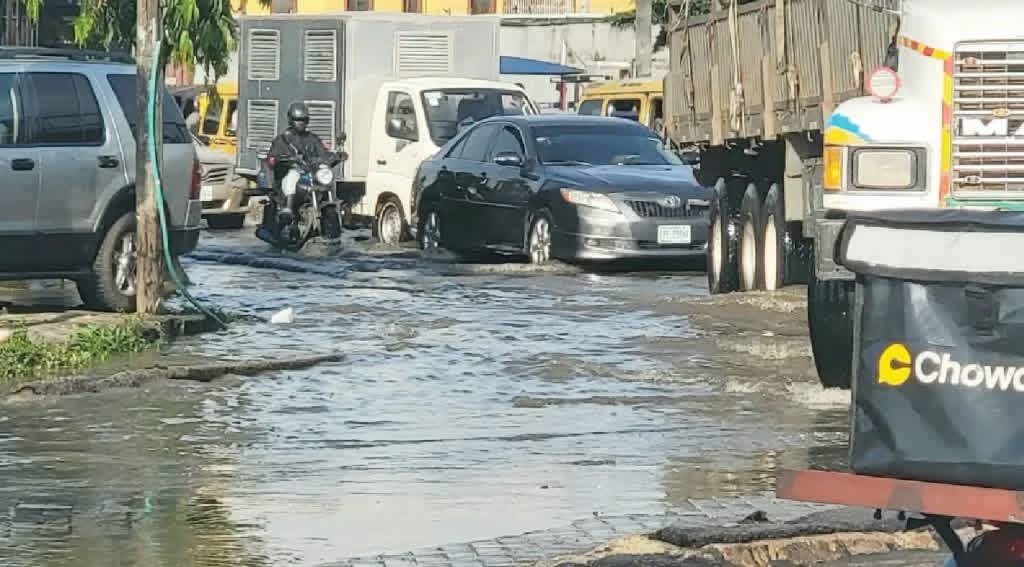
Heavy rainfall triggered flooding and severe traffic congestion around Ogba, Agege and Wempco roads in Lagos on Monday, October 26, 2026, leaving motorists stranded for hours and renewing concerns about recurring drainage problems in the commercial capital.
The flooding affected the junction linking the Ogba, Agege and Wempco road corridors, with congestion extending to Wempco Road, Oba Ogunji Road and surrounding parts of Ogba. Motorists struggled to navigate waterlogged sections, while vehicles that broke down in the floodwaters further obstructed movement.
According to a report published by Punch Metro on Tuesday, October 27, some motorists spent close to two hours in traffic during the disruption. The report also indicated that the affected area had experienced similar flooding during previous rainy seasons, despite complaints from residents and road users about the absence of a lasting solution.
The incident has once again drawn attention to the difficulties faced by Lagos residents when heavy rainfall overwhelms road infrastructure, disrupting daily activities and raising questions about the effectiveness of drainage systems in flood-prone urban communities.
Floodwaters Disrupt Movement Around Ogba and Agege
The affected road network serves motorists travelling through several busy parts of Lagos, including Ogba, Agege and adjoining routes connecting to other sections of the metropolis.
Following Monday’s rainfall, floodwaters covered portions of the roads, making it difficult for vehicles to move freely. The resulting congestion affected motorists attempting to reach their destinations through the affected junction and surrounding streets.
According to Punch Metro, the traffic extended beyond the immediate junction to Wempco Road, Oba Ogunji Road and the Ogba axis.
The situation became more difficult as some vehicles developed faults after encountering the floodwaters. The stranded vehicles reduced the available road space, forcing other motorists to manoeuvre carefully through congested sections.
Traffic officials also faced difficulties managing the movement of vehicles around the affected junction as drivers attempted to find alternative ways through the flooded roads.
Although the available report did not establish the total number of vehicles affected or the precise duration of the disruption across the entire area, accounts from motorists indicated that the delays were substantial.
The incident illustrates how flooding on a relatively limited section of an urban road network can affect movement across adjoining routes, particularly where motorists have few convenient alternatives.
For residents who depend on these roads for work, education, business and other daily activities, the disruption meant more than an inconvenient journey. It also threatened the timely completion of appointments, deliveries and other activities that depend on predictable travel times.
Motorists Describe Hours of Delays and Financial Losses
Several motorists and residents expressed frustration over the recurring flooding, describing it as a problem that continues to affect their movement whenever rainfall occurs.
One motorist, Sodiq Afolabi, told Punch Metro that he had spent close to two hours in traffic while travelling towards the OPIC end of the Lagos-Ibadan Expressway.
His account highlighted the extent to which the flooding had disrupted his journey, leaving him unable to reach his destination within the expected time.
Afolabi’s experience reflects the uncertainty motorists face when familiar routes become difficult to navigate during periods of heavy rainfall.
For commuters travelling between different parts of Lagos, prolonged traffic delays can interfere with work schedules, business appointments and family responsibilities. Where the disruption affects a major junction, the consequences can extend to people who are not directly travelling through the flooded section but depend on connected roads.
Another road user, Sanya Adeolu, who said he lived in the community, described the flooding as a recurring experience that had continued for years.
According to the account reported by Punch Metro, Adeolu said residents had become accustomed to the problem whenever rain fell, but remained concerned that it had not received a lasting solution.
He also warned that floodwaters could rise high enough to enter vehicle engines, potentially causing mechanical damage.
Such incidents can create additional financial pressure for motorists, who may have to pay for repairs after already losing valuable hours in traffic.
The cost of flooding is therefore not limited to the immediate disruption of movement. Where vehicles sustain damage, owners may face repair bills, lost working hours and additional transportation expenses while their vehicles remain unavailable.
Commercial drivers may also lose income when traffic prevents them from completing their usual journeys, although the available report did not provide specific estimates of financial losses associated with Monday’s incident.
For households and businesses operating on tight budgets, repeated transport disruptions can create expenses that are difficult to absorb, particularly when the same problem returns during successive rainfall events.
Residents Question the Effectiveness of Previous Road Repairs
The recurring nature of the flooding has also raised questions about whether road repairs alone can address the problem.
Another motorist, Funsho Oyeyemi, called on the government to take more effective action, arguing that previous repairs had not eliminated the flooding.
According to Punch Metro, Oyeyemi said the rainfall had been brief, yet the affected area became flooded and caused significant traffic delays.
His account points to an important distinction between repairing a damaged road surface and resolving the drainage conditions that allow water to accumulate on it.
Road resurfacing can improve driving conditions under normal circumstances, but it may not prevent flooding if rainwater cannot drain away efficiently.
Where drainage channels are inadequate, obstructed or poorly connected to wider stormwater systems, water can accumulate on roads even after repair work has been completed.
Flooding can subsequently damage road surfaces, potentially creating a cycle in which infrastructure is repaired, exposed to repeated water damage and repaired again without addressing the underlying cause.
However, the available information does not establish the specific engineering deficiencies responsible for the flooding around Ogba, Agege and Wempco roads. A technical assessment would be needed to determine whether the problem stems from insufficient drainage capacity, blocked channels, the condition of existing infrastructure or a combination of factors.
Oyeyemi’s account nevertheless reinforces the concerns of residents who want interventions that reduce the likelihood of the problem returning, rather than measures that improve road surfaces without resolving water accumulation.
For communities experiencing repeated flooding, the effectiveness of public infrastructure projects should be assessed not only by the completion of construction work but also by whether the improvements address the problems that prompted the intervention.
Flooding Raises Concerns About Road Durability
The incident has also renewed concerns about the long-term condition of roads exposed to repeated flooding.
A resident identified only as Tony told Punch Metro that recurring water damage could weaken the affected road and undermine previous repair work.
His concern was that unless the drainage problem was properly addressed, the area could continue to experience flooding and deterioration whenever rainfall occurred.
Water can contribute to road deterioration when it penetrates pavement layers, weakens underlying materials or combines with repeated traffic loading to worsen existing defects. The extent of the damage depends on factors including road construction, drainage performance, the duration of water exposure and the condition of the pavement before flooding occurs.
Where water remains on a road for extended periods, the risk of deterioration may increase, particularly if the underlying drainage and road structure are already vulnerable.
For Lagos, where road networks support extensive daily movement of people and goods, recurring damage can create additional pressure on infrastructure maintenance budgets.
Repeated repairs can also disrupt communities and motorists through construction-related delays, diversions and temporary restrictions.
Addressing drainage alongside road maintenance could therefore help reduce repeated damage where inadequate water management is established as a contributing factor.
Nevertheless, determining the most appropriate intervention for the Ogba, Agege and Wempco corridor would require an assessment of the affected roads, drainage channels and the routes through which stormwater is expected to flow.
The available reports do not indicate whether such an assessment has been completed or whether a new drainage project has been announced for the affected location.
Lagos’ Wider Challenge of Managing Urban Flooding
The latest incident highlights a broader challenge for Lagos, a densely populated coastal state where heavy rainfall can disrupt transportation, commercial activity and access to essential services.
The Federal Ministry of Information and National Orientation reported in August 2026 that the Federal Government and the Lagos State Government had reaffirmed their commitment to cooperation on flood resilience, water management and sanitation.
The ministry identified several factors contributing to flooding challenges in Lagos, including the state’s coastal geography, rapid urbanisation, climate change, rising sea levels and increasingly intense rainfall.
These factors provide important context for understanding why flooding remains a recurring concern across parts of the state. However, they do not independently establish the specific cause of the latest flooding around Ogba and Agege.
The impact of rainfall depends not only on the amount of water falling over a particular area but also on how efficiently the surrounding environment can absorb, collect and discharge it.
In heavily developed urban areas, paved surfaces can reduce the amount of rainwater absorbed naturally into the ground. Drainage infrastructure must consequently manage a substantial volume of runoff within a limited period.
If drainage channels cannot accommodate the volume of water entering them, or if obstructions interfere with water flow, streets may become inundated.
The condition of existing infrastructure and the relationship between local drainage channels and larger water-discharge systems can also influence how quickly floodwaters recede.
These considerations make flood management a continuing infrastructure and urban-planning challenge rather than an issue that can always be resolved through emergency action after rainfall.
For motorists and residents around Ogba, Agege and Wempco roads, the immediate priority is to reduce the disruption caused by recurring water accumulation. Over the longer term, effective action would depend on identifying the specific causes of flooding at the affected junction and implementing measures suited to those conditions.
Drainage Maintenance and Infrastructure Planning Remain Important
The latest disruption also highlights the importance of regular drainage maintenance and coordinated planning between relevant public authorities.
Drainage channels can lose capacity when obstructed by waste, sediment or other materials. Where such obstructions are present, clearing them may improve the movement of stormwater. However, cleaning alone may not resolve flooding if the underlying system is too small, damaged or poorly designed for the volume of runoff it receives.
Similarly, constructing or repairing drainage infrastructure may not deliver the intended results if the system does not provide an effective route for water to leave the affected area.
A comprehensive response would therefore begin with identifying the factors responsible for water accumulation, assessing the condition and capacity of the existing infrastructure, and determining which interventions are necessary.
Depending on the findings, these measures could include drainage rehabilitation, the removal of obstructions, improvements to stormwater channels or adjustments to road infrastructure.
Public agencies would also need to ensure that maintenance continues after construction or rehabilitation projects are completed.
Residents and businesses have a role in preventing avoidable drainage obstructions by disposing of waste properly and refraining from dumping refuse into gutters, canals and waterways. However, responsibility for addressing infrastructure deficiencies and maintaining public drainage systems also rests with the relevant authorities.
The appropriate response must therefore combine public cooperation with effective planning, maintenance and investment.
For the Ogba, Agege and Wempco corridor, the available reporting does not confirm a specific government intervention announced in response to Monday’s flooding.
Government Response Remains Unconfirmed
According to Punch Metro, the Lagos State Commissioner for Information, Gbenga Omotoso, could not be reached for comment when the newspaper attempted to contact him about the incident.
The report stated that calls to his telephone lines were unanswered and that a text message had not received a response by the time the report was filed.
Consequently, no response from the commissioner was available in the report to explain the government’s position on the latest incident or outline any planned measures for the affected area.
The available information also does not establish whether a fresh assessment of the drainage system has been ordered, whether additional repair work is planned or whether a timetable has been set for addressing the recurring flooding.
These details remain important because residents need to understand what measures, if any, are being considered to prevent similar disruptions.
A clear public update from the relevant authorities could help establish whether the problem has been assessed, what its identified causes are and which interventions are considered necessary.
It would also provide a basis for residents to evaluate whether any proposed measures address the underlying problem rather than its immediate effects.
Until further information becomes available, claims about specific government plans or a confirmed solution would be premature.
Why the Incident Matters to Lagos Residents
The flooding around Ogba, Agege and Wempco roads demonstrates how inadequate stormwater management, where it contributes to local flooding, can have consequences beyond the immediate location.
For workers, prolonged delays can reduce productive time and complicate daily schedules. For businesses, unpredictable movement can interfere with deliveries and the transportation of goods. For motorists, waterlogged roads can increase the risk of vehicle breakdowns and additional maintenance costs.
Repeated disruption can also affect residents’ confidence in the reliability of essential transport routes, particularly when the same problem persists over several rainy seasons.
The incident further illustrates why urban infrastructure should be assessed as an interconnected system. Roads, drainage channels and stormwater discharge routes serve different functions, but their performance is closely linked.
A road may be structurally sound and recently repaired, yet remain difficult to use if surrounding drainage cannot manage the water generated by rainfall.
Likewise, clearing a drain may offer only temporary relief if water has no adequate route through the wider drainage network.
For this reason, a lasting response requires evidence-based assessment of the affected location and coordination between the agencies responsible for roads, drainage, environmental management and urban development.
The experience of motorists on Monday provides a practical reminder that infrastructure performance should ultimately be measured by how reliably it serves the public, particularly under challenging weather conditions.
What Happens Next?
The immediate questions concern whether the floodwaters have receded, whether normal traffic movement has resumed and whether the relevant authorities intend to investigate the recurring problem.
The available report does not provide a confirmed update on current road conditions or announce a specific remedial project for the affected junction.
Motorists travelling through Ogba, Agege, Wempco Road and Oba Ogunji Road should therefore seek current traffic information before setting out, particularly when rainfall is expected.
Road users should also exercise caution around flooded sections. Water depth can be difficult to judge, and driving through floodwater may expose vehicles to mechanical damage or leave them stranded. Where conditions appear unsafe, avoiding the flooded section is preferable to attempting to cross it.
For residents, the longer-term concern is whether the recurring disruption will prompt a lasting response based on an assessment of the area’s drainage and road infrastructure.
The Lagos State Government and relevant agencies have previously acknowledged the wider importance of flood resilience and infrastructure management across the state. However, a specific commitment or implementation timetable for the Ogba, Agege and Wempco corridor has not been confirmed in the available reporting.
The next significant development would be a clear explanation of the factors responsible for the flooding, followed by details of any planned intervention and how its effectiveness will be assessed.
Until then, motorists and residents remain concerned about a recurring problem that continues to disrupt movement whenever the affected roads become flooded.
For Weng Global, the central issue extends beyond Monday’s traffic congestion: the priority is determining why the flooding repeatedly occurs and what evidence-based measures can prevent residents from facing the same disruption during future rainfall.
Weng Global – stories beyond borders
Sources
- Punch Metro — Report on flooding and traffic congestion around Ogba, Agege and Wempco roads, published October 27, 2026.
- Federal Ministry of Information and National Orientation — Report on Federal Government and Lagos State collaboration on flood resilience, water management and sanitation, published August 6, 2026.