Reported by Simon Daniel Yusuph l Journalist at Weng Global
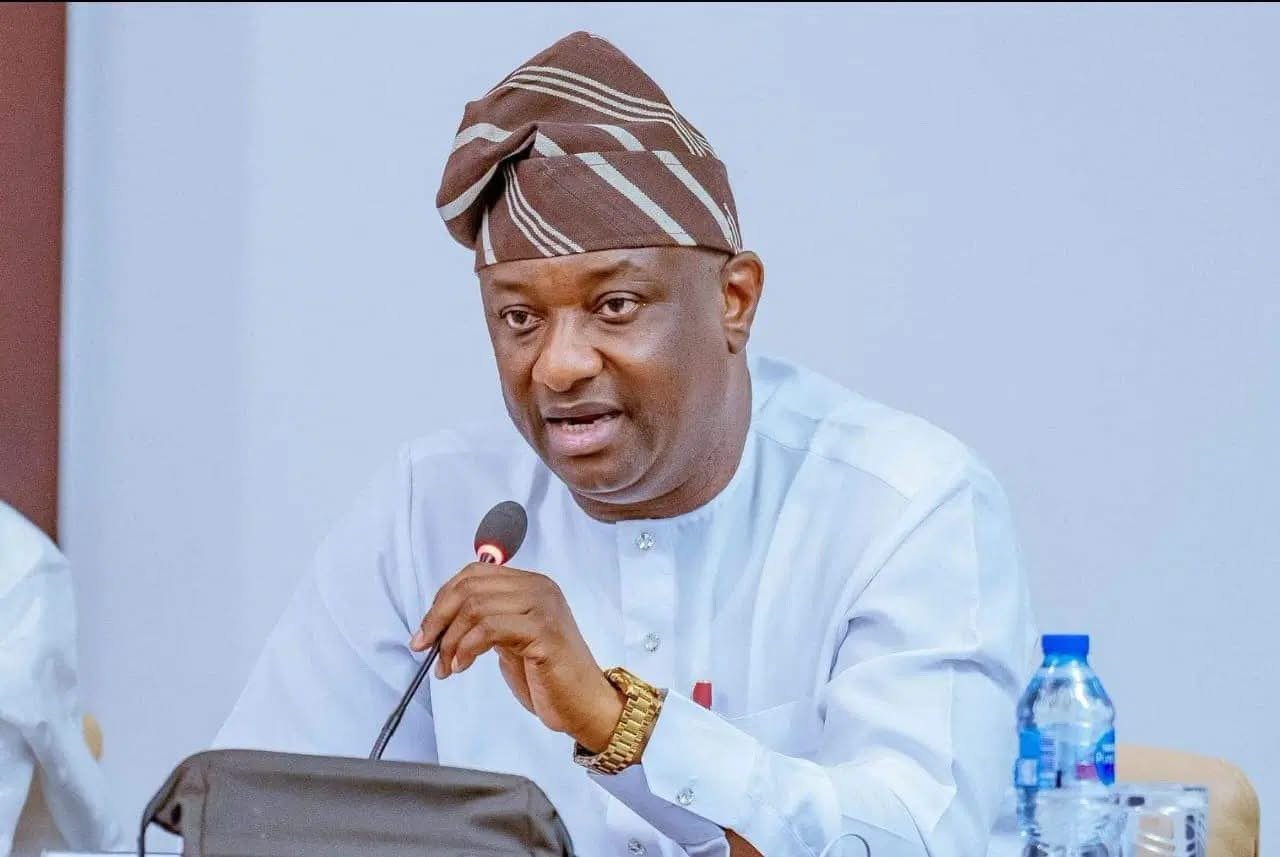
The Federal Government has used funds made available through the removal of the petrol subsidy to finance major aviation infrastructure projects across Nigeria, Minister of Aviation and Aerospace Development Festus Keyamo has said.
Keyamo made the disclosure on Monday, October 5, 2026, while speaking at the 67th anniversary of Aero Contractors in Lagos, where he outlined the government’s investment in airport infrastructure under President Bola Tinubu’s administration.
According to the minister, the government has been able to raise about $500 million for the reconstruction of the Lagos airport without borrowing, while other projects include work on the second runway at the Nnamdi Azikiwe International Airport in Abuja, reconstruction of the Kano airport runway and resurfacing work at Port Harcourt International Airport.
Keyamo attributed the government’s increased capacity to fund infrastructure to economic reforms, particularly the removal of fuel subsidies, which he said improved liquidity and strengthened Nigeria’s foreign reserves.
Government Links Aviation Investment to Subsidy Reform
The minister said Nigeria had struggled for decades to adequately fund major aviation infrastructure because a substantial portion of government oil earnings had previously been absorbed by fuel subsidies.
He argued that the removal of the subsidy created greater fiscal and financial space for the government to direct resources towards infrastructure.
Keyamo said the administration had raised about $500 million for the reconstruction of the Lagos airport and stressed that the money was not obtained through borrowing.
He linked the government’s increased ability to finance infrastructure to improvements in liquidity and foreign reserves.
According to Keyamo, Nigeria’s foreign reserves had risen from about $3 billion to $56 billion, while improved economic conditions had helped strengthen investor confidence.
The minister presented the development as evidence that the government’s economic reforms were beginning to create additional capacity for investment in infrastructure.
However, the assertion comes against the backdrop of continuing public debate over the economic consequences of fuel subsidy removal, particularly the higher cost of transportation, food and other essential goods.
Lagos Airport Reconstruction Takes Centre Stage
The reconstruction of the Murtala Muhammed International Airport in Lagos is one of the most significant aviation infrastructure projects highlighted by the minister.
The airport is Nigeria’s principal international aviation gateway and has experienced years of infrastructure deterioration and increasing passenger traffic.
Keyamo said the government was rebuilding the old terminal at the airport, which he described as having deteriorated after decades of use.
The minister said the terminal, originally built in 1977, had suffered from years of inadequate investment.
The Federal Government previously approved a comprehensive overhaul of the Lagos airport infrastructure, with the project being financed through the Renewed Hope Infrastructure Development Fund rather than a foreign loan. Earlier government explanations said the fund was supported by savings from the removal of the fuel subsidy.
The current administration has therefore presented the Lagos airport project as part of a wider strategy to modernise Nigeria’s aviation gateways and improve the country’s ability to handle international passenger and cargo traffic.
Abuja Second Runway Project Revived
Keyamo also disclosed that President Bola Tinubu had approved the return of China Civil Engineering Construction Corporation, CCECC, to the Abuja airport project to construct the long-delayed second runway at the Nnamdi Azikiwe International Airport.
The project has been discussed for years but faced delays over funding and cost concerns.
Keyamo recalled that the proposed cost of the project had previously been around N45 billion, an amount that generated opposition at the time.
According to the minister, delays have significantly increased the eventual cost of the project, which he said is now approaching N500 billion.
The minister used the example to argue that delaying critical infrastructure can ultimately make projects more expensive because of inflation, changes in construction costs and other economic factors.
The second runway is considered important to the long-term development of Abuja’s main international airport because it would provide additional operational capacity and improve flexibility when the existing runway is unavailable.
The government’s renewed push on the project therefore forms part of its broader aviation infrastructure programme.
Kano Airport Also Receiving Major Investment
The infrastructure programme extends beyond Lagos and Abuja.
Keyamo identified the reconstruction of the runway at Mallam Aminu Kano International Airport among the projects being financed by the government.
The Federal Government had earlier earmarked more than N46 billion for the reconstruction and rehabilitation of facilities at the Kano airport, with work covering the runway, taxiway and related infrastructure. The project was presented as an effort to bring the airport’s facilities closer to international standards.
Kano’s airport is strategically important because of the city’s position as a major commercial centre in northern Nigeria and its historical role as an aviation gateway linking the region with other parts of Nigeria and international destinations.
Improving the airport’s runway and associated facilities could therefore have implications beyond aviation, particularly for trade, tourism, logistics and regional connectivity.
Port Harcourt and Akure Projects
The Federal Government is also resurfacing the runway at Port Harcourt International Airport, according to Keyamo.
He added that work would soon begin on the runway at Akure Airport.
These projects form part of the government’s stated effort to address long-standing infrastructure deficiencies at airports across the country rather than concentrating investment on only the largest gateways.
The condition of airport runways is particularly important to aviation safety and operational reliability because runway quality affects aircraft operations, maintenance requirements and the ability of airports to accommodate regular commercial services.
The government has consequently positioned runway rehabilitation as one of the central elements of its aviation infrastructure agenda.
Why Subsidy Removal Is Central to the Government’s Argument
Fuel subsidy removal has been one of the most consequential economic reforms introduced by the Tinubu administration.
The policy ended the longstanding government support mechanism that kept petrol prices below their market-related cost, but it also contributed to a sharp increase in fuel prices and intensified pressure on household budgets.
The government has consistently argued that subsidy removal freed resources that could be redirected towards productive investments and public infrastructure.
Keyamo’s latest comments apply that argument specifically to aviation.
His position is that the resources and improved economic conditions resulting from the reforms have given the government greater capacity to undertake projects that had previously been difficult to finance.
The minister cited the Lagos airport reconstruction as a major example, arguing that the government was able to mobilise about $500 million for the project without taking out a loan.
That claim, however, should be understood as the minister’s explanation of the government’s financing position. The broader economic debate over the distribution of subsidy-removal savings and their impact on Nigerians remains ongoing.
Investment, Foreign Reserves and Jobs
Keyamo also connected aviation infrastructure investment with employment and foreign investment.
He argued that investors are more likely to commit capital to countries where economic conditions, infrastructure and foreign reserves provide greater confidence.
The minister said infrastructure development and private investment were the principal mechanisms through which sustainable employment could be generated.
His argument was that government itself could not simply create enough jobs through announcements or public-sector recruitment. Instead, infrastructure development could attract businesses and investors that would create additional economic activity.
The aviation sector is particularly relevant to that argument because airports connect businesses and travellers to domestic and international markets.
Improved airports can support tourism, cargo movement, business travel, aviation services, maintenance activities and other industries connected to air transport.
Aero Contractors Calls for Greater Aviation Focus
Keyamo’s comments came at the 67th anniversary of Aero Contractors, one of Nigeria’s oldest airlines.
The airline’s Chief Executive Officer and Accountable Manager, Captain Ado Sanusi, used the occasion to urge the Federal Government to give aviation a more deliberate position within its economic development agenda.
Sanusi argued that aviation should not be treated simply as a means of transportation.
He said the sector could serve as a catalyst for tourism, trade, employment and foreign investment.
He also warned that Nigeria could lose economic opportunities to competing aviation markets in neighbouring countries if it failed to modernise its airports and strengthen the domestic aviation industry.
The comments provide an industry perspective on the government’s infrastructure plans.
While Keyamo focused on the investment already being made, Sanusi highlighted the need for a broader and sustained national strategy capable of supporting airlines, airports, maintenance facilities, aviation professionals and other businesses across the sector.
The Financing Question
One of the most important aspects of the government’s aviation programme is how the projects are being financed.
Keyamo’s latest statement focused on the administration’s increased financial capacity following subsidy removal and improved macroeconomic conditions.
The Lagos airport project has previously been linked specifically to the Renewed Hope Infrastructure Development Fund, which the government has described as a mechanism for financing major infrastructure without relying on foreign borrowing.
The distinction between direct subsidy-removal savings, broader government revenues and financing through infrastructure funds is important when assessing individual projects.
The minister’s latest remarks link the overall improvement in government financial capacity to the removal of the subsidy, while previous government statements have provided more specific details on the financing structure of individual projects.
For readers, the key issue is therefore not simply how much is being spent, but whether the projects are completed efficiently, transparently and at the expected quality.
Infrastructure Delays Can Increase Costs
The Abuja second runway project illustrates another challenge facing Nigeria’s infrastructure development: prolonged delays.
Keyamo said a project that was once estimated at around N45 billion could now cost close to N500 billion.
If the minister’s figures are accurate, the increase demonstrates how significantly the cost of major infrastructure can change over long periods.
Inflation, exchange-rate movements, changes in construction costs, additional requirements and delays can all increase the eventual price of a project.
This creates a difficult policy choice for governments: committing substantial resources to infrastructure can be expensive in the short term, but postponing projects can also increase their eventual cost.
For Nigeria, where infrastructure deficits have persisted for decades, the issue is particularly important.
Why It Matters for Nigeria’s Aviation Sector
The aviation industry plays a broader economic role than passenger transportation.
Reliable airports can improve connectivity between Nigerian cities, facilitate international business and support tourism and cargo operations.
For businesses, better airport infrastructure can reduce delays and improve access to domestic and international markets.
For airlines, modern terminals and reliable runways can improve operational efficiency.
For government, stronger aviation infrastructure can support Nigeria’s ambitions to become a major aviation hub in West Africa.
The potential benefits, however, depend on whether infrastructure investment is matched by effective airport management, competitive airline policies, regulatory stability, safety oversight and adequate maintenance.
Infrastructure alone cannot resolve all the challenges facing Nigeria’s aviation industry.
The Wider Economic Debate
The government’s argument that subsidy removal has created greater capacity for infrastructure investment remains part of a much wider economic debate.
Supporters of the reform argue that maintaining the subsidy was financially unsustainable and diverted public resources away from other priorities.
Critics, meanwhile, have pointed to the immediate burden on households and businesses caused by higher petrol prices and the resulting increase in transportation and living costs.
Keyamo’s comments do not resolve that broader debate.
Instead, they provide the government’s explanation of how economic reforms have been linked to investment in aviation infrastructure.
The effectiveness of that strategy will ultimately depend on whether the infrastructure delivers measurable improvements for travellers, airlines, businesses and the wider economy.
What Happens Next
The Federal Government is expected to continue work on the Lagos airport reconstruction and other aviation infrastructure projects already approved.
The return of CCECC to the Abuja airport project is also expected to move the long-delayed second runway closer to implementation.
Meanwhile, work on the Kano airport runway and resurfacing of the Port Harcourt runway is expected to continue, while the government has indicated that the Akure runway project will commence soon.
The key test will be whether these projects are delivered within reasonable timelines and budgets and whether they produce the improvements promised by the government.
The aviation industry will also continue to press for policies that support local airlines, improve human-capacity development and strengthen Nigeria’s position as a regional aviation centre.
For passengers and businesses, the ultimate measure will be practical: safer and more reliable airports, improved passenger facilities, stronger connectivity and a more competitive aviation industry.
Conclusion
The Federal Government’s latest aviation investment announcement places subsidy removal at the centre of its explanation for increased infrastructure spending.
Festus Keyamo says the government has been able to mobilise about $500 million for the Lagos airport reconstruction without borrowing and is simultaneously pursuing major projects in Abuja, Kano, Port Harcourt and Akure.
The projects represent an attempt to address infrastructure problems that have accumulated over decades.
But the success of the programme will depend on more than funding.
Nigeria will need effective project execution, transparent procurement, strong oversight, timely completion and sustained maintenance if the investments are to produce lasting benefits.
For an aviation sector seeking to compete regionally, modern infrastructure is essential. Yet the sector will also require financially sustainable airlines, skilled personnel, effective regulation and policies capable of attracting long-term private investment.
As the government continues to implement its aviation programme, the central question for Nigerians will be whether the money being invested translates into airports and aviation services that are safer, more efficient and more capable of supporting economic growth.
Weng Global — Stories beyond borders
Sources
- Federal Ministry of Aviation and Aerospace Development
- Vanguard
- Punch
- Tribune
- The Guardian Nigeria
- Aero Contractors