Reported by Simon yusuph,| Journalist at wengglobal
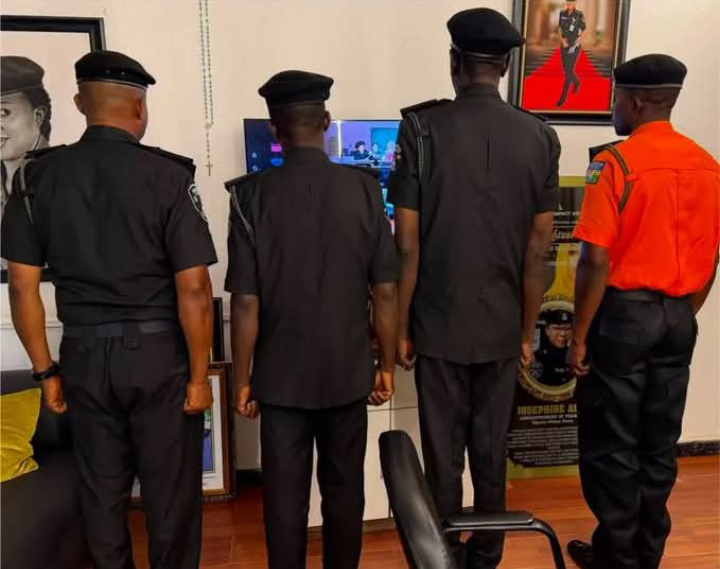
The Commissioner of Police for the Federal Capital Territory (FCT), CP Ajao Saka Adewale, has ordered the immediate orderly room trial of four police officers accused of abandoning their assigned duty posts and unlawfully extorting ₦52,000 from the Chairman of the Independent Corrupt Practices and Other Related Offences Commission (ICPC), in a case that has sparked renewed public debate over police accountability and integrity in Nigeria.
The disciplinary action follows the circulation of reports detailing how the officers allegedly intercepted the ICPC Chairman during routine operations within the Federal Capital Territory and demanded money under questionable circumstances. The incident has attracted widespread attention because it involved the head of Nigeria’s foremost anti-corruption agency, raising fresh concerns about the persistence of extortion despite years of police reform efforts.
According to the FCT Police Command, preliminary investigations revealed that the officers not only abandoned their officially assigned responsibilities but also engaged in conduct that violated the ethical standards and operational procedures of the Nigeria Police Force.
Reacting swiftly to the allegations, CP Adewale directed that the officers be subjected to an orderly room trial—the internal disciplinary process used by the Nigeria Police Force to investigate allegations of professional misconduct against serving personnel.
The police commissioner emphasized that the FCT Command would not tolerate any act capable of eroding public confidence in law enforcement institutions, regardless of the rank or position of the officers involved.
Zero Tolerance for Police Misconduct
The FCT Police Command reaffirmed its commitment to professionalism, discipline, and accountability, stressing that any officer found guilty of corruption, extortion, abuse of office, or other forms of misconduct would face appropriate sanctions in accordance with police regulations.
CP Adewale reiterated that the command remains determined to rebuild public trust through transparent disciplinary processes and improved service delivery.
He noted that extortion and other unethical practices undermine the credibility of the Nigeria Police Force, weaken public cooperation in crime prevention, and damage the reputation of thousands of officers who carry out their duties professionally.
The commissioner also reminded all officers and personnel attached to the FCT Command that integrity remains a non-negotiable value in policing and warned that supervisors would equally be held accountable where lapses in discipline are established.
Details of the Alleged Incident
According to information released by the police, the four officers allegedly left their assigned duty locations before intercepting the vehicle conveying the ICPC Chairman. During the encounter, they reportedly demanded and collected ₦52,000 before allowing him to proceed.
The unusual twist emerged after the officers reportedly discovered the identity of the motorist they had stopped. The matter was subsequently reported through official channels, prompting an internal investigation by the FCT Police Command.
Although police authorities have not publicly disclosed the identities of the officers pending the conclusion of disciplinary proceedings, officials confirmed that investigations found sufficient grounds to commence an orderly room trial.
The command indicated that additional administrative or criminal measures may follow if the disciplinary process establishes further violations of the law.
Renewed Focus on Police Accountability
The incident has reignited national conversations about police extortion, an issue that has remained one of the most persistent complaints against law enforcement personnel in Nigeria.
Successive Inspectors-General of Police have repeatedly issued directives prohibiting illegal roadblocks, unauthorized checkpoints, and extortion of motorists. Several officers across the country have also faced dismissal, reduction in rank, suspension, or prosecution for misconduct over the years.
Despite these efforts, civil society organizations, legal practitioners, and anti-corruption advocates continue to call for stronger institutional reforms, better welfare for officers, enhanced oversight mechanisms, and stricter enforcement of disciplinary measures.
Security analysts argue that consistent accountability is essential to restoring public confidence in the Nigeria Police Force, particularly at a time when citizens increasingly demand transparency from public institutions.
ICPC’s Role in Nigeria’s Anti-Corruption Framework
The Independent Corrupt Practices and Other Related Offences Commission remains one of Nigeria’s principal anti-corruption agencies, mandated to investigate and prosecute corruption-related offences involving public officials and institutions.
The alleged extortion of its chairman has drawn particular attention because it highlights the broader challenges confronting anti-corruption efforts and the need for integrity across all public institutions.
Observers note that the swift response by the FCT Police Command demonstrates an awareness of the potential damage such incidents could inflict on the credibility of both the police and Nigeria’s broader governance framework.
Public Confidence Hinges on Transparent Justice
Public reactions to the development have largely welcomed the decision to subject the officers to disciplinary proceedings while urging authorities to ensure that the investigation remains transparent and free from interference.
Many Nigerians have argued that disciplinary actions should extend beyond internal sanctions where criminal conduct is established, emphasizing that public confidence can only be restored when accountability is visible and consistent.
Legal experts also stress that institutional credibility depends not merely on identifying misconduct but on ensuring that disciplinary processes are completed promptly and their outcomes communicated to the public.
Broader Implications for Police Reform
The case comes amid ongoing efforts by the Nigeria Police Force to modernize its operations through improved training, digital complaint mechanisms, human rights education, and enhanced community policing initiatives.
Experts believe that while reforms have recorded measurable progress in certain areas, isolated incidents of extortion continue to undermine those achievements.
Analysts say sustained leadership commitment, stronger internal oversight, technological monitoring of field operations, and citizen participation in reporting misconduct remain critical to eliminating unethical practices within law enforcement.
For the FCT Police Command, the disciplinary proceedings against the four officers represent more than an internal administrative matter—they serve as a test of the command’s commitment to enforcing ethical standards without fear or favour.
As investigations continue, Nigerians will be watching closely to determine whether the outcome reinforces the police leadership’s repeated assurances that corruption and abuse of office have no place within the force.
The development also underscores a broader national reality: strengthening public institutions requires accountability at every level, particularly among agencies entrusted with enforcing the law. Transparent disciplinary action, when consistently applied, remains one of the most effective tools for rebuilding public confidence and reinforcing the rule of law.
Sources:
- Nigeria Police Force, FCT Command (Official Statement)
- Independent Corrupt Practices and Other Related Offences Commission (ICPC)
- Punch Newspapers
- Premium Times
- The Cable
- Vanguard Nigeria
- Channels Television