Reported by Weng Patrick Atokor | journalist at wengglobal
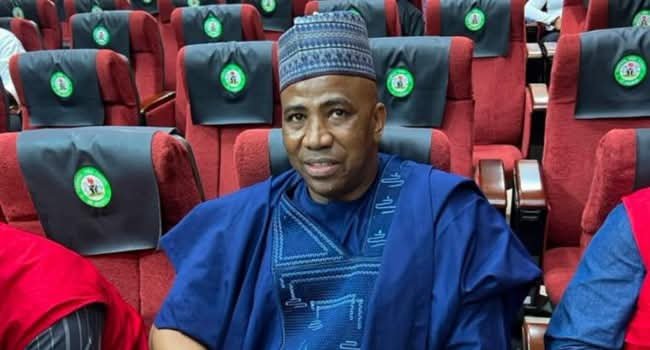
The Economic and Financial Crimes Commission (EFCC) has arraigned the National President of Miyetti Allah Kautal Hore, Bello Abdullahi Bodejo, before the Federal High Court in Abuja over allegations of money laundering involving approximately $2.33 million.Bodejo appeared before Justice Inyang Edem Ekwo on a 12 count charge alleging violations of Nigeria’s Money Laundering (Prevention and Prohibition) Act. During the court proceedings, the Miyetti Allah leader pleaded not guilty to all the charges brought against him by the anti graft agency.
The case marks one of the latest high-profile prosecutions by the EFCC as the agency continues its campaign against alleged financial crimes and illicit financial transactions involving public funds and private individuals.
According to the prosecution, Bodejo is accused of receiving and handling funds amounting to approximately $2.33 million under circumstances the EFCC believes contravene Nigeria’s anti-money laundering laws. The commission alleges that the transactions formed part of financial activities that violated statutory provisions regulating the movement and possession of large sums of money.
During the arraignment, EFCC counsel formally presented the 12 count charge before the court, detailing allegations that the defendant knowingly received and possessed substantial amounts of money believed to be linked to unlawful activities.After the charges were read, Bodejo denied every allegation and entered a plea of not guilty, setting the stage for what is expected to be a closely watched legal battle.
Justice Ekwo subsequently considered applications presented by both the prosecution and the defence before making procedural orders regarding the continuation of the trial. The EFCC has maintained that the prosecution demonstrates its commitment to enforcing financial regulations irrespective of the status or influence of those involved.
The agency has repeatedly stated that combating money laundering remains central to Nigeria’s broader efforts to strengthen transparency, improve governance, and safeguard the country’s financial system.Money laundering remains a serious criminal offence under Nigerian law because it enables criminals to conceal the origins of illicit proceeds while undermining confidence in the financial system.
Nigerian authorities have intensified enforcement in recent years in response to both domestic concerns and international recommendations aimed at strengthening anti-money laundering compliance.Although the allegations against Bodejo have attracted widespread public attention because of his position as President of Miyetti Allah Kautal Hore, legal experts note that an arraignment does not amount to a finding of guilt.
Under Nigerian law, every defendant is presumed innocent until proven guilty by a competent court.The development has also generated significant public interest because Miyetti Allah Kautal Hore is one of Nigeria’s most prominent cattle breeders’ associations. The organisation has frequently featured in national discussions on security, grazing policies, farmer-herder relations, and agricultural development.
Bodejo himself has remained a notable figure in public discourse over the years due to his leadership role within the association and his regular commentary on issues affecting pastoral communities across Nigeria.The current proceedings, however, concern alleged financial crimes rather than the association’s advocacy activities.According to reports, the EFCC’s investigation focused on financial transactions allegedly involving millions of dollars.
Prosecutors contend that the defendant received and retained funds in circumstances prohibited under Nigeria’s money laundering laws. The specific allegations will ultimately be tested during the trial as the prosecution presents documentary evidence and witnesses before the court. Legal analysts say the case could become another important test of Nigeria’s anti-corruption framework, particularly regarding the prosecution of high-profile individuals.
Nigeria has, over the past two decades, strengthened its legal architecture against financial crimes through legislation such as the Money Laundering (Prevention and Prohibition) Act and enhanced oversight by agencies including the EFCC and other financial regulators.
These reforms were introduced partly to improve Nigeria’s compliance with international anti-money laundering standards and to combat illicit financial flows that affect economic development.As the trial progresses, the prosecution will bear the responsibility of proving every element of the alleged offences beyond reasonable doubt, while the defence will have the opportunity to challenge the evidence and present its own case.
Court proceedings are expected to include the examination of financial records, witness testimony, and other documentary evidence relevant to the allegations.The outcome could have broader implications for Nigeria’s anti corruption drive and reinforce judicial interpretation of key provisions within the country’s anti-money laundering legislation.
Observers also note that high profile prosecutions often attract considerable public attention because they reflect the government’s commitment to ensuring accountability while simultaneously testing the strength and independence of the judicial process.The EFCC has consistently stated that its investigations and prosecutions are guided by evidence and applicable laws rather than public opinion.
For Bodejo, the legal proceedings represent the beginning of a judicial process that will determine whether the allegations can be substantiated in court.As of the latest court proceedings, no conviction has been recorded against the defendant. He remains entitled to all constitutional protections afforded to persons standing trial, including the presumption of innocence until a final judgment is delivered by the court.
The Federal High Court is expected to continue hearing the matter on dates fixed by the court as both the prosecution and defence prepare their respective cases.
Sources
Economic and Financial Crimes Commission (EFCC), Channels Television, Punch Newspapers, Premium TimesGuardian, NigeriaBusiness, Post Nigeria, Channels Television