Reported by Simon yusuph,| Journalist at wengglobal
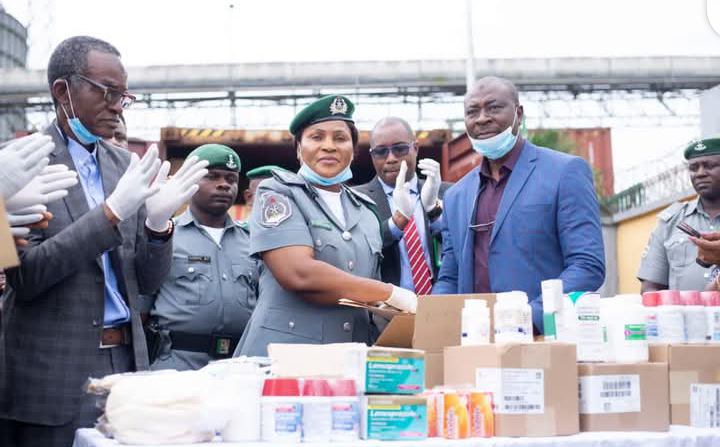
The Nigeria Customs Service (NCS), Port Harcourt Area II Command, has handed over expired pharmaceutical products valued at approximately ₦59 million to the National Agency for Food and Drug Administration and Control (NAFDAC), reinforcing the Federal Government’s campaign against the circulation of unsafe medicines and other counterfeit health products.
The handover represents another significant step in Nigeria’s ongoing efforts to strengthen border security, protect public health, and prevent substandard or expired medicines from finding their way into the country’s pharmaceutical supply chain.
Speaking during the official transfer ceremony in Port Harcourt, Rivers State, officials of the Nigeria Customs Service stated that the seizure was made through intelligence-driven enforcement operations aimed at preventing prohibited and dangerous goods from entering the Nigerian market.
According to the Customs Service, the expired drugs had an estimated Duty Paid Value (DPV) of ₦59 million and would have posed serious health risks if they had reached pharmacies, hospitals, markets, or unsuspecting consumers.
Authorities emphasized that the successful interception demonstrates growing collaboration between border enforcement agencies and health regulators in safeguarding Nigerians from harmful products.
Strengthening Inter-Agency Collaboration
The Nigeria Customs Service reaffirmed that protecting citizens extends beyond revenue generation and includes enforcing laws designed to prevent illegal imports capable of threatening lives and national security.
Customs officials noted that cooperation with NAFDAC has become increasingly important as criminal networks continue to explore new methods of smuggling counterfeit, expired, and falsified pharmaceutical products into Nigeria.
By immediately transferring the confiscated drugs to NAFDAC, Customs ensured that the medicines would undergo proper regulatory handling and eventual destruction in accordance with public health and environmental safety guidelines.
Officials stressed that such collaboration sends a strong message to importers involved in illegal pharmaceutical trade that enforcement agencies are becoming more coordinated and technologically equipped to detect prohibited consignments.
NAFDAC Commends Customs’ Vigilance
Receiving the seized products, NAFDAC officials praised the Nigeria Customs Service for its vigilance and professionalism, describing the interception as a critical contribution to the agency’s mission of protecting Nigerians from unsafe medicines.
The agency reiterated that expired medicines can become ineffective or even dangerous after their expiration dates because their chemical composition may deteriorate, potentially exposing patients to treatment failure, toxic reactions, or worsening medical conditions.
NAFDAC urged importers, pharmaceutical distributors, wholesalers, retailers, and healthcare providers to comply strictly with Nigeria’s drug regulations, warning that violators would continue to face prosecution under existing laws.
The regulator also encouraged members of the public to purchase medicines only from licensed pharmacies and registered healthcare facilities while remaining alert to suspicious pharmaceutical products.
Expired Medicines Pose Serious Public Health Risks
Health experts have consistently warned that expired drugs are not merely ineffective but can become significant public health hazards.
Certain medicines lose their therapeutic potency after expiration, meaning patients suffering from infections, chronic illnesses, or life-threatening conditions may fail to receive the treatment they require. In some cases, degraded pharmaceutical compounds may produce harmful side effects or toxic reactions.
The World Health Organization (WHO) has repeatedly highlighted the dangers posed by substandard and falsified medical products, particularly in developing countries where weak supply chains and illegal distribution networks increase public exposure to unsafe medicines.
Nigeria has intensified efforts in recent years to tackle these challenges through stronger border inspections, enhanced surveillance, intelligence sharing, and coordinated enforcement involving Customs, NAFDAC, law enforcement agencies, and international partners.
Intensified Campaign Against Counterfeit Pharmaceuticals
The latest seizure comes amid broader national efforts to combat counterfeit, expired, and unregistered medicines.
NAFDAC has in recent years expanded nationwide enforcement operations targeting illegal drug markets, unauthorized storage facilities, and import channels used by criminal syndicates.
Similarly, the Nigeria Customs Service has strengthened cargo inspections, intelligence gathering, and risk management procedures at ports, airports, and land borders to identify prohibited goods before they enter domestic circulation.
Security analysts say stronger collaboration between regulatory agencies is becoming increasingly important as pharmaceutical trafficking grows more sophisticated across West Africa.
The interception in Port Harcourt reflects a proactive enforcement strategy that prioritizes prevention over response, reducing the likelihood that dangerous products reach consumers before regulatory action can be taken.
Protecting Consumer Confidence
Public confidence in Nigeria’s healthcare system depends heavily on the availability of safe, genuine, and effective medicines.
Counterfeit and expired pharmaceuticals not only threaten individual patients but also undermine trust in healthcare providers, pharmacies, manufacturers, and public health institutions.
Experts believe continued investment in border surveillance, laboratory testing, digital tracking systems, and public awareness campaigns will remain essential to reducing illegal pharmaceutical trade.
Industry stakeholders have also called for stronger collaboration with pharmaceutical manufacturers, licensed distributors, transport operators, and community leaders to improve product traceability across the supply chain.
A Strong Signal to Smugglers
The handover of the expired drugs reinforces the Federal Government’s commitment to eliminating illegal pharmaceutical imports while demonstrating that coordinated enforcement is producing measurable results.
Both Customs and NAFDAC reiterated their resolve to sustain joint operations aimed at protecting lives and ensuring that only safe, quality-assured medicines reach Nigerian consumers.
Authorities further encouraged citizens to report suspicious pharmaceutical products, illegal drug warehouses, and unregistered medicine outlets through official reporting channels, emphasizing that public participation remains vital in the fight against counterfeit medicines.
As Nigeria continues strengthening regulatory oversight and border enforcement, the successful interception and transfer of the ₦59 million worth of expired drugs stand as another example of institutional cooperation working to safeguard public health and uphold consumer safety across the country.
Sources
- Nigeria Customs Service (Official Statements)
- National Agency for Food and Drug Administration and Control (NAFDAC)
- News Agency of Nigeria (NAN)
- The Punch
- Premium Times
- Vanguard
- World Health Organization (WHO)