Reported by Simon Daniel Yusuph l Journalist at Weng Global
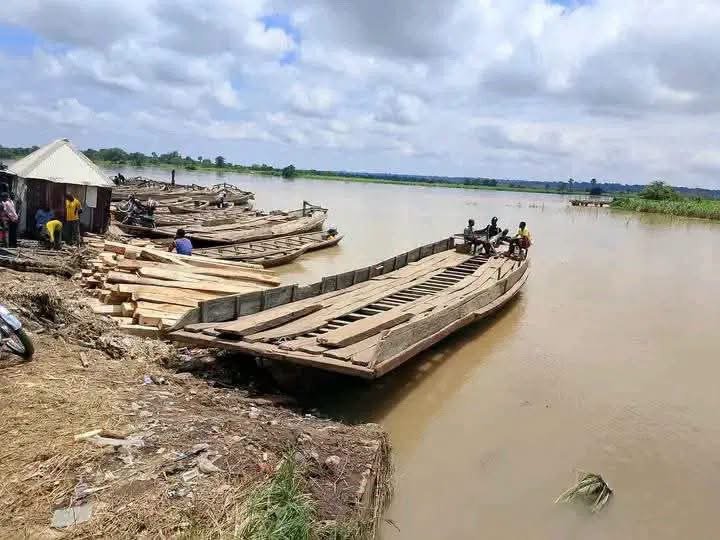
A boat carrying mourners returning from a burial ceremony capsized on the River Benue in Makurdi, Benue State, on Saturday, June 13, 2026, leaving 11 people dead and prompting fresh warnings over safety practices on the state’s waterways.
The wooden boat was carrying 43 passengers from the Wadata area of Makurdi towards Daudu-Dawadawa, an island community behind the Nigerian Army School of Military Engineering in the North Bank area, when it overturned between 7 p.m. and 8 p.m. during heavy rainfall and strong winds.
The tragedy initially produced differing casualty figures as rescue operations continued. The Benue State Police Command initially reported seven deaths and two missing passengers, while subsequent assessments by the National Inland Waterways Authority (NIWA) and other authorities put the eventual death toll at 11.
The incident has since triggered renewed attention to night sailing, the use of life jackets, weather-related restrictions and the enforcement of inland waterway regulations in Benue.
Boat Capsized During Return From Burial
The passengers had travelled from the Daudu-Dawadawa community to Wadata to attend the burial of a woman from their community.
After the burial, they boarded the wooden boat for the return journey across the River Benue.
According to accounts reported after the incident, the vessel was travelling at about 7 p.m. when heavy rain and strong winds developed. The boat subsequently capsized in the middle of the river.
The passengers were reportedly thrown into the water as the vessel overturned.
The early response involved local residents, divers, security personnel and other community members attempting to locate survivors and recover those who were missing.
Initial reports differed on the exact number of people aboard and the number of casualties. The Benue police spokesperson, DSP Udeme Edet, told TheCable that 43 people were aboard and that rescue teams had recovered about 34 passengers, with seven deaths and two people still missing at the time of her initial briefing.
Later assessments established that the disaster had claimed 11 lives.
Pregnant Woman and Children Among Victims
The victims included a pregnant woman and six children, according to reports from the affected community.
The tragedy therefore affected several families travelling together after attending the same burial ceremony.
The National Inland Waterways Authority later confirmed that a family of six was among those affected by the accident. NIWA officials said nine bodies had been recovered and buried at the time of their fact-finding visit, while one person remained missing and search efforts continued.
N-HYPPADEC subsequently described the incident as a tragedy that claimed 11 passengers and visited Daudu-Dawadawa to offer condolences to the affected families and community leaders.
The differing numbers reported during the rescue phase underline the difficulty of establishing casualty figures immediately after a waterway disaster, particularly where passengers are travelling from an island community and the incident occurs at night.
For Weng Global, the later figures provided by relevant agencies are therefore given priority over the earliest preliminary reports.
NIWA Identifies Safety Violations
A fact-finding visit by NIWA brought greater attention to the circumstances surrounding the accident.
NIWA Area Manager in Makurdi, Andrew Ndahi, said preliminary findings indicated that the boat had violated several waterway safety requirements.
According to NIWA, the boat departed at about 7 p.m., outside the approved operating period of 6 a.m. to 6 p.m.
The agency also said the operator proceeded despite adverse weather conditions and that the vessel was reportedly experiencing engine problems.
NIWA’s assessment is significant because the accident occurred during a period of heavy rainfall and strong winds.
The agency said inland waterway operators are required to suspend movement during severe weather conditions and comply with operating-hour restrictions.
It also stressed that life jackets are compulsory for passengers and crew members.
The findings place the tragedy within a wider waterway-safety context rather than treating it solely as an unavoidable consequence of bad weather.
Early Reports Showed Conflicting Casualty Figures
The casualty count changed as rescue and recovery operations progressed.
The Benue Police Command initially said seven people had died and two were missing after the boat carrying 43 passengers overturned.
The police account said rescue workers had managed to save about 34 people.
Other early reports from local sources said more than 40 passengers were on the boat and that 11 people were feared dead.
A local vigilante commander, Nura Umar of Operation Shara in North Bank, was among those who confirmed the incident in its early stages. Reports based on his account said four bodies had initially been recovered while divers searched for other victims.
As more information became available, NIWA and other authorities reported a higher confirmed toll.
The National Hydroelectric Power Producing Areas Development Commission later referred to the disaster as an accident that claimed 11 lives.
Investigation Into the Boat Accident
The Benue State Government later said it had commenced investigations in partnership with relevant agencies to determine the cause of the accident and prevent a recurrence.
Benue Deputy Governor Sam Ode made the statement while receiving a delegation from N-HYPPADEC in Makurdi after the tragedy.
The National Safety Investigation Bureau (NSIB) also began investigating the accident, according to subsequent reports.
The investigation is important because the incident involved several potential safety factors, including weather conditions, operating hours, the condition of the vessel, passenger safety equipment and compliance with navigation regulations.
Determining the precise sequence of events can help authorities identify which safety measures failed and what enforcement gaps may have contributed to the loss of life.
Rainy Season Raises Waterway Risks
The accident occurred during Nigeria’s rainy season, when water levels and currents can change rapidly.
Operation Whirl Stroke’s maritime component later warned mariners, boat operators, passengers and riverine communities that rising water levels along the River Benue were creating stronger currents and increased turbulence.
The military operation specifically referred to the June 13 accident involving 43 passengers travelling from Kwanta Wadata towards Daudu.
Its maritime component commander, Lieutenant Commander Christopher Zakari, warned that the combination of increased water levels, strong currents and turbulence could raise the risk of further boat accidents if safety procedures were ignored.
The warning was issued as authorities sought to prevent another tragedy during the continuing rainy season.
For communities that depend on boats to move between riverine settlements, the issue is particularly important because water transport is often an essential means of accessing markets, schools, health services and neighbouring communities.
N-HYPPADEC Provides Relief to Bereaved Community
Following the accident, the National Hydroelectric Power Producing Areas Development Commission intervened in the affected community.
N-HYPPADEC Managing Director Abubakar Sadiq Yelwa visited Daudu-Dawadawa to commiserate with traditional rulers, community leaders and families of the victims.
The commission donated 50 life jackets and provided N1.6 million in financial support to the bereaved families and community, according to reports from the visit.
Yelwa urged residents to use life jackets whenever they crossed the river and warned against night travel and unsafe boat operations.
The commission also announced plans involving solar-powered street lighting, a solar-powered borehole and the construction of classrooms in the community.
The intervention illustrates how a transport accident can expose broader infrastructure and development challenges facing isolated riverine settlements.
Government Warns Against Unsafe Waterway Operations
The Benue State Ministry of Marine and Blue Economy also called for compliance with waterway safety regulations following the accident.
The ministry urged residents of Daudu and other riverine communities to observe approved safety guidelines governing boat operations.
Officials emphasised that preventing further deaths would require cooperation between government agencies, boat operators, community leaders and passengers.
The warnings are particularly relevant because the accident occurred after dark and during severe weather, two conditions that authorities have identified as major risks for inland water transportation.
The tragedy has therefore renewed the question of whether existing safety rules are sufficiently enforced in communities that depend heavily on local boats.
A Community Dependent on River Transport
Daudu-Dawadawa is an island settlement in the Makurdi area, meaning residents depend on waterways for movement between the community and the mainland.
Such communities can face a difficult balance between safety restrictions and daily transportation needs.
When roads and bridges are unavailable or inadequate, boats become essential for movement.
But dependence on water transport also makes compliance with safety standards critical.
Night journeys, storms, overcrowded vessels, inadequate life jackets, poorly maintained boats and weak enforcement can combine to increase the consequences of an accident.
The Benue tragedy has therefore brought national attention to challenges that are familiar to many riverine communities across Nigeria.
Similar concerns exist in parts of the Niger Delta and other areas where waterways serve as important transportation routes.
Why the “Over 70” Figure Requires Correction
The initial headline supplied for this report referred to a boat carrying more than 70 mourners.
However, the available reporting and subsequent official assessments reviewed by Weng Global do not support that figure.
The Benue Police Command reported that 43 passengers were aboard the boat, while later military and NIWA accounts also referred to 43 passengers.
Weng Global has therefore not used the “over 70” figure as an established fact.
This distinction is important in reporting disasters because casualty and passenger figures can change during early rescue operations. Publishing an unsupported higher number could create unnecessary confusion for families, authorities and readers.
The confirmed reporting available to Weng Global supports a passenger count of 43 rather than more than 70.
What Happens Next
Authorities are expected to continue investigating the circumstances surrounding the accident and assess compliance with waterway regulations.
The investigation will be important in determining whether the vessel’s condition, operating time, weather conditions, safety equipment or other factors contributed to the disaster.
The Benue State Government has indicated that it is working with relevant agencies to establish the causes and prevent similar incidents.
NIWA is also expected to continue safety awareness efforts in riverine communities, including education on operating hours, weather restrictions and compulsory life-jacket use.
Operation Whirl Stroke has already issued a safety advisory following the accident, warning that the rainy season could continue to create hazardous conditions on the River Benue.
For communities using the waterway, the immediate priority is safer transportation and strict compliance with established rules.
Why the Benue Boat Tragedy Matters
The accident is more than a single transport disaster.
It highlights the risks faced by Nigerians living in communities where waterways are central to daily life.
The loss of 11 people, including children and a pregnant woman, demonstrates the human cost that can follow when several safety risks occur at the same time.
The incident also raises broader questions about enforcement.
Rules restricting night navigation and requiring operators to stop during severe weather are meaningful only if they are consistently enforced and understood by boat operators and passengers.
The availability and use of life jackets is equally important.
Government agencies have responded with investigations, safety warnings, relief assistance and the distribution of life jackets. The longer-term test will be whether those measures translate into safer daily transportation for riverine communities.
For Benue, where the River Benue remains an important part of transportation and economic activity, improving waterway safety will require sustained attention rather than temporary measures following individual accidents.
WENG Global — Stories beyond borders
Sources
- National Inland Waterways Authority (NIWA)
- National Hydroelectric Power Producing Areas Development Commission (N-HYPPADEC)
- Benue State Government
- Operation Whirl Stroke (OPWS)
- TheCable
- Vanguard
- Punch Newspapers
- The Sun