Reported by Weng Patrick Atokor | journalist at wengglobal
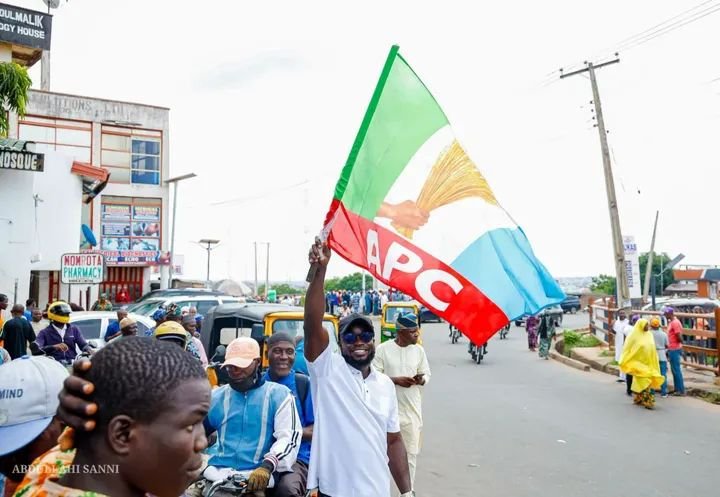
Nigeria’s ruling All Progressives Congress (APC) has argued that the inability of several opposition political parties to comply with the Independent National Electoral Commission (INEC) deadline for the submission of candidates demonstrates a lack of preparedness for the 2027 general elections, intensifying political exchanges ahead of the country’s next electoral cycle.
The party’s reaction followed INEC’s decision to extend the deadline for uploading the names and particulars of presidential, vice-presidential, Senate and House of Representatives candidates from July 11 to July 14, 2026. The electoral commission said the extension was granted after the Inter-Party Advisory Council (IPAC) appealed on behalf of political parties that encountered difficulties completing the nomination process within the stipulated timeframe.
In a statement issued by its National Publicity Secretary, Felix Morka, the APC maintained that it had successfully complied with the original deadline despite fielding candidates across numerous constituencies nationwide. According to the party, meeting the timeline reflected strong internal organisation and effective administrative planning.
Morka argued that the extension requested by opposition parties exposed weaknesses in their internal structures and their ability to manage complex electoral processes.
According to him, political organisations that struggle to conclude their candidate nomination exercises on schedule may find it difficult to convince Nigerians that they possess the competence required to govern effectively.
The APC nevertheless acknowledged that INEC acted within its statutory authority by approving the extension, stressing that the commission has the legal discretion to adjust administrative timelines where necessary. However, the ruling party insisted that the circumstances surrounding the extension highlighted significant contrasts in organisational capacity between itself and its rivals.
The development comes as preparations for the 2027 general election continue to gather momentum, with political parties conducting primaries and finalising candidate lists in line with the Electoral Act and INEC’s revised timetable.
APC accuses opposition of hypocrisy
The ruling party also criticised opposition groups over what it described as contradictory positions regarding INEC.
According to the APC, some opposition parties have previously accused the electoral commission of favouring the ruling party, yet later appealed to the same institution for additional time after failing to meet submission requirements.
The party argued that had INEC maintained the original deadline without extension, the APC would likely have benefited politically because it had already completed its submissions. Instead, it said it accepted the commission’s decision without interference, describing this as evidence of its confidence in the electoral process.
Why INEC granted the extension
INEC explained that the deadline extension followed representations from IPAC on behalf of political parties that required more time to upload candidates’ details through the commission’s electronic nomination portal.
The commission said the extension was intended to facilitate smoother compliance while maintaining the integrity of the electoral timetable.
Election observers note that such administrative adjustments are not unprecedented in Nigeria’s electoral history. Previous election cycles have witnessed timetable revisions where logistical challenges or widespread requests from political stakeholders warranted limited extensions, provided they remained consistent with the Electoral Act.
Opposition parties yet to issue coordinated response
As of the time of publication, opposition parties had not issued a unified response to the APC’s criticism.
However, several opposition leaders have previously argued that compressed electoral timelines, internal legal disputes and ongoing consultations among party stakeholders have contributed to delays in completing nomination processes.
Political analysts also note that coalition negotiations among opposition parties have added another layer of complexity to preparations for the 2027 elections.
Some observers caution against interpreting administrative delays as definitive evidence of electoral weakness, arguing that many parties continue to restructure ahead of what is expected to be one of Nigeria’s most competitive elections in recent history.
Electoral preparations intensify
The debate comes amid increasing political activity across the country as parties position themselves for the next general election.
INEC has consistently urged political parties to comply strictly with established timelines, warning that candidates emerging from processes conducted outside approved schedules risk disqualification under the Electoral Act unless otherwise directed by competent courts.
Election management experts believe adherence to electoral timelines is critical to ensuring transparency, reducing litigation and enabling adequate preparation for voter education, logistics and election administration.
The commission has repeatedly emphasised that while political parties retain responsibility for organising their primaries, compliance with statutory deadlines remains mandatory.
Analysts urge focus on issues
Beyond the current political exchanges, governance experts say Nigerians are likely to judge parties not only by their organisational efficiency but also by the quality of their policy proposals on the economy, security, education, healthcare and employment.
They argue that although timely submission of candidates demonstrates administrative competence, voters will ultimately assess political parties based on their ability to address national challenges.
With less than a year before campaigns gather full momentum, analysts expect rhetoric between the ruling party and opposition groups to intensify, particularly as alliances shift and candidates emerge across the country.
For now, attention remains on how political parties utilise the additional period granted by INEC and whether the extension successfully enables full compliance without disrupting the broader electoral timetable.
As preparations continue, stakeholders have called on all political actors to respect democratic institutions, comply with electoral regulations and ensure that competition ahead of the 2027 general elections remains peaceful, transparent and issue-driven.
Sources:
- TheCable
- Vanguard
- Punch Newspapers
- The Guardian Nigeria
- Independent National Electoral Commission (INEC)
- Legit.ng