Reported by Simon Daniel Yusuph l Journalist at Weng Global
Osun State candidates of the Accord Party contesting National Assembly and State House of Assembly seats have pledged to support Governor Ademola Adeleke’s political engagements and mobilise votes for President Bola Ahmed Tinubu in the 2027 presidential election.
The candidates made their position known through the Speaker of the Osun State House of Assembly, Adewale Olumide Egbedun, who serves as co-chairman of the group representing Accord’s National Assembly and State Assembly candidates in the state.
According to a statement issued by Egbedun through his Chief Press Secretary, Olamide Tiamiyu, the candidates expressed confidence in Adeleke’s leadership and declared their readiness to work with him towards securing substantial electoral support for Tinubu in Osun.
The declaration comes amid growing political realignments ahead of the 2027 general elections, with politicians, political parties and campaign organisations positioning themselves for the contest.
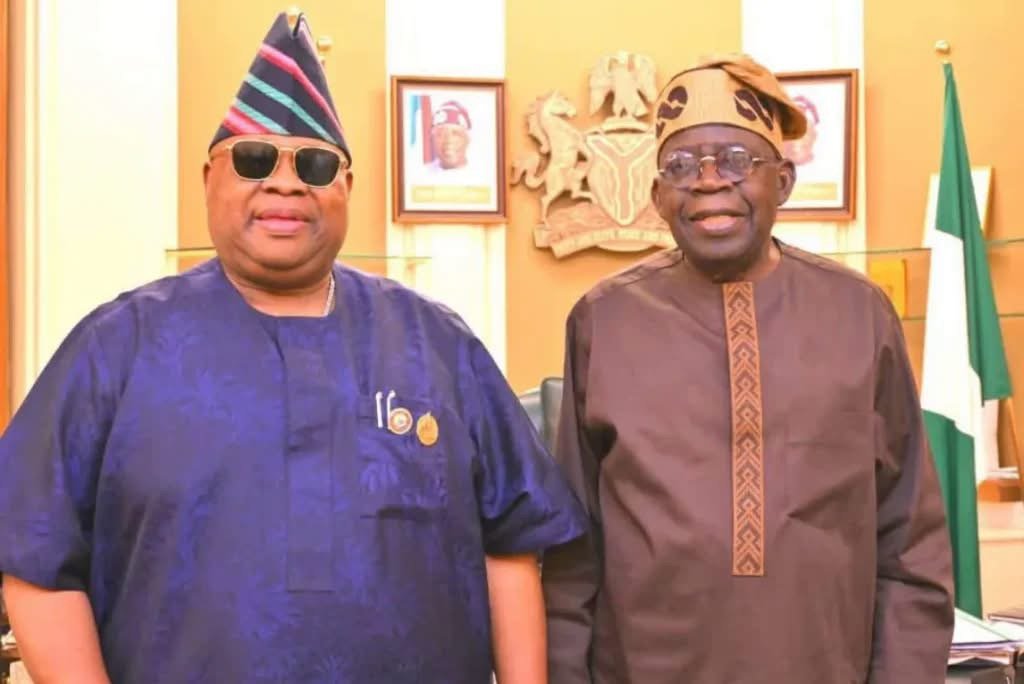
The development also highlights the relationship between Adeleke, who belongs to the Accord Party, and Tinubu, the president and candidate of the All Progressives Congress (APC) for the forthcoming presidential election.
Although the two politicians belong to different political parties, Adeleke has publicly endorsed Tinubu’s re-election bid. The governor’s position has become an important feature of political discussions in Osun State as preparations for the next general elections gather momentum.
Accord Candidates Promise Grassroots Mobilisation for Tinubu
Egbedun said the Accord candidates remained committed to Adeleke’s leadership and would support his political engagements, including efforts to mobilise votes for Tinubu across Osun State.
In the statement reported by InsightLinks on October 13, 2026, the Speaker said the candidates intended to use their political structures and grassroots connections to promote support for the president.
He said their commitment would extend beyond public declarations, with sustained engagement with constituents and mobilisation activities intended to translate the pledge into electoral support.
Egbedun also emphasised political cooperation, arguing that collaboration between political actors could help advance the interests of Osun State and strengthen its relationship with the Federal Government.
The candidates, according to the statement, were prepared to work closely with Adeleke as he undertakes his role in the broader political effort supporting Tinubu’s second-term ambition.
However, the declaration represents a political commitment rather than evidence of votes already secured. The actual outcome of the 2027 presidential election in Osun will depend on voters’ decisions, campaign activities, political competition and the conduct of the electoral process.
The distinction is important because endorsements by political candidates and party leaders do not automatically translate into votes from constituents.
While elected officials and candidates can influence political conversations, voters retain the constitutional right to decide which candidates they support at the ballot box.
Adeleke’s Political Position and Tinubu’s Re-Election Bid
Adeleke’s support for Tinubu has developed through a series of public declarations ahead of the 2027 presidential election.
In March 2026, the Osun State Government announced that Adeleke had reaffirmed his support for Tinubu’s re-election, describing the endorsement as being in the interest of the South-West region.
The governor also called on political and government officials to strengthen Accord’s grassroots structures and continue engaging residents across the state.
His position subsequently remained part of the political conversation surrounding Osun’s governorship election and the relationship between the state government and the Federal Government.
In July 2026, the national leadership of Accord and Adeleke adopted Tinubu as their preferred presidential candidate for the 2027 election, according to reporting by The Guardian.
The party leadership cited the importance of completing major federal infrastructure projects, including the Lagos-Calabar Coastal Road and the Sokoto-Badagry Highway.
The endorsement demonstrated that political cooperation between Adeleke and Tinubu was not limited to the governor’s personal statements but also involved the national leadership of Accord at that time.
Adeleke’s position is particularly significant because Accord is the platform under which he contested and won re-election as Osun governor in August 2026.
His continued support for Tinubu places him in a position where he must maintain his political relationship with the president while leading a state government associated with a different party.
The latest declaration by Accord’s legislative candidates suggests that the governor’s presidential preference has support among members of the group representing the party’s National Assembly and State House of Assembly candidates.
Nevertheless, the statement does not establish that every Accord member, supporter or voter in Osun shares the same preference.
APC Names Adeleke to Coordinate Tinubu’s Campaign in Osun
The candidates’ pledge follows a major development in the organisation of Tinubu’s 2027 presidential campaign.
Premium Times reported on October 13 that Adeleke had been named the Osun State coordinator for Tinubu’s presidential campaign under the APC’s campaign structure.
The appointment places a governor elected under Accord in a prominent role in the re-election campaign of an APC president.
The report also identified former Osun governor Adebisi Akande and former deputy governor Iyiola Omisore among the advisers listed in the campaign council.
According to Premium Times, the campaign council’s inauguration was scheduled for October 14, 2026, at the Banquet Hall of the Presidential Villa in Abuja.
Adeleke’s inclusion reflects his repeated public statements supporting Tinubu’s second-term ambition.
However, the governor has previously denied that his support resulted from a formal agreement with the president.
In an interview with Channels Television, as reported by Premium Times, Adeleke said his position was influenced by Tinubu’s South-West identity and his interest in ensuring that federal infrastructure projects in the region were completed.
He also indicated that he was willing to work with APC figures, including political opponents, in support of Tinubu’s re-election.
These statements are relevant to understanding the latest pledge by Accord candidates. They suggest that the political cooperation is being presented publicly as an effort to advance shared regional and political interests, rather than as evidence of a confirmed agreement transferring Accord’s entire political structure to the APC.
The distinction matters because support for a presidential candidate does not necessarily mean that a politician or political party has abandoned its separate identity or electoral ambitions.
Accord candidates may continue contesting legislative seats under their party while backing Tinubu for the presidency.
The extent to which that arrangement will influence the election remains to be seen.
What the Pledge Means for Accord’s Legislative Candidates
The declaration creates a political arrangement in which Accord candidates are seeking votes for their own legislative ambitions while promising to support Tinubu at the presidential level.
Nigeria’s general elections involve contests for different offices, including the presidency, Senate, House of Representatives and state Houses of Assembly.
Voters make separate choices in these contests, meaning that support for a presidential candidate does not automatically require a voter to support the same candidate’s political party in legislative elections.
This distinction provides the electoral context for the Osun candidates’ declaration.
Accord candidates can campaign for seats in the National Assembly and Osun State House of Assembly while encouraging voters to support Tinubu in the presidential election.
For the candidates, working with Adeleke could offer an opportunity to draw on the governor’s political influence and existing support networks across the state.
Their challenge will be to convert that political alignment into public support while demonstrating why voters should elect them to the legislative offices they seek.
Legislative candidates are generally expected to explain their positions on representation, lawmaking, oversight of government institutions and constituency development.
Consequently, the strength of their campaigns will depend not only on their endorsement of Tinubu but also on their individual records, policy positions, party organisation and ability to engage voters on local concerns.
The declaration itself does not provide evidence of how many votes the candidates expect to secure for Tinubu, nor does it establish a verified projection of the president’s eventual vote total in Osun.
Any specific figure would require clear attribution to the individual or organisation making the estimate and should not be treated as a confirmed electoral outcome.
Political Cooperation and Osun’s Relationship With the Federal Government
One of the central arguments advanced by supporters of Adeleke’s position is the potential benefit of cooperation between the Osun State Government and the Federal Government.
States depend on a range of relationships with the federal authorities, including coordination over infrastructure, public services, development programmes and other matters requiring cooperation between different levels of government.
Political alignment may help officials communicate shared priorities and build working relationships. However, political cooperation alone does not establish that a state will receive additional funding, preferential treatment or faster implementation of federal projects.
Such outcomes depend on government decisions, budgetary provisions, project approvals, administrative processes and the availability of resources.
Adeleke’s stated interest in the completion of infrastructure projects in the South-West provides one explanation for his support for Tinubu.
For Osun residents, the practical significance of that relationship will depend on whether it produces measurable improvements in infrastructure, employment opportunities, public services and economic conditions.
The governor and his supporters will therefore face expectations to demonstrate how their political cooperation benefits the state.
At the same time, the Federal Government’s responsibilities extend beyond Osun and the South-West. National infrastructure and development policies must be assessed against their broader effects on citizens across Nigeria.
The political significance of the endorsement should not overshadow the need to evaluate public policy through evidence of implementation and results.
The Importance of Voter Choice Ahead of 2027
The pledge by Accord candidates also raises broader questions about political loyalty, party identity and voter choice in Nigeria’s multiparty democracy.
Political alliances are not unusual in Nigerian elections. Politicians and parties sometimes cooperate across party lines when they share particular objectives or believe that collaboration will improve their electoral prospects.
However, voters may have their own priorities, which can differ from those of party leaders and candidates.
Economic conditions, the cost of living, employment, education, healthcare, security, infrastructure and the performance of elected officials can all influence electoral decisions.
For this reason, a declaration by political candidates should be understood as an expression of their intended campaign strategy, not as proof that the electorate has already accepted their position.
Accord’s legislative candidates will need to communicate their presidential preference while also addressing the issues that matter to their respective constituencies.
Tinubu’s campaign, meanwhile, will need to persuade voters that his administration merits another term. The president’s endorsement by political figures can strengthen campaign visibility, but it does not replace the need to demonstrate policy achievements and respond to public concerns.
The electoral process will ultimately determine whether the political cooperation produces the result its supporters anticipate.
What Happens Next?
The next stage will involve translating the candidates’ declaration into practical campaign activities.
Egbedun said the group intended to use grassroots engagement, constituency outreach and voter mobilisation to support Tinubu’s re-election bid.
The effectiveness of those efforts will depend on how the candidates organise their structures, engage local communities and coordinate with Adeleke’s political team.
The scheduled inauguration of Tinubu’s presidential campaign council on October 14 will also be an important development in the organisation of the president’s re-election campaign, according to Premium Times.
Further details about the responsibilities assigned to campaign officials and the activities planned for Osun will help clarify how the governor and Accord candidates intend to work within the broader campaign structure.
For now, the candidates’ declaration signals their intention to combine their legislative ambitions with support for Tinubu’s presidential bid.
Whether that commitment will translate into significant electoral gains remains uncertain.
The 2027 election will provide the test of the political alliance, as voters decide independently who should represent them in the legislature and who should lead the country.
For Osun residents, the central question will be whether the political cooperation produces tangible benefits for the state while preserving the democratic choice of individual voters.
Weng Global – stories beyond borders
Sources
- InsightLinks — Report on Accord National Assembly and State House of Assembly candidates pledging support for Tinubu’s re-election.
- Premium Times — Report on Adeleke’s appointment as Osun coordinator for Tinubu’s 2027 presidential campaign.
- The Guardian — Report on Adeleke and Accord’s adoption of Tinubu as their preferred presidential candidate.
- Osun State Government — Official statement on Adeleke’s reaffirmation of support for Tinubu’s re-election.