Reported by Simon Daniel Yusuph l Journalist at Weng Global
The National Chairman of the All Progressives Congress (APC), Nentawe Yilwatda, has confirmed the ruling party’s efforts to secure support from influential politicians outside its ranks ahead of Nigeria’s 2027 general elections, as President Bola Ahmed Tinubu’s re-election campaign attracts growing attention across the country’s political landscape.
The outreach includes prominent figures associated with opposition parties, such as Federal Capital Territory Minister Nyesom Wike, Osun State Governor Ademola Adeleke and Anambra State Governor Chukwuma Soludo, whose political positions and relationships with the presidency have become increasingly significant in discussions about the next presidential election.
The development reflects the APC’s determination to broaden its political support beyond its established membership and build relationships with politicians who command influence in different states and political constituencies.
Recent developments have provided concrete evidence of this cross-party alignment. On October 13, 2026, reports emerged that the APC had included Wike, Adeleke, Soludo and other prominent political figures in its revised Presidential Campaign Council for the 2027 general elections.
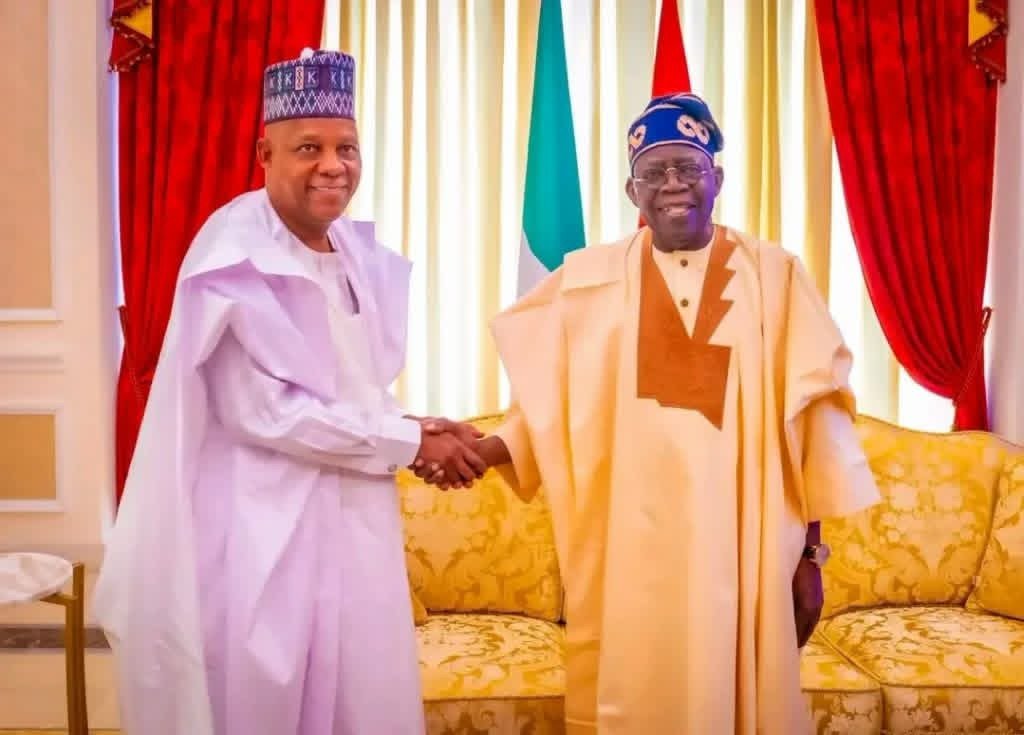
The campaign structure places Tinubu at its head, with Vice-President Kashim Shettima and Yilwatda serving as vice-chairmen. The inclusion of politicians associated with different political parties highlights the ruling party’s willingness to accommodate individuals whose political affiliations do not necessarily align with the APC.
However, the participation of opposition-linked politicians in Tinubu’s campaign should not automatically be interpreted as evidence that their respective parties have formally joined the APC. Individual endorsements, campaign responsibilities and party membership are separate political matters.
The emerging arrangement raises important questions about the future of Nigeria’s opposition, the influence of political alliances on the 2027 elections and the extent to which cross-party support could shape the contest for the presidency.
APC Expands Its Political Outreach Ahead of 2027
The APC’s efforts to attract support from politicians outside its membership come as parties and political leaders begin positioning themselves for the 2027 general elections.
Nigeria’s presidential elections are often shaped by a combination of party structures, regional considerations, political alliances, candidate popularity and the ability of campaigns to mobilise voters across the country’s six geopolitical zones.
For the ruling party, building a broad coalition could help consolidate its existing support while opening opportunities to reach voters and political constituencies traditionally associated with other parties.
Yilwatda’s position as APC national chairman places him at the centre of the party’s organisational and political preparations. His responsibilities include coordinating party structures, maintaining relationships with stakeholders and supporting the party’s preparations for electoral contests.
The decision to engage politicians outside the APC reflects a political calculation that electoral strength is not determined exclusively by the number of registered party members.
Influential politicians can bring established networks, local knowledge, campaign experience and relationships with voters. Their involvement may also help a presidential candidate reach constituencies where the ruling party faces stronger competition.
Nevertheless, the effectiveness of such alliances depends on whether political endorsements translate into sustained grassroots mobilisation and voter support.
The presence of prominent politicians in a campaign council is therefore an important political development, but it does not establish how voters will ultimately behave at the ballot box.
The 2027 presidential election remains a contest that will be decided through the electoral process, rather than through the number or prominence of politicians publicly associated with any candidate.
Wike Emerges as a Significant Figure in Tinubu’s Political Coalition
Nyesom Wike, the Minister of the Federal Capital Territory and a prominent figure in the Peoples Democratic Party (PDP), has repeatedly expressed support for Tinubu’s re-election despite his association with a party that is not the ruling APC.
Wike’s political position has attracted considerable attention because of his influence in Rivers State, his national political connections and his longstanding involvement in the PDP.
His relationship with the Tinubu administration demonstrates how political alliances can cross party boundaries, particularly when politicians make decisions based on personal political relationships, strategic interests or assessments of electoral opportunities.
In August 2026, Wike described emerging political alignments in support of Tinubu as a broader “Rainbow Coalition”.
According to reports by Channels Television and The Guardian, he made the remarks while reacting to political developments involving Adeleke and the president.
Wike argued that politicians from different parties could support Tinubu without necessarily belonging to the APC.
He also suggested that the political crisis within the PDP had weakened the ability of the opposition to operate as a unified national force.
His comments illustrated a distinction between supporting a presidential candidate and abandoning one’s existing political party.
That distinction remains important as Nigeria approaches another general election.
Wike’s position does not, by itself, establish that the PDP has formally endorsed Tinubu. Rather, it reflects his individual political stance and the possibility of politicians supporting different candidates at different levels of the electoral contest.
On September 15, 2026, Channels Television also reported that Wike had maintained his support for Tinubu’s re-election while insisting that the PDP could still field candidates for governorship, National Assembly and state assembly elections.
Such a position could produce complex political arrangements in which politicians cooperate at the presidential level while competing against one another in other elections.
For the APC, Wike’s participation in the campaign structure could provide an opportunity to strengthen its political presence in Rivers State and the Federal Capital Territory.
However, the practical impact of that involvement will depend on the strength of his political networks, the response of other political stakeholders and the willingness of voters to support the candidate he backs.
Adeleke’s Position Highlights the Complexity of Cross-Party Alliances
Osun State Governor Ademola Adeleke is another prominent politician whose relationship with Tinubu has attracted attention ahead of the 2027 elections.
Adeleke’s political circumstances illustrate the complicated relationship between party affiliation, regional interests and presidential endorsements.
Although associated with the PDP for much of his political career, Adeleke secured his re-election ticket for the Osun governorship election on the platform of the Accord Party.
He subsequently reaffirmed his support for Tinubu’s second-term ambition.
Channels Television reported on August 16, 2026, that Adeleke denied reaching an agreement with the president over the endorsement.
According to the report, the governor explained that his support was based on Tinubu’s regional background and his desire to encourage the president to continue development projects in the South-West.
Adeleke’s explanation is significant because it demonstrates that public support for a presidential candidate can be presented in regional or developmental terms rather than as a formal agreement between political parties.
His inclusion in the APC’s revised Presidential Campaign Council further illustrates the ruling party’s efforts to attract support from politicians outside its membership.
Reports published on October 13, 2026, identified Adeleke among the politicians named in the revised campaign structure.
The development could strengthen Tinubu’s campaign visibility in Osun State, where the APC and other political parties have competed for electoral support.
However, Adeleke’s participation should not be interpreted as proof that all Accord Party members or his supporters have adopted the APC’s political position.
Political endorsements by individual officeholders do not automatically determine the preferences of their supporters.
Adeleke’s influence will depend partly on whether his political relationships and grassroots networks can translate his endorsement into support for Tinubu during the presidential election.
The situation also raises questions about how political parties will manage competing interests when individual members support a presidential candidate associated with another party.
For voters, the distinction between an individual politician’s position and the official position of a political organisation remains essential.
Soludo’s Involvement Adds an Anambra Dimension
Anambra State Governor Chukwuma Soludo is another prominent figure whose political position has become relevant to discussions about Tinubu’s re-election.
Soludo belongs to the All Progressives Grand Alliance (APGA), a party with an established political presence in Anambra State and parts of the South-East.
His inclusion in the revised presidential campaign council places another governor from outside the APC within Tinubu’s campaign structure.
The development is politically notable because the South-East has its own electoral dynamics, party loyalties and regional considerations that may influence the 2027 presidential contest.
Soludo’s relationship with the federal government also demonstrates that cooperation between a state administration and the presidency does not necessarily require the two to belong to the same political party.
However, the governor’s participation in a presidential campaign structure should be distinguished from a formal decision by APGA to merge with the APC or abandon its independent political identity.
No such conclusion can be drawn from the reported campaign council appointments alone.
The political implications of Soludo’s involvement will depend on the nature of his responsibilities, the extent of his mobilisation efforts and the reaction of APGA stakeholders and voters in Anambra State.
The South-East remains an important part of Nigeria’s electoral calculations, and the ruling party’s ability to attract support from influential regional figures could form part of its broader campaign strategy.
Nevertheless, an endorsement by a governor does not guarantee that voters in the state will support the same presidential candidate.
Electoral outcomes are shaped by several factors, including public perceptions of government performance, economic conditions, candidate credibility, party organisation and the issues voters consider most important.
Revised Campaign Council Provides Evidence of Broader Outreach
The reported inclusion of Wike, Adeleke and Soludo in the APC’s revised Presidential Campaign Council is among the clearest indications of the party’s willingness to accommodate politicians from outside its membership.
According to reports published by Punch Newspapers and Premium Times on October 13, 2026, the revised council includes Tinubu as chairman, with Shettima and Yilwatda serving as vice-chairmen.
The list also includes Senate President Godswill Akpabio, Speaker of the House of Representatives Tajudeen Abbas and Kwara State Governor AbdulRahman AbdulRazaq among the vice-chairmen.
Senator Abdulaziz Yari was named director-general of the campaign council.
Other prominent figures listed include Delta State Governor Sheriff Oborevwori, former Lagos State Governor Babatunde Fashola and Minister of Aviation and Aerospace Development Festus Keyamo.
The composition brings together serving public officials, party leaders and politicians with different political backgrounds.
The campaign council is expected to provide an organisational framework for coordinating activities connected to Tinubu’s re-election bid.
Such structures can help campaigns distribute responsibilities, coordinate political messaging and mobilise supporters across states and geopolitical zones.
However, the appointment of individuals to campaign positions does not establish that every listed member has the same level of influence or that all political groups represented will mobilise with equal intensity.
The practical significance of the council will become clearer as campaign activities develop and its members undertake their respective responsibilities.
It is also important to distinguish between an announced campaign arrangement and the eventual outcome of an election.
The council’s composition reveals the political relationships the ruling party is seeking to organise around Tinubu’s candidacy. It does not establish the result of the 2027 presidential election.
What the Political Realignment Means for the Opposition
The emerging cross-party support for Tinubu presents both challenges and opportunities for Nigeria’s opposition parties.
One challenge is the possibility that prominent politicians could support the president while remaining formally associated with opposition parties.
Such arrangements may complicate efforts by opposition organisations to present a unified national alternative to the ruling party.
When influential politicians publicly endorse the incumbent president, opposition parties may face questions about internal discipline, ideological consistency and the ability of their leaders to maintain a common electoral strategy.
However, individual endorsements do not necessarily mean that an entire opposition party has lost its electoral relevance.
Political parties retain structures, candidates and supporters whose decisions may differ from those of prominent officeholders.
The opposition’s electoral prospects will therefore depend on its ability to organise effectively, resolve internal disputes, select credible candidates and communicate a persuasive programme to voters.
The PDP, the Accord Party and APGA each have distinct political identities and organisational interests. Their relationships with politicians who support Tinubu could become important considerations as the 2027 election approaches.
The African Democratic Congress (ADC) and other political organisations seeking to challenge the ruling party will also have to determine how best to respond to cross-party alliances.
The central question is whether opposition parties can maintain strong internal organisations while competing against a ruling party that is seeking support from influential figures across political boundaries.
For Nigeria’s democratic system, effective political competition requires more than the existence of multiple registered parties. It also depends on voters having meaningful choices and parties being able to present credible alternatives.
The emergence of alliances does not automatically weaken democracy. Political cooperation across party lines is a normal feature of democratic politics.
The more important consideration is whether such arrangements are transparent, consistent with the law and responsive to citizens’ interests.
Why the 2027 Election Matters
Nigeria’s 2027 general elections will provide voters with an opportunity to assess the performance of the Tinubu administration and consider competing political programmes.
Issues such as the cost of living, employment, security, infrastructure, education, healthcare and economic opportunity are likely to remain important in public debate.
The political strategies being developed by the APC and opposition parties will operate within this wider environment.
For Tinubu’s campaign, securing the support of prominent politicians could strengthen its organisational reach and provide access to political networks in different states.
Yet the effectiveness of the strategy will ultimately depend on how voters assess the administration’s record and whether the campaign can demonstrate credible plans for addressing the country’s challenges.
For opposition parties, the emergence of a broader pro-Tinubu coalition could increase pressure to build stronger alliances of their own.
Such alliances would need to go beyond agreements among political leaders. They would also require clear policy positions, credible candidates and an organisational structure capable of reaching voters.
For citizens, the most important issue is whether political competition produces meaningful choices about Nigeria’s future.
Political endorsements can shape the campaign environment, but voters must still evaluate candidates and their proposals independently.
The 2027 election will therefore test not only the APC’s ability to maintain a broad coalition but also the opposition’s capacity to organise a competitive challenge.
What Happens Next?
The next phase of the political process will involve the activities of the presidential campaign council, the responses of opposition parties and the continued positioning of politicians ahead of the 2027 general elections.
The campaign council’s reported composition provides a framework for coordinating Tinubu’s re-election effort, but the extent of its influence will depend on how its members perform their assigned responsibilities.
Attention will also focus on whether other influential politicians publicly endorse Tinubu, whether opposition parties strengthen their cooperation and how party leaders manage differences over presidential and state-level elections.
The positions taken by Wike, Adeleke and Soludo will remain important to the political conversation because of their public offices and political networks.
However, their individual support should not be treated as a guarantee of electoral success for Tinubu or as evidence that their respective parties have formally endorsed the APC.
The Independent National Electoral Commission will oversee the electoral process in accordance with Nigeria’s applicable electoral laws and the official timetable for the 2027 general elections.
Until the election takes place, political endorsements, campaign appointments and alliance-building efforts remain developments within a continuing contest for public support.
For the APC, the immediate challenge is to convert its expanding political relationships into an organised and persuasive campaign.
For the opposition, the task is to determine how to respond to the ruling party’s outreach while maintaining credible political alternatives.
For Nigerian voters, the central consideration remains whether the competing candidates and parties can offer convincing answers to the country’s most pressing problems.
The growing alignment of influential politicians behind Tinubu has added a new dimension to preparations for 2027, but the final outcome will depend on the choices voters make at the ballot box.
Weng Global – stories beyond borders
Sources
- Punch Newspapers — Report on the APC’s revised Presidential Campaign Council, October 13, 2026.
- Premium Times — Report on the inclusion of opposition-linked politicians in Tinubu’s campaign council, October 13, 2026.
- Channels Television — Report on Wike’s proposed broader coalition in support of Tinubu, August 21, 2026.
- The Guardian — Report on the emerging political coalition supporting Tinubu, August 21, 2026.
- Channels Television — Report on Adeleke’s explanation of his support for Tinubu, August 16, 2026.
- Channels Television — Report on Wike’s position on Tinubu’s re-election and the PDP’s participation in other elections, September 15, 2026.