Reported by Simon Daniel Yusuph l Journalist at Weng Global
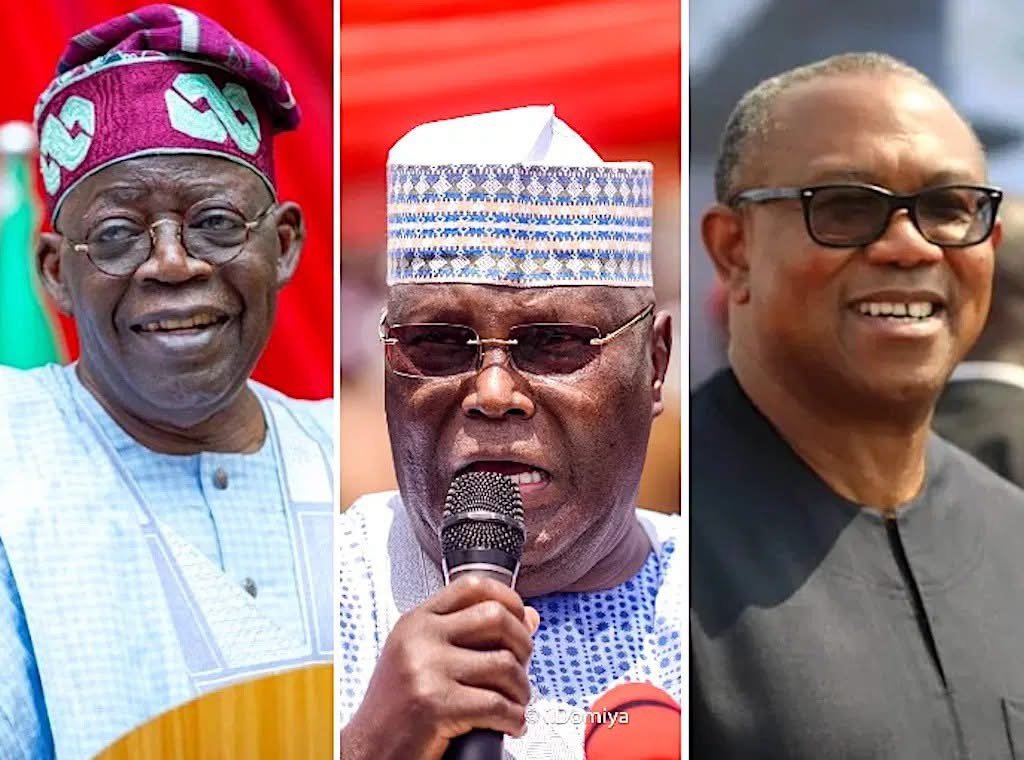
Former Cross River State Governor and Peoples Redemption Party (PRP) presidential candidate Donald Duke has warned that President Bola Ahmed Tinubu could win re-election in Nigeria’s 2027 presidential election if opposition leaders, particularly former Vice-President Atiku Abubakar and former Anambra State Governor Peter Obi, remain divided.
Duke made the assessment during an appearance on Channels Television’s Morning Brief on October 7, 2026, while discussing the opposition’s prospects ahead of the January 16, 2027 presidential election. He argued that continued fragmentation could again divide opposition votes and give the ruling All Progressives Congress (APC) an advantage.
Duke’s statement is a political prediction, not an established forecast of the election outcome. Nigeria’s 2027 presidential election remains to be decided by voters.
Main Development
Duke said opposition candidates would struggle to defeat Tinubu if major contenders continue pursuing separate presidential campaigns.
According to him, the experience of the 2023 presidential election demonstrated the potential consequences of a fragmented opposition. At that election, Tinubu of the APC won 8,794,726 votes, while Atiku Abubakar, then the Peoples Democratic Party (PDP) candidate, received 6,984,520 votes and Peter Obi, who contested under the Labour Party, polled 6,101,533 votes. Rabiu Kwankwaso of the New Nigeria Peoples Party received 1,496,687 votes.
Duke argued that the combined strength of opposition candidates could pose a significant challenge to the incumbent if their supporters were brought behind a common candidate.
He also criticised what he described as the inability of leading opposition politicians to overcome their individual ambitions.
Duke’s assessment follows months of attempts by opposition parties and political figures to establish a common platform capable of challenging the APC in 2027.
Duke’s Warning to Opposition Leaders
Duke said the opposition was repeating a pattern that could allow the ruling party to remain in power if votes are divided among several major candidates.
He compared the situation with the American two-party system, arguing that fragmentation within a major opposition bloc could make it easier for the governing party to retain power.
The former Cross River governor pointed specifically to the 2023 contest, when Atiku, Obi and Kwankwaso contested separately rather than behind a single opposition candidate.
Duke said the leading opposition figures appeared confident about their chances but warned that their expectations could be misplaced if they failed to cooperate.
When asked directly whether his assessment meant Tinubu would win the 2027 presidential election if the opposition remained divided, Duke answered in the affirmative.
The comment reflects Duke’s political assessment rather than an endorsement of Tinubu.
Indeed, Duke has previously criticised the Tinubu administration and said his concern with the president was primarily about governance rather than political strength.
Duke Says Tinubu Is Beatable
Although Duke predicted that Tinubu could benefit from opposition fragmentation, he has also argued that the president can be defeated if opposition forces unite.
In an earlier appearance on Channels Television’s Politics Today in August, Duke said Tinubu was a formidable politician but argued that the opposition could overcome him by putting aside differences and supporting a common candidate.
Duke also said at the time that he would be willing to withdraw from the presidential contest if opposition parties agreed on another candidate capable of challenging the APC.
That position places Duke’s latest warning in a broader argument: his concern is not that Tinubu is unbeatable, but that opposition fragmentation could make victory difficult.
The distinction is important because Duke himself remains one of the candidates on the ballot for the 2027 presidential election.
Atiku and Obi Remain Central to Opposition Calculations
Atiku and Obi are among the most prominent opposition figures in the 2027 contest.
The Independent National Electoral Commission’s final list of presidential candidates places Atiku Abubakar on the ballot as the candidate of the African Democratic Congress (ADC), while Peter Obi is listed as the candidate of the Nigeria Democratic Congress (NDC). Tinubu is listed as the APC candidate and Duke as the PRP candidate.
Their positions are significant because both men performed strongly in the 2023 election.
Atiku finished second behind Tinubu, while Obi finished third. Together, they received more votes than Tinubu’s winning total in 2023, although their votes were cast under separate parties and campaigns.
That historical result is one of the reasons opposition unity has become a major subject in preparations for 2027.
However, combining the votes of different candidates from one election does not automatically mean those votes would transfer to a single candidate in another election. Voter preferences can change, and political alliances can alter campaign dynamics.
This is why Duke’s argument remains a political calculation rather than a guaranteed electoral outcome.
Opposition Unity Efforts
Several initiatives have emerged during 2026 seeking to bring opposition parties and politicians together.
In August, the G100 political pressure group began consultations with opposition parties and presidential candidates over the possibility of creating a common political front against the APC.
Those involved in the discussions included Atiku, Obi, Duke, Oyo State Governor Seyi Makinde and other opposition figures. The initiative sought to establish a credible alternative to the ruling party ahead of the 2027 election.
The effort has faced significant political and organisational challenges.
A major difficulty is that opposition parties had already selected their presidential candidates before some of the coalition discussions intensified. Any agreement to support a single candidate could therefore require one or more presidential contenders to withdraw from the race and ask their supporters to back another politician.
That is a difficult political decision for candidates who have already secured their parties’ nominations.
In September, opposition stakeholders continued discussions over a single candidate and possible cooperation. Atiku and Obi were not present at one of the early G100 meetings, although representatives of several opposition parties attended.
By early October, reports indicated that the G100 was considering alternative arrangements, including the possibility of a second-round strategy, as efforts to persuade Atiku and Obi to support a single opposition candidate continued.
Tinubu’s Camp Rejects Opposition Threat
The possibility of an opposition alliance has already drawn responses from supporters of the president.
In August, campaigners under the Renewed Hope Project 2027 dismissed the proposed alliance involving Atiku, Obi and Duke as an “exercise in futility.”
The group argued that the performance of the Tinubu administration, rather than the opposition’s coalition calculations, would determine the 2027 outcome.
The response illustrates the competing interpretations of the opposition’s strategy.
While opposition figures and their supporters see unity as a possible route to defeating the APC, Tinubu’s supporters have argued that an alliance does not automatically translate into electoral success.
Ultimately, the electorate rather than either camp will determine the outcome.
The 2023 Election Provides the Background
The 2023 presidential election remains central to the debate because no candidate secured an outright majority of the total votes cast.
INEC’s official election report recorded 24,025,940 valid votes.
Tinubu received 8,794,726 votes, representing the largest share. Atiku received 6,984,520, while Obi secured 6,101,533. Kwankwaso received 1,496,687.
The result demonstrated the strength of several competing political blocs.
It also showed how regional and political loyalties could produce a highly competitive election in which the winning candidate did not need to secure a majority of all valid votes.
Duke’s argument is that a similar distribution in 2027 could once again favour the candidate with the largest individual vote share if opposition parties remain divided.
However, the political environment has changed considerably since 2023.
Atiku, Obi and other major opposition figures are now operating under different party structures, while new alliances and political realignments have emerged.
2027 Election Already Has 18 Presidential Candidates
The scale of the field also reinforces Duke’s concerns about vote fragmentation.
INEC published a final list containing 18 presidential candidates and their running mates for the 2027 election. The list includes Tinubu, Atiku, Obi, Duke, Makinde, Omoyele Sowore, Adewole Adebayo and other candidates.
The presidential and National Assembly elections are scheduled for January 16, 2027, while governorship and State House of Assembly elections are scheduled for February 6.
With multiple candidates on the presidential ballot, opposition parties face a strategic question over whether to maintain separate campaigns or develop a coordinated approach.
A larger field does not necessarily determine the outcome, but it can affect how votes are distributed among candidates.
Why Opposition Unity Matters
Duke’s intervention highlights one of the central strategic questions of the 2027 election: whether Nigeria’s opposition can transform separate political ambitions into a coordinated electoral challenge.
A united opposition could potentially reduce the number of major candidates competing for the same pool of anti-APC voters.
It could also allow opposition parties to coordinate campaign structures, resources and messaging.
However, unity carries its own risks.
Different opposition parties have different ideological positions, regional bases, leadership structures and policy priorities. A coalition could therefore face disagreements over who should lead, what policies should form its platform and how power should be shared.
There is also no guarantee that supporters of one candidate would automatically transfer their loyalty to another candidate if their preferred politician withdrew.
For that reason, an opposition alliance would need more than an agreement among political leaders. It would also need to persuade voters.
Duke’s Position as a Presidential Candidate
Duke’s warning is particularly notable because he is himself contesting the presidency.
His willingness to discuss the possibility of supporting another opposition candidate suggests that he sees the broader strategic question as more important than maintaining an individual candidacy at all costs.
In August, he said he would be prepared to step aside for a consensus candidate if opposition forces could agree on a person capable of mounting a credible challenge to Tinubu.
However, no such consensus candidate has been established.
Duke therefore remains a presidential candidate on the PRP platform, alongside the other candidates published by INEC.
Tinubu’s Re-election Bid
President Tinubu is seeking another term after winning the 2023 presidential election.
His administration is expected to campaign on its record in office, while opposition candidates are expected to make the government’s economic, security and governance record central to their campaigns.
Duke has already criticised the administration’s governance record, saying in August that his concern with Tinubu was “governance not politics.” He argued that the president’s administration had not performed well enough to justify another term.
Those comments demonstrate that Duke’s prediction of a possible Tinubu victory should not be interpreted as support for the president.
Rather, he is warning opposition politicians that political fragmentation could allow a candidate he does not believe should win another term to remain in office.
What Happens Next
The major opposition parties and presidential candidates still face the question of whether they can reach an agreement on cooperation before the election.
The G100 and other groups have continued discussions aimed at finding a mechanism for opposition cooperation, while Atiku and Obi remain major figures in the negotiations.
At the same time, the formal electoral process is moving forward.
INEC has already published the final list of presidential candidates, meaning the political competition now has a defined field of contenders.
The coming months are therefore likely to focus heavily on campaign alliances, candidate positioning, party structures and efforts to consolidate voter support.
Whether the opposition ultimately unites, maintains separate campaigns or develops another form of cooperation remains to be seen.
Why It Matters for Nigerian Voters
The debate over opposition unity matters because the 2027 presidential election will determine the direction of Africa’s most populous country for the next four years.
For voters, however, the question is not simply whether politicians unite against Tinubu.
Candidates will also have to convince Nigerians that they have credible solutions to the country’s economic, security, employment, infrastructure and governance challenges.
Political alliances can change the structure of an election, but they cannot by themselves guarantee victory.
Duke’s warning therefore presents a strategic argument for opposition leaders, while leaving the ultimate decision with Nigerian voters.
The central lesson from the 2023 election is that a fragmented field can produce a winner without that candidate securing a majority of all votes cast. INEC’s official figures confirm that Tinubu won the election with 8.79 million votes, ahead of Atiku and Obi, who contested separately.
Whether the same dynamics will shape 2027 will depend on the candidates, alliances and voters that emerge during the campaign.
For now, Duke’s message is clear: if Atiku, Obi and other major opposition figures fail to resolve their differences, he believes Tinubu will have a stronger path to re-election.
That is a political forecast—not a predetermined result.
Sources
- Independent National Electoral Commission (INEC)
- Channels Television
- Vanguard
- The Guardian
- Punch
- Reuters