Reported by Weng Patrick Atokor l Journalist at Weng Global
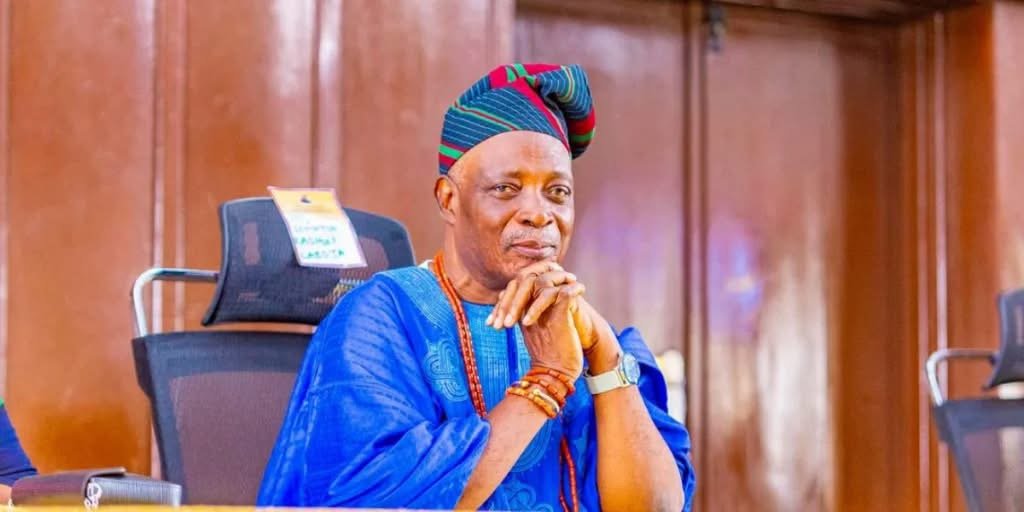
Former Osun Central senator Olusola Adeyeye has expressed confidence that President Bola Tinubu will retain the South-West in the 2027 presidential election, while warning political parties against assuming that the contest will be easy.
Adeyeye, who serves as the South-West Coordinator of the All Progressives Congress (APC) Presidential Campaign Council, made the remarks during an appearance on Channels Television’s Sunday Politics.
His comments come as political parties and candidates intensify preparations for the 2027 presidential contest. The Independent National Electoral Commission (INEC) currently lists January 16, 2027, as the scheduled date for the presidential and National Assembly elections.
Adeyeye Expresses Confidence in APC
Adeyeye said the APC was working to strengthen its position in the South-West and argued that political unity would be important to the party’s performance in the region.
He cautioned that parties should not approach the 2027 election believing that victory would come easily.
According to Adeyeye, any party that enters the election divided could face difficulties, while he maintained that he did not currently see another political party defeating the APC in parts of the South-West where the ruling party remains united.
“We in the APC, we work very hard to win,” Adeyeye said during the television programme, adding that the party intended to secure a strong performance in the region.
He also said the APC would “win big” in the South-West, describing the region as an important part of the party’s campaign strategy.
The comments represent Adeyeye’s political assessment as an APC campaign official rather than an independently established forecast of the 2027 election outcome.
South-West Remains Important to 2027 Contest
The South-West is expected to remain an important political battleground ahead of the 2027 presidential election.
The region comprises Lagos, Ogun, Oyo, Osun, Ondo and Ekiti states and has historically played a significant role in Nigerian presidential politics.
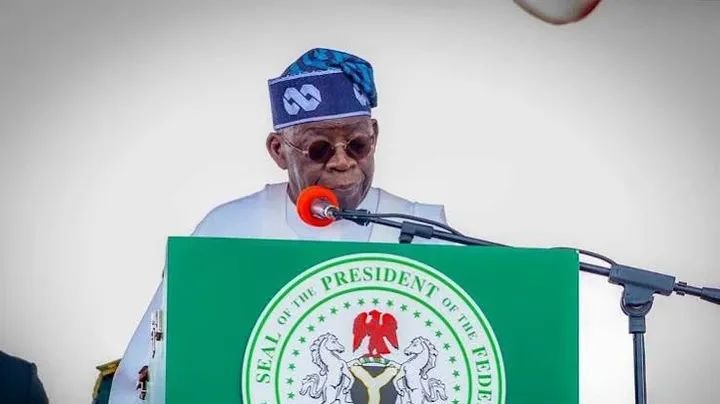
Tinubu, a former governor of Lagos State and a prominent political figure from the South-West, won the presidency in the 2023 election. His political support in the region has subsequently become an important component of discussions about the 2027 contest.
Adeyeye’s comments suggest that the APC is placing considerable emphasis on maintaining its organisational and political strength across the region.
However, the political landscape has also continued to change, with movements between political parties, new alliances and disagreements within established parties shaping preparations for the next election.
Channels Television recently reported that political structures in several parts of the country were being reorganised ahead of the 2027 contest, including movements involving politicians and campaign officials.
Adeyeye Cites Obasanjo’s 1999 Experience
In defending his argument that losing the South-West would not necessarily determine the national presidential outcome, Adeyeye referred to the 1999 election involving former President Olusegun Obasanjo.
Adeyeye argued that Obasanjo’s electoral performance in parts of the South-West did not prevent him from eventually winning the presidency.
He used that historical example while discussing a hypothetical situation in which Tinubu might perform poorly in the region, although Adeyeye simultaneously insisted that he did not expect Tinubu to lose the South-West in 2027.
The comparison was presented by Adeyeye as an argument about the distinction between regional performance and the wider requirements for winning a Nigerian presidential election.
Nigeria’s presidential election is determined by the constitutional requirements for winning nationally, meaning the performance of candidates across different parts of the country is relevant to the final outcome.
Osun Politics and the APC’s 2027 Strategy
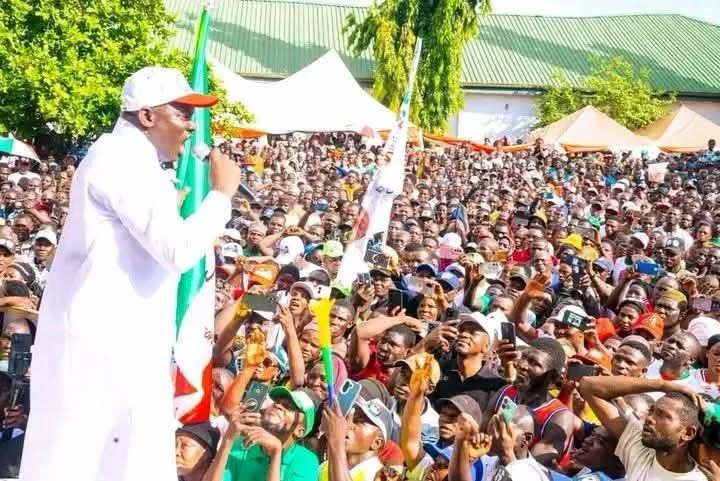
Adeyeye also discussed the political situation in Osun State, where the APC is expected to face competition from several political forces in the 2027 elections.
His comments followed the August 15, 2026 Osun governorship election, which was won by incumbent Governor Ademola Adeleke.
INEC’s election records confirm that the Osun governorship poll was held on August 15, 2026.
Channels Television reported that Adeleke secured 511,067 votes, while APC candidate Bola Oyebamiji received 444,815 votes.
The result provides recent electoral context for discussions about the strength of the major political parties in Osun ahead of the 2027 presidential and legislative elections.
Adeyeye nevertheless said the APC was targeting victory in Osun in 2027.
He questioned whether the popularity of Adeleke could automatically translate into wider support for the governor’s political platform, arguing that some of the governor’s political appeal was connected to his family background.
That assessment is Adeyeye’s political view and has not been independently established as a measurement of voter attitudes in Osun.
Aregbesola’s Political Influence
The former senator was also asked about former Osun State Governor Rauf Aregbesola and the possible influence of the African Democratic Congress (ADC) in the 2027 contest.
Aregbesola, who previously served as governor of Osun and later as Nigeria’s Minister of Interior, has remained an influential figure in Osun politics.
Adeyeye questioned the ADC’s performance in the August 2026 Osun governorship election and specifically referred to its showing in areas including Ilesa and Osun Central.
He also acknowledged Aregbesola’s personal popularity, while arguing that such popularity should not automatically be assumed to transfer to another candidate.
Adeyeye said the situation would be different if Aregbesola himself were the candidate.
His comments underline one of the central questions facing political parties ahead of 2027: whether established political figures can convert personal networks and political influence into measurable electoral support for candidates and parties.
Tinubu and Adeleke Political Relationship
The political dynamics in Osun have also attracted attention because of the relationship between President Tinubu and Governor Adeleke.
Although Tinubu is the APC presidential candidate and Adeleke belongs to a rival political camp, the two politicians have maintained a relationship that has occasionally generated political discussion.
In August, Adeleke said his support for Tinubu’s 2027 re-election bid was based on the President’s South-West identity and his desire to encourage the continuation of development projects in the region. Channels Television reported that Adeleke denied having reached an agreement with Tinubu over the matter.
That position illustrates the complexity of political alliances in the South-West, where party affiliations, regional identity, individual relationships and local political structures can intersect.
APC’s Campaign Structure
Adeyeye’s role in the APC’s campaign organisation gives his comments additional relevance to the party’s preparations.
The APC previously designated Adeyeye to coordinate its presidential campaign activities in the South-West. Punch reported that he was among the zonal directors named as part of the party’s campaign structure.
The role places him within the political organisation responsible for mobilising support for Tinubu’s re-election campaign in the region.
His latest remarks therefore provide an indication of the APC’s public messaging and expectations as the 2027 campaign develops.
What Happens Next
The 2027 presidential election is scheduled for January 16, 2027, according to INEC’s current election calendar.
Political parties will continue organising campaigns, mobilising supporters and positioning their candidates across the six geopolitical zones.
For the APC, retaining support in the South-West is expected to remain a major part of its campaign strategy, while opposition parties will seek to challenge the ruling party’s political structures and expand their own support bases.
Adeyeye’s assertion that Tinubu will not lose the South-West remains a political prediction from an APC campaign official. The actual level of support for each presidential candidate will be determined by voters when the election is held.
As the 2027 contest develops, campaign activity, candidate mobilisation, party alliances and voter sentiment across the South-West will remain significant areas of political attention.
Weng Global – Stories beyond borders
Sources
- Independent National Electoral Commission (INEC) — 2027 General Election timetable and election calendar.
- Channels Television — reporting on Olusola Adeyeye’s appearance on Sunday Politics and his comments on the 2027 election.
- Channels Television — report on the 2026 Osun governorship election results.
- Channels Television — report on Ademola Adeleke’s position regarding Tinubu’s 2027 bid.
- Punch — report on the APC’s 2027 presidential campaign structure.