Reported by Simon Daniel Yusuph l Journalist at Weng Global
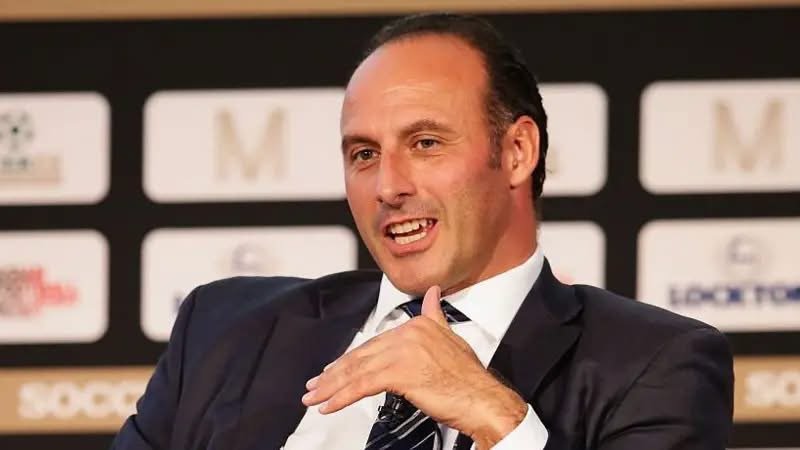
Former Tottenham Hotspur and Switzerland defender Ramon Vega has formally launched his campaign to challenge Gianni Infantino for the FIFA presidency, entering a contest that is expected to bring renewed debate over the governance, finances and direction of world football.
Vega, who has previously attempted to enter the FIFA presidential race, has announced his candidacy ahead of the election scheduled for March 18, 2027, at the 77th FIFA Congress in Rabat, Morocco. FIFA confirmed in May that Infantino would seek another term as president.
The former defender’s latest campaign is centred on calls for greater trust in FIFA, stronger governance, increased transparency and a more equitable distribution of football’s financial resources, according to reporting published on Wednesday.
Ramon Vega Enters 2027 FIFA Presidential Race
Vega has formally declared his intention to contest the FIFA presidency against Infantino, according to a report published on October 7, 2026, which said the former Switzerland international had released an 11-page manifesto outlining his campaign.
The manifesto reportedly presents Vega as a candidate seeking to reform the way world football is governed and to restore confidence in FIFA’s institutions.
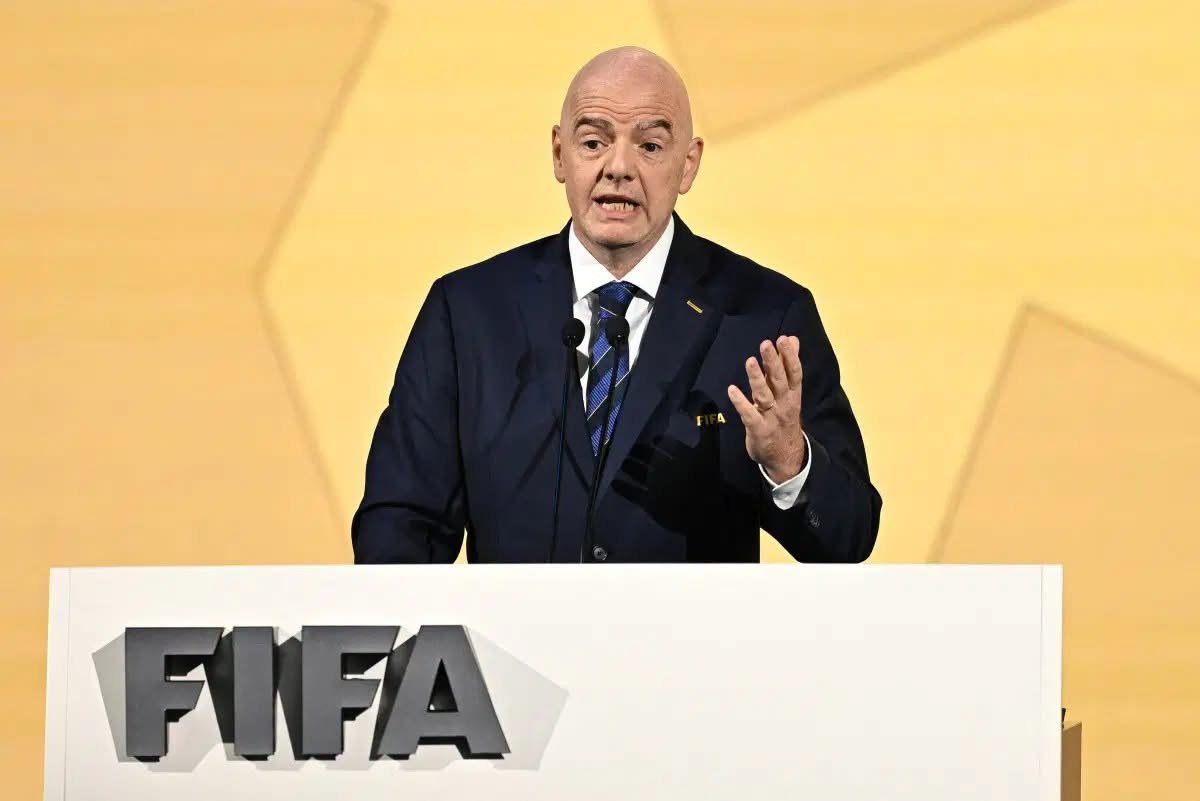
His campaign comes at a politically significant moment for the organisation. Infantino, who has led FIFA since 2016, has already announced that he will seek re-election in 2027.
The FIFA president made his intention clear during the 76th FIFA Congress in Vancouver, Canada, in May, telling delegates representing FIFA’s 211 member associations that he would be a candidate in the next presidential election.
The next election is scheduled to take place at the 77th FIFA Congress in Rabat on March 18, 2027.
Vega’s entry therefore gives the election a formally declared challenger at a time when European football officials and other stakeholders have been calling for changes to FIFA’s governance.
Who Is Ramon Vega?
Vega is a former Switzerland international who built a long professional football career in Europe.
The defender played for several clubs, including Grasshopper Club Zürich, Tottenham Hotspur, Cagliari, Celtic, Watford and Créteil. His time in England included a spell at Tottenham, while he also became part of Celtic’s successful team around the turn of the century.
He won the League Cup with Tottenham in 1999 and was part of Celtic’s domestic treble-winning side in the 2000-01 season.
Vega represented Switzerland at international level and earned 23 senior caps. After retiring from professional football, he moved into the financial sector and developed a career in asset management and investment.
That combination of football experience and financial-sector involvement has featured prominently in his previous attempts to position himself as a potential reform candidate for FIFA.
Vega Has Challenged Infantino Before
The 2027 campaign is not Vega’s first attempt to challenge Infantino.
In 2019, Vega announced his intention to stand against Infantino in the FIFA presidential election. However, he failed to secure the required nominations from at least five FIFA member associations before the deadline, leaving Infantino as the only candidate for that election. BBC Sport reported at the time that Vega had been unable to obtain enough support to enter the ballot.
Vega also sought to contest the 2023 election. Reports at the time said he had received backing from several football associations and intended to challenge Infantino.
Infantino was ultimately re-elected by acclamation at the 73rd FIFA Congress in Kigali, Rwanda, in March 2023.
His latest declaration therefore represents another attempt by the former defender to secure a place on the FIFA presidential ballot.
The difference this time is the political environment surrounding FIFA.
Infantino Seeking Another Term
Infantino remains the incumbent and has already publicly confirmed his intention to seek re-election.
At the FIFA Congress in Vancouver, he thanked the organisation’s 211 member associations and announced that he would stand in the 2027 election.
FIFA subsequently confirmed that the presidential election would be held during the 77th FIFA Congress in Rabat.
Infantino’s campaign comes after a period of increased scrutiny over FIFA’s leadership and decision-making.
In recent months, the FIFA president has faced criticism over several issues, including governance questions and a controversial proposal involving private investment in FIFA tournament assets.
The Norwegian Football Association has also filed complaints with FIFA committees concerning several matters involving the organisation’s leadership and decision-making. Reuters reported that the complaints include issues surrounding FIFA’s Peace Prize, the handling of a disciplinary matter involving United States forward Folarin Balogun during the 2026 World Cup and the abandoned FIFA Forward Enterprise project. FIFA said the matters would be discussed by the FIFA Council.
The developments have increased pressure for greater scrutiny of FIFA’s governance.
Growing Pressure for a Challenger
Vega’s candidacy comes against a wider backdrop of concern among some football authorities about the direction of FIFA under Infantino.
UEFA has been particularly vocal about the need for governance reform.
Reuters reported in September that UEFA was working to identify a credible challenger to Infantino ahead of the 2027 election. UEFA vice-president Laura McAllister said the candidate did not necessarily have to come from Europe but would need to unite football’s confederations around a platform focused on accountability, transparency and modern leadership.
That search for an alternative candidate had become an important part of the political landscape surrounding the election.
Vega’s announcement could therefore alter the dynamics of the contest, although declaring a candidacy is only one stage of the electoral process.
A candidate still needs to meet FIFA’s eligibility and nomination requirements before becoming an official contender in the presidential vote.
What Vega Is Promising
The central theme of Vega’s campaign is reform.
According to the October 7 report on his manifesto, Vega is presenting himself as a candidate who wants to restore trust in FIFA and strengthen its governance structures.
His proposals reportedly include greater protection for the independence of member associations, more transparent decision-making and a governance model that gives greater consideration to fans and players.
He has also highlighted the distribution of football’s financial resources as an important issue.
The argument places Vega’s candidacy within a broader debate over how the enormous commercial value generated by international football should be distributed across the sport.
FIFA’s revenues have increased significantly under the modern commercial model, while the organisation has expanded its global competitions and development programmes.
The question of how resources should reach national associations, grassroots football, players and other parts of the football ecosystem is therefore likely to remain an important issue during the election campaign.
Vega’s background in finance could also give him an opportunity to present himself as a candidate with an understanding of both the football and commercial sides of the sport.
FIFA’s Financial Power and Governance Debate
The FIFA presidency is one of the most influential positions in global sport.
The organisation oversees international football competitions, distributes development funding to member associations and controls some of the world’s most valuable sporting events, including the FIFA World Cup.
FIFA has 211 member associations, meaning that a successful presidential candidate needs to build support across a highly diverse international football community.
The electoral contest is consequently not simply a European political battle.
Africa, Asia, South America, North and Central America and the Caribbean, Oceania and Europe all have member associations whose votes will contribute to the final outcome.
This gives football politics outside Europe significant importance.
Infantino has worked extensively to expand FIFA’s relationships across different regions and has frequently emphasised the organisation’s investment in football development.
FIFA said in 2026 that it had invested billions of dollars in football development through its Forward programme.
For challengers such as Vega, the question will be whether they can persuade enough member associations that a change in leadership would provide greater transparency, stronger accountability and better long-term management of the sport.
African Football Could Be Important
Africa is likely to be an important constituency in the 2027 FIFA presidential election.
The continent has 54 FIFA member associations and therefore represents one of the largest voting blocs in the organisation.
Any candidate seeking the presidency will need to build relationships with African football associations and demonstrate how proposed reforms would affect football development on the continent.
For African football, issues such as infrastructure, youth development, women’s football, grassroots investment, national-team competitions, player development and financial support are likely to remain central concerns.
FIFA’s development programmes have provided significant financial support to football associations across Africa, meaning that any proposed changes to FIFA’s financial structure will be closely watched.
At the same time, African football authorities will have to weigh development funding against broader questions about governance, representation and decision-making within FIFA.
Vega’s challenge could therefore become relevant beyond the personalities of Vega and Infantino if it develops into a wider debate about how football’s global governing structure should operate.
Infantino Faces a Different Election Environment
Infantino has considerable advantages as the incumbent.
He has spent more than a decade at the centre of FIFA leadership, first becoming president in 2016 and later winning re-election in 2019 and 2023.
He also has established relationships with member associations around the world.
However, the political environment surrounding the 2027 election is more contested than the previous presidential contests.
In 2023, Infantino was re-elected without opposition. The next election is already attracting greater scrutiny.
Reuters reported that the Union of Arab Football Associations, representing 22 national football federations, expressed support for Infantino earlier in October. At the same time, the Swiss Football Association had withdrawn its support, while UEFA was seeking a credible challenger.
That combination suggests that Infantino continues to command substantial international support but is also facing organised criticism from sections of the football establishment.
What Happens Next?
The next major stage will be the formal electoral process leading to the March 2027 FIFA Congress.
Candidates challenging Infantino will need to satisfy FIFA’s nomination and eligibility requirements before the vote.
According to recent reporting on the election process, candidates have until November 18, 2026, to declare their candidacy. The election itself is scheduled for March 18, 2027, in Rabat.
Vega’s formal declaration therefore comes at a critical point in the calendar.
His ability to translate his manifesto into support from FIFA member associations will determine whether his candidacy develops into a serious challenge to Infantino.
The election could also attract additional candidates. UEFA has indicated that it wants to identify a credible alternative, meaning the field may not necessarily be limited to Vega and Infantino.
For now, Vega’s declaration establishes him as one of the most visible challengers to the incumbent.
Why the Election Matters
The FIFA presidency affects more than the administration of international competitions.
The president has influence over football development programmes, global tournament strategy, relationships with national associations, commercial policy and the broader direction of the world’s most popular sport.
A competitive election can therefore provide FIFA member associations with an opportunity to debate how the organisation should be governed and how its resources should be distributed.
For Vega, the challenge will be turning criticism of the existing system into a convincing alternative.
For Infantino, the task will be demonstrating that his leadership continues to command sufficient confidence across FIFA’s global membership despite the controversies and opposition surrounding his administration.
The 2027 contest is consequently shaping up as a test not only of personalities but also of competing visions for the future of global football.
For African and other developing football nations, the most important question will be whether the election produces policies that strengthen long-term football development, improve institutional accountability and ensure that the financial benefits of the global game reach a wider part of the football community.
Weng Global – stories beyond borders
Sources
- FIFA
- Reuters
- BBC Sport
- Al Jazeera
- SportsCatch
- The Guardian