Reported by Simon Daniel Yusuph l Journalist at Weng Global
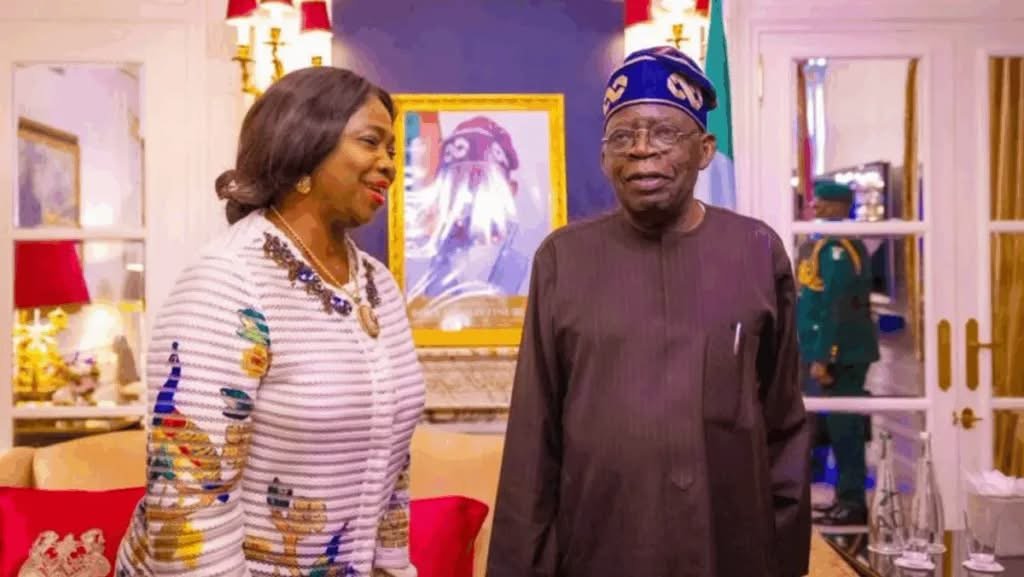
President Bola Ahmed Tinubu has congratulated the Chairman and Chief Executive Officer of the Nigerians in Diaspora Commission (NiDCOM), Abike Dabiri-Erewa, on her birthday, commending her longstanding contributions to public service, journalism, legislative work and the welfare of Nigerians living at home and abroad.
In a congratulatory message released by the State House on Sunday, October 11, 2026, Tinubu described Dabiri-Erewa as a devoted public servant whose career has focused on national development, social justice and strengthening the relationship between Nigeria and its citizens in the diaspora.
The president also praised her efforts to encourage Nigerians living overseas to contribute their knowledge, expertise and resources to the country’s development, particularly in education, healthcare and sports.
The message, signed by Bayo Onanuga, Special Adviser to the President on Information and Strategy, highlighted Dabiri-Erewa’s professional journey from broadcasting to the National Assembly and her current leadership of NiDCOM.
Tinubu Praises Dabiri-Erewa’s Commitment to Public Service
Tinubu’s birthday message focused on Dabiri-Erewa’s years of service across journalism, legislative responsibilities and public administration.
According to the State House statement, the president described her as a committed public servant and party faithful who has demonstrated concern for the welfare of Nigerians, particularly underprivileged members of society.
He commended her dedication, diligence and foresight, noting that these qualities had informed her work in different professional capacities.
Tinubu also highlighted her efforts to pursue social justice for Nigerians both within the country and overseas, an area closely connected to NiDCOM’s responsibilities.
The commission works on matters affecting Nigerians abroad, including diaspora engagement, welfare concerns and initiatives intended to strengthen the contribution of overseas Nigerians to national development.
The president’s message acknowledged the importance of these responsibilities, particularly as millions of Nigerians live, work, study and conduct business outside the country.
Although the birthday message was primarily a tribute to Dabiri-Erewa, it also drew attention to the broader significance of diaspora engagement in Nigeria’s development priorities.
From Broadcasting to Legislative Service
Dabiri-Erewa began her professional career as a broadcaster with the Nigerian Television Authority (NTA), according to the State House.
Her experience in journalism preceded her entry into elective politics, where she represented Ikorodu Constituency in Lagos State in the House of Representatives.
She was elected to the House in 2003 and subsequently served through the 2007 and 2011 election cycles, remaining in the legislature until 2015.
During her time in the National Assembly, she held responsibilities that included chairing the House Committee on Media and Publicity and the House Committee on Diaspora Affairs.
These positions placed her at the intersection of legislative communication, public accountability and issues affecting Nigerians living outside the country.
Her work on diaspora affairs was particularly relevant to the development of institutional mechanisms for engaging Nigerians abroad and addressing concerns involving citizens in foreign countries.
The experience she gained in broadcasting and legislative service later became part of her professional background in public administration.
Tinubu referred to these different stages of her career in his birthday message, highlighting the contribution she has made through journalism, lawmaking and leadership of NiDCOM.
Her career illustrates how professional experience in media and legislative institutions can intersect with the administration of public agencies responsible for specific national priorities.
However, the practical impact of any public office ultimately depends on the policies implemented, the services delivered and the extent to which citizens benefit from the institution’s work.
Leading the Nigerians in Diaspora Commission
Dabiri-Erewa currently serves as Chairman and Chief Executive Officer of the Nigerians in Diaspora Commission, commonly known as NiDCOM.
The commission is responsible for coordinating engagement with Nigerians living abroad and promoting their participation in the country’s social and economic development.
Nigeria’s diaspora population represents an important source of international expertise, professional networks, investment and financial support for families and communities at home.
Nigerians living overseas also contribute to the country’s international profile through their work in healthcare, education, technology, business, sports and other sectors.
NiDCOM’s role includes encouraging these connections while engaging with concerns affecting Nigerian citizens abroad.
Such concerns can range from access to assistance in difficult circumstances to cooperation with foreign authorities and efforts to maintain constructive relationships between Nigerians overseas and institutions at home.
The commission also promotes opportunities for diaspora professionals and entrepreneurs to contribute to Nigeria’s development through investment, knowledge-sharing and other forms of engagement.
In his birthday message, Tinubu specifically praised Dabiri-Erewa’s efforts to attract diaspora talent to Nigeria, identifying education, healthcare and sports as areas where overseas expertise could support national progress.
The president’s remarks reflect the administration’s interest in encouraging Nigerians abroad to contribute more directly to development initiatives.
Nevertheless, attracting expertise is only one aspect of diaspora engagement. The long-term benefits also depend on effective coordination, institutional capacity, opportunities for collaboration and the ability to turn international connections into practical outcomes.
Tinubu Highlights Contributions to Education, Healthcare and Sports
A central element of Tinubu’s congratulatory message was his recognition of Dabiri-Erewa’s efforts to encourage Nigerians abroad to support development at home.
The president identified education, healthcare and sports as sectors where diaspora talent could make a meaningful contribution.
In education, Nigerians living overseas may contribute through academic partnerships, research collaboration, mentoring, professional training and the exchange of specialised knowledge.
Such engagement can help Nigerian institutions build connections with international universities, research centres and professional organisations.
Healthcare is another important area. Nigerian medical professionals working abroad possess experience that can support training, research, specialist services and collaboration with institutions in the country.
Diaspora participation does not necessarily require every professional to relocate permanently to Nigeria. Depending on the circumstances, expertise can also be shared through temporary visits, remote collaboration, institutional partnerships and structured professional programmes.
In sports, Nigerians abroad can contribute through coaching, technical development, talent identification, sports science, investment and international professional networks.
These possibilities help explain why governments and development institutions increasingly view diaspora communities as potential partners rather than only as sources of remittances.
However, successful engagement requires clear objectives and programmes that produce measurable benefits.
The availability of skilled Nigerians overseas does not automatically translate into improved public services. Institutions must be able to identify relevant expertise, establish partnerships and ensure that contributions support practical needs.
Tinubu’s commendation placed Dabiri-Erewa’s work within this wider national objective of connecting Nigerians abroad with development opportunities at home.
Diaspora Engagement and Nigeria’s Development Priorities
Nigeria’s relationship with its diaspora has significant economic and social implications.
Nigerians living abroad maintain connections with their families and communities, contribute financially to households and participate in professional and business networks that extend across national borders.
These connections can support education, healthcare, housing, entrepreneurship and other activities within Nigeria.
Beyond financial contributions, diaspora communities can also help facilitate trade, investment, technology transfer and access to international markets.
Professionals working overseas may provide valuable knowledge about new technologies, management practices, research methods and international standards.
For a country seeking to expand its economic opportunities and strengthen public institutions, these connections can represent an important resource.
However, the benefits are not automatic. They depend on whether the country can create an environment in which diaspora participation is practical, transparent and worthwhile.
Issues such as institutional coordination, investment confidence, administrative processes and access to reliable information can influence the willingness of Nigerians abroad to participate in development projects.
Diaspora engagement also involves responsibilities towards citizens who encounter difficulties overseas. Effective coordination and appropriate support mechanisms are important to maintaining confidence between citizens and their home country.
NiDCOM operates within this broader environment, making its leadership relevant to both the welfare of Nigerians abroad and the country’s efforts to benefit from international professional networks.
Tinubu’s birthday message recognised this connection by highlighting Dabiri-Erewa’s work in attracting diaspora talent and pursuing social justice for Nigerians at home and abroad.
Recognition of Her Work and Public Service
Tinubu also acknowledged the awards and recognition Dabiri-Erewa has received over the years, describing them as deserved in light of her contributions.
The president’s message presented her career as one spanning several areas of public responsibility, including journalism, lawmaking and the leadership of a federal commission.
His remarks placed particular emphasis on her concern for underprivileged Nigerians and her efforts to promote the country’s interests through diaspora engagement.
Birthday messages from public officials are often occasions for recognising an individual’s professional journey and contributions to national life.
In this instance, the statement also served to highlight the responsibilities associated with NiDCOM and the importance the administration places on engaging Nigerians abroad.
The message did not announce a new government policy, funding commitment or change in the commission’s mandate. It was primarily a congratulatory statement recognising Dabiri-Erewa’s service.
That distinction is important in assessing the announcement. While the president’s praise signals recognition of her work, the statement itself does not provide performance figures or independently assess the outcomes of specific NiDCOM programmes.
Evaluating the commission’s impact would require additional evidence, including programme results, documented interventions, partnerships and measurable outcomes for Nigerians at home and abroad.
Why the Birthday Message Matters
The significance of Tinubu’s message extends beyond the personal celebration of a public official.
It draws attention to the role diaspora engagement plays in Nigeria’s development and the responsibilities of institutions established to maintain connections with citizens overseas.
Nigeria’s global population offers opportunities for collaboration in professional training, research, entrepreneurship, healthcare, education and other fields.
Making effective use of these opportunities requires sustained engagement between government institutions, diaspora organisations, private businesses and individual professionals.
It also requires attention to the concerns of Nigerians living abroad, including their ability to access appropriate assistance and maintain meaningful connections with their country.
For ordinary Nigerians, effective diaspora engagement could help create opportunities for knowledge-sharing, investment, skills development and stronger international partnerships.
For the government, it presents an opportunity to connect national development priorities with expertise and networks that already exist across the world.
The challenge is to ensure that public statements recognising these opportunities are matched by practical programmes and measurable results.
Tinubu’s commendation of Dabiri-Erewa therefore highlights an important policy area, even though the birthday announcement itself does not introduce new measures.
What Happens Next?
The State House announcement did not outline new initiatives or specific deadlines for NiDCOM following Dabiri-Erewa’s birthday.
The commission’s continuing responsibilities include engagement with Nigerians abroad and efforts to encourage their contributions to national development.
Future assessments of its work will depend on the programmes it implements, the partnerships it establishes and the results achieved for Nigerians both overseas and at home.
Education, healthcare and sports remain among the areas highlighted by Tinubu as potential beneficiaries of diaspora expertise.
For these opportunities to deliver lasting value, effective coordination and clearly defined objectives will be important.
The president’s message also places renewed attention on the need to recognise diaspora communities as potential partners in Nigeria’s development, while ensuring that their welfare and concerns remain part of the country’s engagement with citizens overseas.
For Dabiri-Erewa, the birthday tribute represents presidential recognition of her career across broadcasting, legislative service and public administration.
For Nigeria, the broader issue is how institutions such as NiDCOM can continue to turn the skills, networks and experience of Nigerians around the world into tangible benefits for the country.
Weng Global – stories beyond borders
Sources
- The State House, Abuja — Official presidential congratulatory message published on October 11, 2026.
- Nigerians in Diaspora Commission (NiDCOM) — Official information on the commission’s mandate and activities.
- Voice of Nigeria — Reporting on President Tinubu’s birthday message to Abike Dabiri-Erewa.