Reported by Simon Daniel Yusuph l Journalist at Weng Global
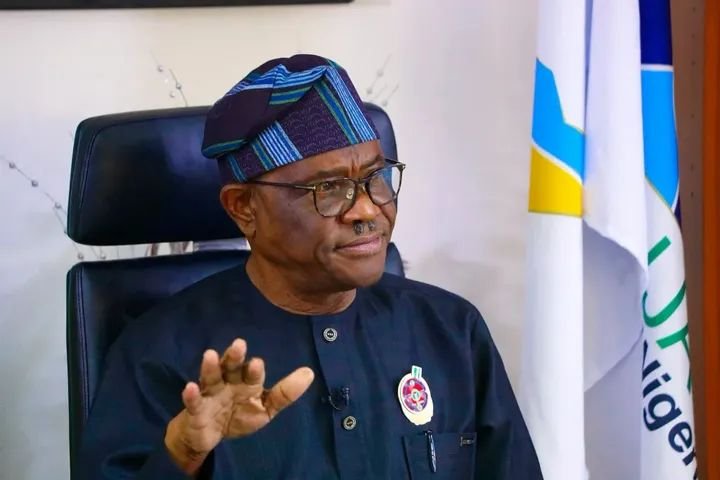
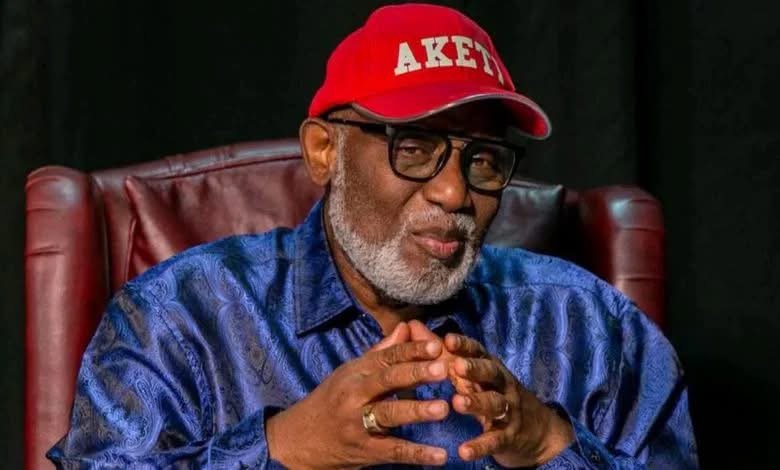
Ondo State Governor Lucky Aiyedatiwa has said the late former governor Oluwarotimi Akeredolu’s long-standing advocacy for state police has moved from a regional security campaign into the centre of Nigeria’s national policy and constitutional debate.
Aiyedatiwa made the remarks on Thursday, October 8, 2026, at a posthumous 70th birthday colloquium held in honour of Akeredolu at the International Conference Centre of the University of Ibadan, Oyo State.
The event, organised around the theme “Fundamentals and Governance of State Policing: Towards a New Architecture for National Security in Nigeria,” brought together governors, former governors, lawmakers, security officials, traditional rulers, academics, civil society representatives, members of Akeredolu’s family and other stakeholders.
The discussion comes at a significant stage in Nigeria’s attempt to amend its Constitution to permit the establishment of state police. The proposed reform has progressed beyond years of political discussion and is now before state Houses of Assembly as part of the constitutional amendment process.
Akeredolu’s Advocacy Gains National Attention
Aiyedatiwa, who served as Akeredolu’s deputy governor before succeeding him, said the late governor’s position on decentralised policing had become increasingly relevant to the country’s security challenges.
He recalled Akeredolu’s role in pushing for a security arrangement that would give communities and subnational authorities greater capacity to respond to threats affecting their areas.
According to Aiyedatiwa, the creation of the Western Nigeria Security Network, popularly known as Amotekun, represented an important practical expression of Akeredolu’s belief that local communities should have a meaningful role in protecting themselves.
“The establishment of the Southwest Security Network, the Amotekun Corps, represented a bold assertion that those closest to the people must have a meaningful role in protecting them,” Aiyedatiwa said at the colloquium.
The governor said what Akeredolu and other advocates had previously presented as a necessary response to Nigeria’s federal structure had now become part of the country’s wider constitutional conversation.
“What Akeredolu and other progressive voices once advanced as a necessary response to the realities of our federal structure has now entered the very centre of Nigeria’s national policy and constitutional conversation,” he said.
Aiyedatiwa also stressed that the establishment of state police must go beyond creating additional security formations. He said the system would need safeguards capable of ensuring professionalism, accountability and respect for citizens’ rights.
Among the issues he identified were credible recruitment and vetting, professional training, sustainable funding, effective oversight, clearly defined areas of responsibility, respect for human rights and safeguards against abuse.
From Amotekun to a National Security Reform
Akeredolu, who died in December 2023, was one of the most prominent political and legal advocates of decentralised policing in Nigeria.
As chairman of the Southwest Governors’ Forum, he played a leading role in the establishment of Amotekun in 2020, following widespread security concerns across the region.
The initiative was developed against a background of kidnapping, attacks on farmers, banditry and insecurity along roads and rural communities.
The debate around Amotekun was initially controversial, with questions raised about its legal status, relationship with the Nigeria Police Force and the authority of state governments to establish security structures.
However, the initiative eventually became an established component of the Southwest’s security architecture.
The significance of Akeredolu’s position has grown as Nigeria’s national debate has shifted towards a constitutional framework for state policing.
The Development Agenda for Western Nigeria Commission, DAWN, and the Oluwarotimi Akeredolu Foundation said ahead of the colloquium that the national conversation had moved beyond the question of whether state police should exist to the more difficult question of how such a system should operate.
That distinction is important because creating state police would involve more than transferring policing responsibilities from federal authorities to state governments. It would require decisions on recruitment, training, financing, command structures, operational jurisdiction, disciplinary mechanisms, oversight and citizens’ rights.
Abiodun: State Police Needs More Than Security Funding
Ogun State Governor Dapo Abiodun, who delivered the keynote address at the colloquium, said Nigeria would require an additional 554,353 personnel to adequately staff the proposed state police system.
Abiodun also called for the establishment of a dedicated State Police Take-Off Fund to prevent differences in the financial capacity of states from undermining the reform.
He argued that security should be considered not only from the perspective of protecting lives and property but also in relation to economic development.
“National security today is not just physical protection, it is economic security, food security, health security, financial security and freedom of worship. None survives in lawlessness,” Abiodun said.
He linked security to investment, agriculture and infrastructure, arguing that businesses are less likely to invest where security conditions remain fragile and farmers cannot safely access their farms.
“We cannot build a $1 trillion economy on fragile security,” he said.
Abiodun described state policing as an economic issue as well as a security issue, arguing that safer communities could support stronger commercial activity and investment.
He also credited Akeredolu with helping to move the state police debate from theory to practical regional action through Amotekun.
According to the governor, Akeredolu’s position was rooted in the belief that state governors should have meaningful operational capacity to protect their communities.
“The greatest tribute is not to praise his past, but to complete his unfinished work,” Abiodun said.
DAWN Says the Debate Is Now About Implementation
The Director-General of DAWN Commission, Dr Seye Oyeleye, said the central question confronting Nigeria was no longer simply whether state police should be established.
Instead, he said, attention must now focus on how the proposed system would work.
“The debate on state policing is no longer about whether. It is about how. How do we fund it? How do we train and equip it? How do we guard against abuse? How do we keep it accountable to the people, not to politicians?” Oyeleye said.
His position reflects one of the most important concerns surrounding state police: the possibility of political interference.
Supporters argue that state-controlled police could respond more quickly to local threats and make better use of community intelligence. Critics, however, have repeatedly warned that placing policing structures under state political authorities could create opportunities for abuse, particularly during elections or periods of political tension.
That concern has also featured prominently in recent national discussions.
At a House of Representatives Press Corps lecture in Abuja on October 6, 2026, the corps’ chairman, Gbeyega Onadiran, called for strong safeguards to prevent state police from becoming political instruments controlled by governors. He said the proposed structure should guarantee professionalism, accountability and independence.
The concern underscores why the debate has moved beyond the simple question of supporting or opposing state police.
The effectiveness of the reform will depend heavily on the institutional safeguards built into the constitutional and legal framework.
Nigeria’s Constitutional Process Is Underway
The push for state police is no longer confined to political speeches or policy proposals.
In June, the Presidency said significant progress had been made towards establishing state police, with constitutional amendments being developed following consultations involving the Executive, National Assembly and security authorities.
Chief of Staff to President Bola Tinubu, Femi Gbajabiamila, said the process required careful consideration of constitutional and legal questions and could not be implemented hastily.
The National Assembly subsequently advanced the constitutional amendment process.
According to the National Assembly’s explanation of the constitutional alteration procedure, an amendment requires approval by at least two-thirds of both chambers of the National Assembly before being transmitted to the 36 state Houses of Assembly. It then requires approval by at least 24 of the 36 states.
That means the creation of state police cannot become a reality simply because the federal government or a majority of governors supports it.
It requires a constitutionally prescribed process involving both the National Assembly and state legislatures.
The latest reported figures show that the process is still ongoing.
The Secretary of the Presidential Working Group on the National Policing Bill, Nnadubem Moghalu, said on October 6 that four states — Edo, Oyo, Osun and Rivers — had approved the constitutional amendment bill transmitted to the state Houses of Assembly.
With 24 state approvals required, the reform therefore still has a substantial legislative process ahead.
Akeredolu’s Legacy Extends Beyond Amotekun
Aiyedatiwa also used the occasion to reflect on Akeredolu’s broader public career.
He described his predecessor as a lawyer, Senior Advocate of Nigeria, former President of the Nigerian Bar Association, two-term governor of Ondo State and former chairman of the Southwest Governors’ Forum.
Akeredolu’s advocacy for state police was closely connected to his wider argument that Nigeria’s security architecture should recognise the country’s federal structure and diverse security challenges.
The late governor frequently argued that a centralised police system could struggle to respond adequately to the specific realities of communities spread across a country as large and diverse as Nigeria.
The Amotekun experiment became an important part of that argument.
While Amotekun is not equivalent to a constitutionally established state police service, its existence provided an example of how subnational security structures could operate alongside federal agencies.
The current constitutional debate is now considering whether Nigeria should move beyond such complementary security arrangements and formally create state-controlled police institutions.
The Major Challenge Will Be Accountability
The strongest argument in favour of state police is the possibility of bringing policing closer to the people.
Local officers could potentially possess better knowledge of communities, local languages, criminal networks, geography and patterns of insecurity.
Supporters also argue that decentralisation could improve intelligence gathering and reduce the operational burden on the Nigeria Police Force.
But those potential advantages come with significant risks.
A state police system could be vulnerable to political influence if recruitment, deployment, promotions and disciplinary procedures are controlled entirely by political authorities.
The risk becomes especially important during elections, when security agencies are expected to operate impartially and protect citizens regardless of political affiliation.
For that reason, the safeguards identified by Aiyedatiwa and other participants — including professional recruitment, training, oversight and clearly defined jurisdiction — are central to the debate.
The question is not simply whether states should have police forces. It is also about who should supervise them, who should investigate misconduct, how officers should be disciplined and how citizens can seek redress when their rights are violated.
What Akeredolu’s Advocates Want Next
The DAWN Commission and the Akeredolu Foundation have said they intend to keep the late governor’s advocacy alive through policy discussions rather than treating the 70th birthday commemoration as a conventional memorial.
The October 8 colloquium was deliberately designed to examine the practical fundamentals of state policing, including funding, training, equipment, governance and accountability.
That approach reflects the stage the national debate has now reached.
Nigeria is no longer discussing state police solely as an idea. The constitutional amendment process has reached the state assemblies, while governments and stakeholders are already debating how a decentralised policing system could be funded and managed.
For Aiyedatiwa, that development represents the continuation of an argument his predecessor pursued during his lifetime.
For Nigeria, however, the ultimate test will be whether the proposed system can improve public safety without weakening constitutional safeguards, democratic accountability or citizens’ rights.
Akeredolu’s advocacy may therefore become part of the history of how Nigeria arrived at the state police debate. But whether that advocacy ultimately produces an effective national policing reform will depend on the decisions now being made by lawmakers, state governments, security institutions and other stakeholders.
The next stage is the constitutional process across the state Houses of Assembly, followed by the institutional and legislative work required to establish the operational framework of state police if the amendment secures the necessary approvals.
The central challenge will be to build a system that brings policing closer to communities while ensuring that security institutions remain professional, accountable and protected from political abuse.
Weng Global – stories beyond borders
Sources
- Ondo State Government
- State House, Abuja
- National Assembly of Nigeria
- Vanguard
- The Guardian Nigeria
- Premium Times
- Development Agenda for Western Nigeria Commission
- Oluwarotimi Akeredolu Foundation