Reported by Simon Daniel Yusuph l Journalist at Weng Global
Ghana has approved plans to formally apply for membership of BRICS, Foreign Affairs Minister Samuel Okudzeto Ablakwa announced in Accra on Tuesday, October 6, 2026, saying the move is intended to diversify the country’s international partnerships, expand economic opportunities and strengthen cooperation with countries of the Global South.
The decision was disclosed during a joint briefing with India’s External Affairs Minister, Dr Subrahmanyam Jaishankar, who was visiting Ghana.
Ablakwa said Ghana would now begin the formal application process and seek the support of existing BRICS members, particularly India, which Accra regards as an important strategic and economic partner.
Ghana’s announcement does not mean the country has already become a BRICS member. The formal application and subsequent consideration by existing members must still take place.
Main Development
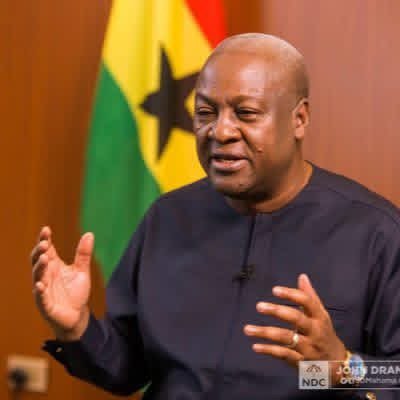
The Ghanaian government’s decision follows Cabinet approval under President John Dramani Mahama’s administration.
Ablakwa said the government sees BRICS membership as part of a broader effort to provide Ghana with additional economic and diplomatic options while maintaining its existing relationships with traditional development partners.
The minister said the proposed membership is connected to the government’s wider economic strategy, which seeks to move Ghana from economic stabilisation towards what the administration describes as transformative growth.
According to the Ghana News Agency, Ablakwa said Ghana wants to diversify international cooperation in ways that can attract investment, create jobs, support industrialisation and allow the country to capture greater value from its natural resources.
He also stressed that joining BRICS would not mean Ghana was abandoning its established relationships with institutions such as the International Monetary Fund and World Bank.
Ghana is a member of both institutions and also participates in African multilateral financial institutions.
Instead, the government says BRICS would provide another avenue for cooperation and give Ghana more choices in pursuing its development objectives.
Ghana Seeks India’s Support
India has emerged as a key partner in Ghana’s proposed BRICS application.
Ablakwa said Ghana had already approached India for assistance with the application process and was encouraged by the response from Jaishankar, who was in Accra for an official visit.
Jaishankar acknowledged Ghana’s interest and said India understood why the country was attracted to the BRICS platform.
He also indicated that India was supportive of Ghana’s aspirations, while making clear that membership would ultimately require consideration by the wider BRICS grouping.
The Ghana News Agency reported that Jaishankar described BRICS as a grouping of countries with diverse geographical backgrounds that value independent thinking and greater freedom of choice. He said Ghana’s interest was therefore understandable but stressed that the matter would require collective consideration by the bloc.
That distinction is important because Ghana’s Cabinet approval represents a decision to pursue membership, not an approval of Ghana’s admission into BRICS.
What Is BRICS?
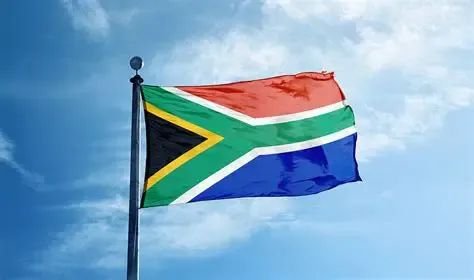
BRICS began as BRIC, a grouping involving Brazil, Russia, India and China. South Africa later joined, transforming the acronym into BRICS.
The grouping subsequently expanded significantly.
According to the official BRICS platform, the bloc currently has 11 full members: Brazil, China, Egypt, Ethiopia, India, Indonesia, Iran, Russia, Saudi Arabia, South Africa and the United Arab Emirates.
Indonesia formally became a full member in January 2025.
BRICS operates as a political and diplomatic coordination forum for countries of the Global South and focuses on cooperation across areas including politics and security, economics and finance, and people-to-people relations. The grouping does not have a constitutive treaty, its own budget or a permanent secretariat.
The bloc has also created a separate partner-country category.
As of the latest official BRICS information, partner countries include Belarus, Bolivia, Cuba, Kazakhstan, Malaysia, Nigeria, Thailand, Uganda, Uzbekistan and Vietnam.
Ghana Would Join an Expanding Global South Platform
Ghana’s proposed application comes at a time when BRICS has become a larger platform for countries seeking greater cooperation outside traditional Western-led institutions.
The bloc’s expansion has increased its geographic and economic reach.
Its full members include major economies from Asia, Africa, the Middle East, Europe and Latin America. The partner-country system has also brought additional developing countries into the group’s activities without giving them full membership status.
The official BRICS framework states that partner countries may be invited to participate in summits and foreign ministers’ meetings and can participate in other discussions subject to consultation and consensus among members.
For Ghana, moving from an application to full membership would therefore represent a significant diplomatic step.
It would also place Ghana alongside African countries already involved in the BRICS framework, including South Africa and Egypt as full members, and Nigeria and Uganda as partner countries.
Economic Opportunities Behind Ghana’s Decision
The Mahama administration is presenting the proposed BRICS membership primarily as an economic and strategic opportunity.
Ablakwa said Ghana wants partnerships capable of supporting job creation, industrialisation, investment and greater value addition to the country’s natural resources.
That emphasis is significant for an economy where commodities and natural resources remain important to exports and government revenue.
The government has argued that Ghana should move beyond exporting raw materials and develop greater domestic capacity to process and add value to its resources.
BRICS could potentially provide another platform through which Ghana seeks investment, technology, trade opportunities and industrial partnerships.
However, membership itself would not automatically deliver those benefits.
The extent to which Ghana could gain economically would depend on the agreements, investments and commercial relationships developed through its participation.
The quality of Ghana’s domestic policies, infrastructure, industrial capacity and ability to negotiate beneficial partnerships would also remain important.
Ghana and India’s Growing Economic Relationship
India is central to Ghana’s calculations.
Ablakwa identified India, Brazil and China as important economic partners and highlighted the growth of Ghana-India trade.
The minister said trade between Ghana and India had risen from about $3 billion in 2024 to approximately $7 billion, according to figures cited by the Ghana News Agency.
The two countries are also pursuing cooperation in sectors including agriculture, science and technology, pharmaceuticals, railways, defence, mining and digital technology.
Citi Newsroom reported that Ghana and India had signed memoranda of understanding covering agriculture and science and technology during Jaishankar’s visit.
Those existing relationships could provide Ghana with an important diplomatic foundation as it seeks support for its BRICS application.
Resource Sovereignty and Industrialisation
A central argument behind the Ghanaian government’s decision is what Ablakwa described as resource sovereignty.
The government wants Ghana to have greater control over how its natural resources are exploited and how much value is retained domestically.
That approach links the BRICS application to a broader debate among developing countries about the structure of global trade.
Many African economies export commodities and import finished products, leaving them exposed to fluctuations in international commodity prices while limiting the amount of value created locally.
Ghana’s government says it wants to change that pattern by strengthening domestic processing and industrial production.
Ablakwa said the country wanted partners that could support value addition rather than simply continue a system in which Ghana exports raw materials.
The policy ambition is therefore broader than BRICS membership itself.
The government is seeking international relationships that it believes can support industrial transformation while giving Ghana more room to determine its economic priorities.
Traditional Partners Will Remain
Ghana has also sought to make clear that its BRICS ambition does not represent a break with Western institutions or established development partners.
Ablakwa said Ghana would maintain its existing relationships while developing new partnerships.
That position could become important as Ghana balances multiple diplomatic and economic interests.
The country has long maintained relationships with the United States, European countries, international financial institutions and other development partners.
Joining BRICS would add another layer to Ghana’s foreign economic policy rather than necessarily replacing its existing alliances.
The government’s argument is that maintaining multiple relationships can give Ghana greater flexibility when negotiating trade, investment, development financing and technology partnerships.
Reactions
India has expressed support for Ghana’s aspirations while noting that the decision on membership rests with the BRICS members collectively.
Jaishankar’s position provides Ghana with an important diplomatic opening because India is one of the original BRICS members and remains one of the bloc’s major economies.
The Ghanaian government, meanwhile, views the proposed membership as consistent with its foreign-policy objective of strengthening South-South cooperation.
The decision also fits into a wider Ghanaian emphasis on economic diversification and stronger engagement with emerging economies.
There has been no indication that Ghana intends to withdraw from the IMF, World Bank or other established international partnerships as a consequence of the BRICS application.
Instead, officials have framed the decision as an effort to create additional choices.
Why It Matters for Africa
Ghana’s proposed BRICS application could have wider implications for Africa’s engagement with the changing global economic order.
African countries have increasingly sought stronger bargaining power in international institutions and greater access to investment, technology and markets.
The continent is also attempting to strengthen intra-African trade through the African Continental Free Trade Area while maintaining commercial relationships with major economies outside Africa.
Ghana is already an important diplomatic actor in West Africa and has historically played a prominent role in Pan-African affairs.
Its decision to seek BRICS membership could therefore contribute to broader African discussions about how the continent should engage with emerging economic powers.
The move may also draw attention to the different approaches African countries are taking towards BRICS.
South Africa and Egypt are full members, while Nigeria and Uganda participate as partner countries. Ghana is now seeking a full membership pathway.
Nigeria’s experience is particularly relevant for Ghana because Abuja formally accepted BRICS partner-country status in January 2025, with its government citing opportunities for trade, investment, energy security, infrastructure and technology cooperation.
Potential Benefits and Challenges
If Ghana eventually becomes a full BRICS member, the country could gain a broader platform for diplomatic engagement with major emerging economies.
Potential areas of benefit could include trade, investment, industrial cooperation, infrastructure, technology, agriculture and financial cooperation.
However, expectations would need to be carefully managed.
BRICS membership is not a guarantee of foreign investment or rapid economic growth.
The grouping is primarily a coordination and cooperation platform rather than a conventional economic union with automatic trade preferences between members.
Its members also have different economic systems, foreign-policy priorities and strategic interests.
For Ghana, the challenge would be converting diplomatic membership into practical economic outcomes.
That could involve negotiating investment agreements, developing export opportunities, attracting technology partnerships and ensuring that projects create measurable benefits for Ghanaian businesses and workers.
What Happens Next
The immediate next step is for Ghana to prepare and submit its formal application.
Ablakwa said the government would seek the support of existing BRICS members as it advances the process.
Ghana’s diplomatic missions and existing relationships with BRICS countries are expected to play a role in that engagement.
The application would then have to be considered within the BRICS framework.
The official BRICS process indicates that decisions on participation and expansion involve consultation and consensus among existing members.
This means Ghana’s Cabinet decision is only the beginning of the process.
There is currently no confirmed date for Ghana to become a BRICS member, and the country should not be described as a full member until the existing members formally approve its admission.
For now, Ghana remains outside the bloc while preparing its application and seeking diplomatic support.
The Bigger Picture
Ghana’s decision reflects a broader shift in how some developing countries are approaching international partnerships.
Rather than relying exclusively on traditional economic and diplomatic relationships, governments across the Global South are increasingly seeking multiple partnerships with emerging economies.
For Ghana, the BRICS application is being presented as part of that diversification strategy.
The country’s leaders will nevertheless face the task of ensuring that the policy produces practical benefits for citizens rather than remaining primarily a diplomatic initiative.
That will depend on whether new partnerships generate investment, expand exports, improve industrial capacity, create jobs and strengthen Ghana’s ability to add value to its natural resources.
The proposed BRICS application therefore marks an important foreign-policy development, but its ultimate significance will depend on what Ghana does with the opportunity if its application is accepted.
For now, the confirmed development is that Ghana’s Cabinet has approved the decision to pursue BRICS membership and the government is preparing to formally apply.
Weng Global – stories beyond borders
Sources
- Ghana News Agency
- Ghana Ministry of Foreign Affairs
- BRICS Brazil
- Ghana Broadcasting Corporation
- Citi Newsroom
- Graphic Online
- Federal Ministry of Information and National Orientation, Nigeria