Reported by Weng Patrick Atokor l Journalist at Weng Global
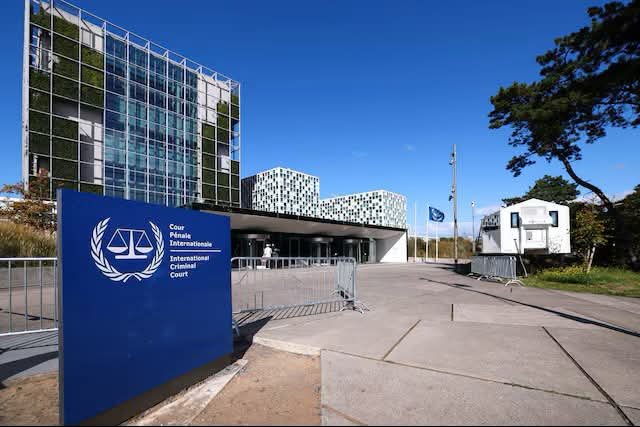
The International Criminal Court (ICC) has unsealed four arrest warrants against senior Taliban figures accused of crimes against humanity involving persecution on gender and political grounds in Afghanistan.
The ICC’s Pre-Trial Chamber II announced the decision on Monday, October 5, 2026, making public warrants issued in 2025 against Taliban Supreme Leader Haibatullah Akhundzada, Chief Justice Abdul Hakim Haqqani, Education Minister Habibullah Agha and Higher Education Minister Neda Mohammad Nadim.
The development brings renewed international attention to the Taliban’s restrictions on women and girls, particularly their exclusion from secondary and higher education since the group returned to power in August 2021.
The ICC said its judges found reasonable grounds to believe that the four suspects were criminally responsible for ordering, inducing or soliciting the crime against humanity of persecution under Article 7(1)(h) of the Rome Statute.
The alleged persecution was directed at girls, women and people considered by the Taliban to be non-conforming with its policies on gender, gender identity or expression. The court also identified people perceived as “allies of girls and women” as having been targeted on political grounds.
Four Taliban figures named in the warrants
The four individuals named by the ICC occupy or occupied senior positions within the Taliban’s de facto authorities.
They are Haibatullah Akhundzada, the Taliban’s supreme leader; Abdul Hakim Haqqani, the group’s chief justice; Habibullah Agha, the education minister; and Neda Mohammad Nadim, the higher education minister.
The warrants concerning Akhundzada and Haqqani were initially issued on July 8, 2025. The ICC subsequently issued warrants against Agha and Nadim on September 9, 2025.
While the existence of the first two warrants had already been made public in 2025, the ICC kept the warrants themselves under seal. The court’s October 5 decision formally removed that restriction and made all four warrants public.
The court’s decision does not amount to convictions. The suspects remain accused, and the ICC’s findings at the arrest-warrant stage concern whether there are reasonable grounds to believe that the alleged crimes were committed and that the named individuals may bear criminal responsibility.
What the ICC alleges
According to the ICC, the Taliban implemented a governmental policy that resulted in severe violations of fundamental rights and freedoms of civilians in Afghanistan.
The court said the alleged conduct included murder, imprisonment, torture, rape and enforced disappearance, alongside systematic restrictions on fundamental rights.
Women and girls were specifically deprived of rights and freedoms through Taliban decrees and edicts, including access to education, privacy and family life. The restrictions also affected freedom of movement, expression, thought, conscience and religion, according to the court.
The ICC said the alleged crimes occurred in Afghanistan after the Taliban seized power on August 15, 2021, and continued until at least January 20, 2025.
The court also found that people perceived as opposing or resisting the Taliban’s gender policies could be targeted, including people described as allies of girls and women.
This means the case extends beyond the question of school and university access. The ICC is examining what it describes as a broader system of gender-based and political persecution.
Education restrictions at the centre of international concern
The unsealing of the warrants comes as Afghanistan remains at the centre of international concern over restrictions on girls’ and women’s education.
UNESCO reported in August 2026 that Afghanistan remained the only country in the world formally prohibiting girls and women from accessing education beyond the primary level.
The organisation estimated that about 2.4 million girls had been excluded from secondary education by 2026. Women have also been barred from university education since 2022.
The consequences extend beyond classrooms.
UNESCO has warned that the continuing restrictions are limiting opportunities for Afghan girls and women to acquire qualifications, develop professional skills and participate fully in economic and social life.
The organisation has therefore supported alternative learning programmes, literacy initiatives and skills-development opportunities for women and girls who have been excluded from formal education.
The education restrictions have also affected Afghanistan’s higher-education system. UNESCO’s 2025 education situation report said female university enrolment had fallen from 27 per cent in 2019 to zero by 2024 following the restrictions imposed by the Taliban.
ICC says gender persecution can include systemic discrimination
A significant aspect of the ICC’s decision is its interpretation of gender persecution.
The court said persecution on gender grounds should not be understood only as direct physical violence. It can also encompass systemic and institutionalised forms of harm, including discriminatory rules and social structures.
In reaching its decision, the Pre-Trial Chamber considered the broader purpose of Article 7(1)(h) of the Rome Statute, which addresses persecution as a crime against humanity.
The judges said the provision is intended to protect civilian populations from serious and systemic violations of fundamental rights, particularly where vulnerable groups are targeted.
That reasoning gives the case significance beyond Afghanistan because it reinforces the principle that discriminatory government policies can form part of conduct examined under international criminal law when the legal requirements for persecution are met.
The warrants were issued before today’s announcement
Although Monday’s decision is new, the underlying ICC action began earlier.
On July 8, 2025, the court announced arrest warrants for Akhundzada and Haqqani after finding reasonable grounds to believe they bore responsibility for persecution on gender and political grounds.
At that time, the ICC said the alleged persecution involved girls and women, people whose gender identity or expression did not conform to Taliban policies, and people perceived as allies of women and girls.
The ICC prosecutor’s office had submitted the applications for those first two warrants in January 2025 following an investigation into the Afghanistan situation.
The prosecutor said the investigation relied on evidence including witness and expert testimony, official decrees, forensic material, statements by Taliban representatives and audio-visual evidence.
The court’s latest decision therefore represents a further stage in an investigation that has been examining alleged crimes committed in Afghanistan since the Taliban’s return to power.
What the warrants mean
An ICC arrest warrant is an important judicial step, but it does not automatically result in an arrest.
The ICC does not have its own police force and depends on cooperation from states to execute arrest warrants. The four Taliban figures remain at large, according to the ICC’s current defendant information.
The practical enforcement challenge is particularly significant in Afghanistan, where the Taliban remains the de facto authority.
The warrants nevertheless create an international legal record concerning the allegations and can restrict the suspects’ ability to travel to countries willing and legally able to cooperate with the court.
The ICC’s move also signals that the alleged treatment of women and girls in Afghanistan remains an international accountability issue rather than solely an internal policy dispute.
Why the development matters
The case has wider implications for women’s rights, international criminal justice and the future of education in Afghanistan.
For Afghan women and girls, the restrictions have affected not only access to classrooms but also employment, public participation, economic independence and the ability to determine their own futures.
UN Women has documented the wider consequences of the restrictions, including the exclusion of women and girls from education and severe limitations on employment and participation in public life.
The restrictions also have consequences for Afghanistan’s long-term development.
When millions of girls are prevented from progressing through secondary and higher education, the country loses future teachers, doctors, engineers, entrepreneurs, researchers and other skilled professionals.
UNESCO’s 2026 figures illustrate the scale of the education crisis, with approximately 2.4 million girls estimated to have been excluded from secondary education.
The ICC’s decision therefore intersects with a broader international effort to preserve educational opportunities for Afghan girls and women while pursuing accountability for alleged violations.
What happens next
The immediate significance of the October 5 decision is that the four warrants are now publicly accessible.
The ICC’s Office of the Prosecutor has previously said it will work with states and other partners to seek enforcement of its Afghanistan warrants. The Afghanistan investigation itself remains active and includes alleged crimes attributed to individual Taliban members and Islamic State-Khorasan Province.
Whether any of the four suspects will be arrested will depend heavily on international cooperation and their movements outside Afghanistan.
For Afghan girls and women, however, the underlying issue remains immediate: access to education and participation in public life remain severely restricted.
The ICC’s action places those restrictions within an international criminal-law framework and adds another layer to global efforts to document alleged abuses and seek accountability.
For now, the unsealing of the warrants does not resolve the situation on the ground. But it makes the allegations against four senior Taliban figures more publicly visible and strengthens the international legal record surrounding the treatment of women and girls under Taliban rule.
Weng Global – Stories beyond borders
Sources
- International Criminal Court (ICC), “ICC Pre-Trial Chamber II unseals four arrest warrants in Situation in Afghanistan,” October 5, 2026.
- International Criminal Court, Afghanistan situation and defendant records.
- Associated Press, report on the ICC’s unsealing of the four Taliban arrest warrants, October 5, 2026.
- Reuters, report on the ICC’s additional details concerning the Taliban arrest warrants, October 5, 2026.
- UNESCO, “Five years on: Keeping learning alive for girls and women in Afghanistan,” August 2026.
- UN Women, Afghanistan gender data and analysis.