Reported by Simon Daniel Yusuph l Journalist at Weng Global
The Sokoto State Police Command has confirmed a deadly attack on Ungushi community in Kebbe Local Government Area of Sokoto State, with at least 28 bodies recovered after suspected Lakurawa fighters reportedly invaded the community.
The attack, which occurred amid heightened security concerns in the Sokoto-Kebbi border area, has renewed fears over the ability of armed groups to penetrate vulnerable rural communities in north-western Nigeria.
The victims reportedly included Imam Aliyu, the Chief Imam of Ungushi Izala Jumu’at Mosque. Police said determining the final casualty figure was initially difficult because of the circumstances surrounding the attack, but confirmed that no fewer than 28 bodies had been recovered.
Main Development
The attack on Ungushi occurred in Kebbe Local Government Area, an area that has faced repeated security concerns involving armed groups and suspected Lakurawa fighters.
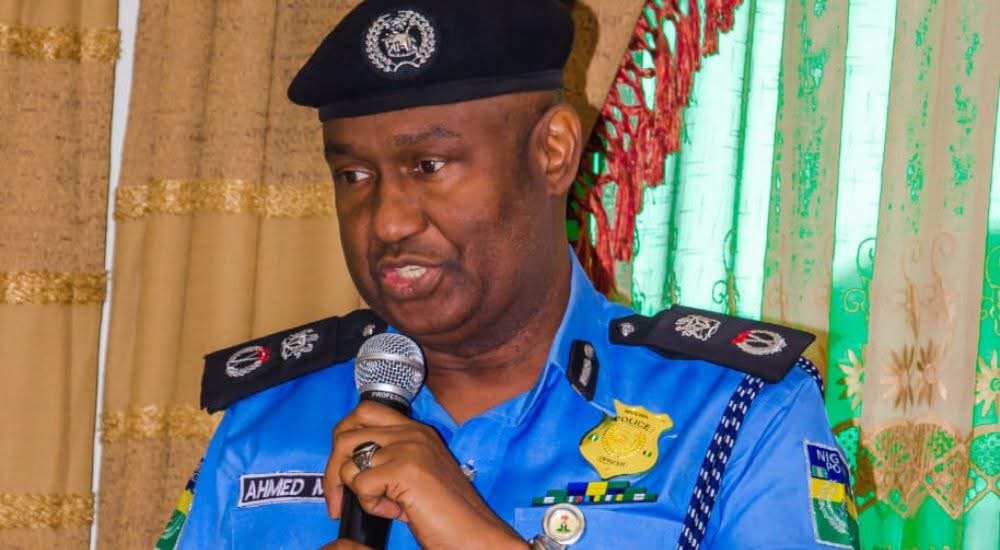
Sokoto State Police spokesperson DSP Ahmed Rufai confirmed the attack and said the command initially faced difficulties establishing the precise number of people killed.
He nevertheless confirmed the recovery of at least 28 bodies following the assault.
The confirmation provides a firmer official account of the scale of the attack than earlier reports, which had cited varying casualty figures from residents and other local sources.
The victims reportedly included farmers, traders, religious figures and other residents of Ungushi.
Among those killed was Imam Aliyu, the Chief Imam of the Ungushi Izala Jumu’at Mosque, according to reports on the attack.
The incident has generated renewed concern over security in Kebbe and surrounding communities, particularly those located along vulnerable routes linking Sokoto and neighbouring Kebbi State.
What Police Confirmed
The police confirmation is significant because initial reports contained different estimates of the number of people killed.
Police spokesman Ahmed Rufai said the nature of the attack made it difficult to immediately determine the exact number of casualties.
However, security personnel subsequently recovered at least 28 bodies from the affected community.
This means the figure of 28 should be treated as the minimum confirmed number in the police account rather than necessarily the final death toll.
Other reports cited higher casualty figures from residents and community sources, but those figures were not consistently confirmed by the police.
A fact-check by PRNigeria also noted discrepancies among reports concerning the number of victims and rejected unrelated claims circulating online about the identities and circumstances of alleged victims.
For responsible reporting, the police-confirmed figure remains the most reliable baseline available from the authorities.
Lakurawa Link Remains an Attribution
The attackers have been described in reports as suspected members of the Lakurawa terrorist organisation.
Weng Global is treating that identification as an attribution rather than presenting it as an independently established fact.
Reports from the area have linked recent attacks in Kebbe to Lakurawa, while Nigerian security authorities have been responding to the group as a significant threat in the region.
The Nigerian Army previously said its operational assessment in Kebbe followed reports of renewed attacks on Ungushi and surrounding communities by suspected Lakurawa elements.
The Army’s assessment was aimed at strengthening its security architecture and preventing further terrorist infiltration of vulnerable border communities between Sokoto and Kebbi states.
The distinction is important because armed groups operating in north-western Nigeria are sometimes described interchangeably as bandits, terrorists or criminal groups in early reports.
Weng Global will therefore attribute the Lakurawa connection to security authorities and credible reporting where appropriate rather than treating an early identification as an independently established fact.
Army Strengthens Security Around Kebbe
The attack came shortly after Major General Bemgha Paul Koughna, General Officer Commanding the Nigerian Army’s 8 Division, conducted an operational assessment visit to the Forward Operating Base in Kebbe and surrounding communities.
The Army said the visit was prompted by renewed security threats in the area.
According to the Army’s account, the military leadership was reviewing its security arrangements to prevent further infiltration and strengthen protection for vulnerable communities.
The military also emphasised the importance of denying terrorist elements safe operating areas along the Sokoto-Kebbi border.
The deployment and assessment demonstrate that the security challenge in Kebbe has become a continuing operational concern rather than an isolated incident.
A Community Under Growing Security Pressure
Kebbe Local Government Area has experienced a series of security incidents in recent months.
Earlier in August, the Sokoto State Police Command confirmed another deadly attack on Girkau community in the same local government area.
That incident reportedly resulted in the deaths of a police officer and two civilians, while security vehicles were also attacked.
The recurrence of attacks has increased concerns among residents about the ability of security agencies to respond quickly enough to threats in remote communities.
The geographical location of Kebbe also adds to the security challenge.
Communities in the area are situated close to the Sokoto-Kebbi border corridor, where difficult terrain and long distances can complicate rapid security responses.
The Army has consequently identified border security, intelligence gathering and community engagement as important components of its response.
Civilian Impact
The most immediate consequence of the Ungushi attack has been the loss of civilian lives.
Beyond the confirmed deaths, attacks of this nature can produce wider consequences for rural communities.
Farmers may be unable to reach their fields. Traders can lose access to markets. Families may abandon homes in search of safer locations, while schools, religious activities and other community institutions can be disrupted.
Repeated attacks can also weaken local economies because residents become reluctant to travel, trade or invest in affected areas.
The loss of a religious leader such as the Chief Imam can further deepen the emotional impact on a community, particularly where religious and traditional institutions play an important role in maintaining social cohesion.
For communities already facing economic pressure, insecurity can therefore become a cycle in which violence drives displacement, displacement reduces economic activity and declining economic opportunities increase vulnerability.
Wider Security Concerns in North-West Nigeria
The Ungushi attack comes against a wider backdrop of insecurity across north-western Nigeria.
Sokoto, Kebbi, Zamfara and neighbouring states have experienced attacks by different armed groups, including bandits and organisations with jihadist links.
The emergence and reported expansion of Lakurawa have added another layer to the security challenge.
Security officials and analysts have increasingly focused on the possibility that armed extremist networks could exploit existing criminal and communal insecurity to expand their influence.
That makes intelligence sharing and early warning particularly important.
The Nigeria Police Force has separately stressed the importance of cooperation between security agencies, state governments and local communities in tackling insecurity across the North-West.
Police leadership has also warned against ethnic and religious profiling, stressing that security responses should focus on criminal networks and their facilitators rather than entire communities.
This distinction is particularly important in conflict reporting because inaccurate ethnic or religious attribution can increase tension and potentially create further security risks.
Community Intelligence and Early Warning
One of the recurring issues in attacks affecting remote communities is the ability of authorities to receive and act on intelligence before violence occurs.
The Nigerian Army has previously called for stronger cooperation from communities in the Kebbe area, arguing that residents can play an important role in identifying suspicious movements and helping security agencies disrupt terrorist networks.
The effectiveness of such cooperation depends on public trust.
Residents must be confident that information supplied to authorities will be handled securely and that security agencies will respond quickly to credible warnings.
At the same time, security agencies must ensure that community intelligence is properly verified before action is taken.
Poorly verified intelligence can expose innocent people to suspicion, while delayed responses can allow armed groups to exploit vulnerable communities.
Why the Ungushi Attack Matters
The significance of the Ungushi attack extends beyond the immediate death toll.
It demonstrates the continuing vulnerability of rural communities in parts of north-western Nigeria despite ongoing military and police operations.
The attack also highlights the difficulty of securing large rural areas where security forces must cover widely dispersed settlements and border corridors.
For residents, the central concern is protection from further attacks.
For state and federal authorities, the challenge is more complex: they must prevent armed groups from establishing permanent footholds while also improving intelligence gathering, protecting communities and restoring public confidence.
The situation also has implications for agriculture and rural livelihoods.
When farmers are afraid to cultivate their land or livestock owners cannot safely move through rural areas, food production and household incomes can suffer.
In the longer term, persistent insecurity can contribute to displacement and deepen humanitarian pressures.
Government and Military Response
The Nigerian Army has responded by reassessing its security architecture around Kebbe.
The visit by the 8 Division commander was presented as part of efforts to strengthen operations and prevent further terrorist infiltration.
Security forces are expected to maintain pressure on armed groups operating in the area while increasing protection for vulnerable communities.
The police, meanwhile, remain responsible for maintaining law and order and supporting investigations into attacks and other criminal activity.
A sustained response will require coordination among the police, military, intelligence agencies, state authorities and local communities.
No single security institution is likely to resolve the threat without cooperation from the others.
What Happens Next
The immediate priority is to prevent another attack on Ungushi or neighbouring communities.
Security agencies are expected to continue operations in Kebbe and surrounding areas, while the Army’s strengthened security posture is intended to reduce the ability of armed groups to operate freely.
Authorities will also need to establish the full circumstances of the attack and determine whether additional casualties or victims remain unaccounted for.
The final casualty figure should therefore be treated with caution until authorities complete their assessment.
For residents, the key issue is whether the increased military presence will translate into sustained protection rather than temporary reinforcement following an attack.
The broader test for the government will be whether it can combine military operations with intelligence-led policing, community engagement and measures that address the conditions allowing armed groups to exploit vulnerable rural areas.
The Ungushi attack has once again placed Kebbe’s security situation in focus.
With at least 28 bodies recovered, the incident underscores the human cost of Nigeria’s continuing struggle against armed groups in the North-West and the urgent need for sustained protection of communities at risk.
Weng Global – stories beyond borders
Sources
- Sokoto State Police Command
- Nigerian Army, 8 Division
- The PUNCH
- Channels Television
- Anadolu Agency
- Premium Times
- PRNigeria
- Vanguard