Reported by Simon Daniel Yusuph l Journalist at Weng Global
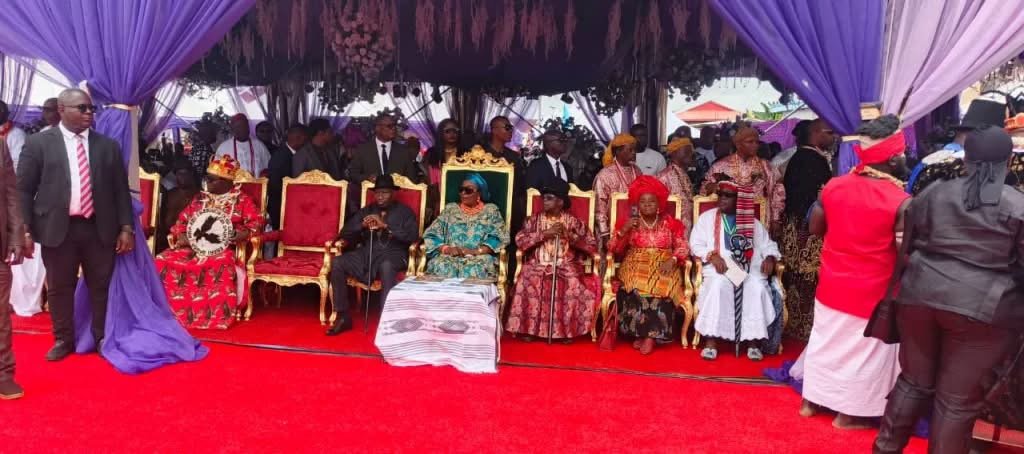
Former President Goodluck Jonathan and the Olu of Warri, Ogiame Atuwatse III, were among prominent dignitaries who attended the coronation of King Charles Douglas MacPepple Jaja, Jeki VI, as the new Amanyanabo of Opobo Kingdom in Rivers State on Saturday, September 26, 2026.
The coronation, held in Opobo Town, marked the formal installation of Jaja VI as the sixth monarch of the historic Niger Delta kingdom following his election in December 2025 after the death of his predecessor, King Dandeson Douglas Jaja, Jeki V.
The ceremony brought together traditional rulers, political leaders, community leaders, business figures and other guests as Opobo Kingdom formally began a new chapter under its latest monarch.
Jonathan Attends Historic Coronation
Jonathan’s attendance followed his earlier acceptance of an invitation from the Opobo monarch.
In August, Jonathan received King Charles Douglas MacPepple Jaja and members of the Opobo Council of Alapu at his residence in Yenagoa, Bayelsa State, where he described Opobo Kingdom as a historic institution with an important place in Nigeria’s history.
Jonathan had pledged to attend the coronation after receiving the formal invitation from the monarch.
The former president’s participation at the ceremony therefore fulfilled the commitment he made during the pre-coronation engagement.
The visit also reflected the longstanding cultural and historical links between Opobo, the wider Niger Delta and prominent Ijaw figures.
Olu of Warri Among Traditional Leaders
The presence of the Olu of Warri added another traditional institution to the gathering of dignitaries at the Opobo coronation.
Ogiame Atuwatse III, the 21st Olu of Warri Kingdom, is one of Nigeria’s prominent traditional rulers. His attendance placed two historic Niger Delta royal institutions in the same ceremonial setting.
The Opobo throne itself has a long history of interaction with other traditional institutions across southern Nigeria.
Ahead of the coronation, King Charles Jaja had undertaken traditional and diplomatic engagements with other royal institutions, including a visit to the palace of the Obi of Onitsha, Nnaemeka Alfred Achebe.
These engagements formed part of the wider preparations for the coronation and demonstrated the traditional diplomacy surrounding the succession.
King Jaja VI Takes the Opobo Throne
King Charles Douglas MacPepple Jaja was elected as the new Amanyanabo of Opobo Kingdom in December 2025 following the death of King Dandeson Douglas Jaja, Jeki V.
The new monarch is known as Jeki VI, continuing the royal lineage associated with the Jaja name.
The Opobo Council of Chiefs announced September 26 as the date for the grand coronation, with activities running around the ceremony. Punch reported that the coronation was scheduled to take place in Opobo Town, in Opobo/Nkoro Local Government Area of Rivers State.
The council described the occasion as an important moment for the kingdom and said preparations had been made to accommodate visitors from within Nigeria and abroad.
A Kingdom With a Significant Niger Delta History
The coronation also draws attention to the history of Opobo Kingdom and its founder, King Jaja of Opobo.
King Jaja emerged as a major political and commercial authority in the 19th-century Niger Delta. Historical accounts describe his establishment of Opobo as an important political and commercial centre following conflicts in the Bonny area during the late 1860s.
The kingdom became strongly associated with the palm-oil trade and developed commercial relationships extending from the Niger Delta hinterland towards the Atlantic coast.
In 1873, Britain entered into a commercial treaty with Jaja that formally recognised him as King of Opobo. His growing opposition to British commercial interests later brought him into conflict with colonial authorities, resulting in his arrest and exile in 1887.
The history has continued to shape the identity of the Opobo monarchy and its place in the story of the Niger Delta.
Coronation Marks Continuity of the Monarchy
The installation of Jeki VI follows the death of Jeki V on December 31, 2025.
The Opobo Council of Chiefs has presented the coronation as a continuation of an institution whose history stretches back to the era of King Jaja.
In the days leading up to the ceremony, the kingdom hosted a range of traditional and cultural activities as part of the coronation programme.
Reports from Opobo on Friday, September 25, indicated that traditional performances, including appearances by the King’s and Queen’s masquerades, formed part of the final rites before the coronation proper.
The activities have provided an opportunity for residents, visitors and members of the Opobo community in the diaspora to participate in the celebrations.
Security and Organisation
The Opobo Council of Chiefs previously assured residents and visitors that adequate security arrangements had been made for the coronation.
The council urged guests to follow security, traffic and protocol arrangements during the celebrations.
It also appealed to the media to document the event and tell the wider story of Opobo Kingdom, including its cultural heritage and historical significance.
The arrangements were considered necessary because the ceremony attracted guests from different parts of Nigeria and outside the country.
Why the Coronation Matters
The coronation represents more than the installation of a new traditional ruler.
For Opobo, it is a moment of succession and continuity for one of the historic royal institutions of the Niger Delta.
Traditional institutions continue to play important cultural and community roles in many parts of Nigeria, even as elected governments remain responsible for formal state administration.
The presence of national figures such as Jonathan alongside traditional rulers also illustrates the continuing interaction between Nigeria’s political leadership, traditional institutions and community structures.
For the people of Opobo, the ceremony provides an opportunity to celebrate their history while beginning a new phase under Jeki VI.
What Comes Next
With the coronation completed, attention will turn to the new monarch’s reign and the role his administration of the traditional institution will play in Opobo Kingdom.
The kingdom is also expected to continue cultural activities linked to its heritage and community identity.
The succession of Jeki VI ensures the continuation of the Opobo monarchy following the death of his predecessor and places the historic Jaja throne under a new generation of leadership.
Weng Global – stories beyond borders
Sources
Channels Television
Punch Newspapers
The Guardian Nigeria
BusinessDay
The Opobo Council of Chiefs