Reported by Simon Daniel Yusuph l Journalist at Weng Global
US President Donald Trump has called on Congress to introduce mandatory prison sentences for people convicted of defrauding federal benefit programmes, warning that those who steal from Americans should face jail time and longer sentences for repeated offences.
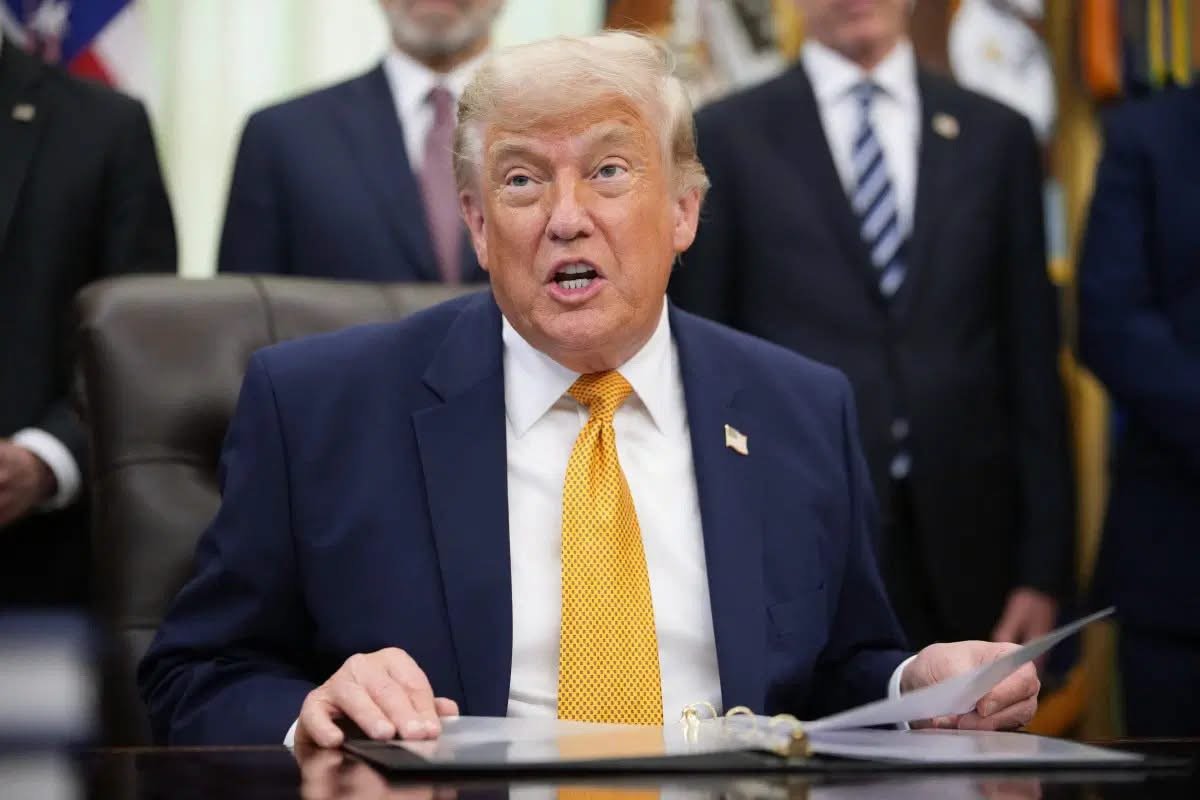
Trump made the demand in a video message posted on social media on Saturday, October 3, 2026, as his administration intensifies its campaign against fraud involving Medicare, Medicaid and Social Security.
The proposed legislation would remove probation as an option for people convicted of fraud against the programmes, while penalties would increase according to the amount stolen. Trump also proposed doubling the sentence for convicted fraudsters who are caught committing similar offences for a second time.
Trump Targets Medicare, Medicaid and Social Security Fraud
Trump’s proposal is specifically focused on fraud involving major US federal benefit programmes.
Medicare provides health insurance primarily to older Americans and certain people with disabilities, while Medicaid provides health coverage to eligible low-income Americans. Social Security provides a range of federal benefits, including retirement, disability and survivor payments.
In his video message, Trump said Congress should establish mandatory minimum prison terms for people convicted of stealing from these programmes.
The President argued that the government should respond more forcefully to individuals who exploit programmes designed to support vulnerable Americans.
Under his proposal, a person convicted of stealing from the programmes would no longer have probation available as an alternative to imprisonment.
Trump also proposed progressively longer prison terms depending on the amount of money involved in a fraud scheme.
For repeat offenders, he called for sentences to be doubled.
The proposal, however, is not itself a change in federal law. Congress would have to approve legislation before new mandatory sentencing requirements could take effect.
Trump did not provide specific sentencing ranges in the video, and he did not set out the precise legal standards that would govern the proposed penalties.
Warning to Those Who Defraud Americans
The President’s message was framed as a warning to individuals involved in fraud against US government programmes.
Trump said his administration would pursue people who steal from the American public and indicated that the consequences should become more severe for those who repeatedly commit fraud.
The proposed approach reflects Trump’s broader emphasis on tougher enforcement and punishment for financial crimes affecting taxpayers and government programmes.
He also directed part of his warning at politicians and public officials.
Trump proposed making state and local politicians personally financially liable for losses caused by fraud if they knew about the fraud, had the ability to stop it and failed to act.
The proposal raises significant legal and policy questions, including how responsibility would be established and what standard would determine whether an elected official knew about fraudulent activity or had sufficient authority to prevent it.
Trump did not provide those details in the video.
US Justice Department Already Expanding Fraud Enforcement
Trump’s latest proposal comes against the backdrop of a broader federal campaign against fraud.
The US Department of Justice established the National Fraud Enforcement Division in 2026 with a mandate to investigate and prosecute fraud affecting federal government programmes, federally funded benefits, businesses, non-profit organisations and private citizens.
The department says the Fraud Division works with federal, state, local and other law enforcement agencies and uses data-driven investigative methods to identify and prosecute fraud.
The division was announced by Trump in January and formally expanded by the Justice Department in April.
According to the department, the initiative forms part of a wider administration effort led by Vice President JD Vance to combat fraud, waste and abuse in federal benefit programmes.
The creation of the division demonstrates that Trump’s latest proposal is part of a wider enforcement strategy rather than an isolated announcement.
The Justice Department has already pursued major healthcare and benefits-related fraud cases during 2026.
Billions of Dollars in Alleged Healthcare Fraud
The administration’s focus on healthcare fraud has produced a series of federal prosecutions.
In June, the Justice Department announced that its nationwide healthcare fraud enforcement operation had resulted in charges against 455 defendants over alleged schemes involving more than $6.5 billion in false claims.
The defendants included doctors and other licensed medical professionals.
The cases involved alleged schemes targeting Medicare, Medicaid and other healthcare programmes, with prosecutors describing conduct ranging from fraudulent billing to medically unnecessary services and other alleged abuses.
In another June announcement, the Justice Department said its Healthcare Fraud Unit had secured six trial convictions involving more than $1.1 billion in fraud losses.
The department said the cases involved six different fraud schemes, including alleged large-scale Medicare fraud and fraudulent healthcare billing.
These cases show the scale of the fraud enforcement challenge facing the US government and provide context for Trump’s demand for tougher sentencing.
Importantly, allegations made in criminal cases do not establish guilt. Defendants are presumed innocent unless convicted in court.
Social Security Fraud Also Under Federal Investigation
The administration has also recently increased enforcement against fraud involving Social Security benefits.
On September 29, the Justice Department announced the results of a month-long enforcement surge targeting fraud in Social Security Administration programmes, including Supplemental Security Income.
The department said federal prosecutors and investigative agencies brought charges against 17 defendants between August 21 and September 18 over alleged schemes involving more than $1.3 million in intended losses to the United States.
The enforcement action involved 11 US Attorney’s Offices and the Social Security Administration’s Office of Inspector General.
The latest crackdown illustrates the administration’s focus on protecting federal benefit programmes from fraudulent claims and misuse.
Trump’s proposed legislation would add a new sentencing component to those enforcement efforts by seeking mandatory prison terms for people convicted of specified benefit-programme fraud.
Healthcare Benefits Under Greater Scrutiny
Medicare and Medicaid have been among the major areas targeted by the administration’s fraud enforcement strategy.
The Justice Department’s Fraud Division has identified healthcare fraud as one of its priorities, particularly schemes involving Medicare and Medicaid, telemedicine, home healthcare, hospice services and controlled substances.
A Justice Department policy document says the division intends to use data analysis and other investigative tools to identify significant healthcare fraud schemes and prosecute those responsible.
The department has also said that its healthcare fraud programme has prosecuted thousands of defendants over the years.
In one July 2026 case, prosecutors said a defendant accused of Medicare fraud faced a potential maximum sentence of 20 years after conviction. The case demonstrates that lengthy prison sentences are already available under existing federal laws for certain fraud offences.
Trump’s latest proposal would therefore seek to change the sentencing framework for specified benefit-programme fraud by introducing mandatory minimum terms and restricting the availability of probation.
What the Proposed Legislation Could Mean
If Congress adopts Trump’s proposal, federal judges could face less discretion in sentencing people convicted of the covered offences.
Mandatory minimum sentences generally require judges to impose at least a specified period of imprisonment when the statutory conditions are met.
Trump’s proposal would therefore represent a significant policy shift if enacted, particularly because he wants probation removed for people convicted of stealing from the specified benefit programmes.
However, the exact effect would depend on the legislation Congress ultimately considers.
Congress would have to determine the offences covered, the sentencing thresholds, the minimum prison terms and the circumstances in which enhanced penalties would apply.
The proposal would also have to operate within the broader US federal criminal justice system and constitutional framework.
For now, it remains a presidential request to Congress rather than an enacted sentencing law.
Debate Over Deterrence and Punishment
Supporters of tougher penalties are likely to argue that mandatory imprisonment could strengthen deterrence and protect taxpayer-funded programmes.
The administration has repeatedly described fraud against federal programmes as a direct financial harm to the American public.
The Justice Department has similarly framed its Fraud Division as an effort to protect taxpayer-funded programmes and improve the government’s ability to identify sophisticated fraud schemes.
Critics of mandatory minimum sentencing in the broader US criminal justice debate have historically argued that rigid sentencing requirements can reduce judicial discretion and may produce disproportionate outcomes in some cases.
However, no specific congressional response to Trump’s latest proposal had been established in the reporting available at the time of publication.
The details of any legislation will therefore be important in determining how the proposal could affect prosecutors, defendants, judges and federal benefit programmes.
A Broader Government Campaign Against Fraud
Trump’s announcement is part of a wider push by his administration to make fraud enforcement a major federal priority.
The National Fraud Enforcement Division has been tasked with investigating fraud against government programmes and private citizens while coordinating with other federal and local authorities.
The Justice Department says the division is intended to identify fraudulent activity more efficiently, strengthen prosecutions and close vulnerabilities that allow fraud schemes to continue.
The department has also pursued cases involving stolen benefits, healthcare fraud and other financial crimes during 2026.
In May, for example, the Fraud Division announced enforcement actions representing nearly $1 billion in alleged fraud, including cases involving Medicare, Medicaid and other government benefits.
The scale of those cases helps explain why fraud has become a major policy concern for the administration.
Why It Matters
Federal benefit programmes serve millions of Americans, meaning fraudulent claims can affect public finances and the availability of resources intended for eligible recipients.
Medicare, Medicaid and Social Security collectively represent major areas of federal spending and provide essential support to elderly people, people with disabilities and low-income families.
Efforts to reduce fraud can therefore have implications beyond criminal prosecutions.
The government must balance enforcement with ensuring that legitimate beneficiaries continue to receive assistance without unnecessary administrative barriers.
For prosecutors and law enforcement agencies, stronger enforcement could mean increased resources for investigating complex schemes, particularly those involving multiple states, digital transactions or international networks.
For defendants, any new mandatory sentencing system could mean greater certainty of imprisonment following conviction.
For Congress, the central question will be whether Trump’s proposed approach should become federal law and, if so, how it should be structured.
What Happens Next
Trump has called on Congress to act, but the proposed sentencing changes are not yet law.
Congress would need to consider and pass legislation before any new mandatory prison requirements could take effect.
The details of such legislation would determine the offences covered, the length of mandatory sentences, the treatment of repeat offenders and the proposed financial liability for state and local officials.
Meanwhile, federal agencies are expected to continue investigating fraud under existing laws.
The Justice Department’s National Fraud Enforcement Division remains responsible for coordinating major fraud investigations and prosecutions, while federal agencies involved in Medicare, Medicaid and Social Security oversight continue their enforcement activities.
For now, Trump’s message represents a call for tougher federal action rather than an immediate change to the US criminal justice system.
Conclusion
President Donald Trump has called for mandatory prison sentences for people convicted of defrauding Medicare, Medicaid and Social Security, warning that those who steal from Americans should face serious prison time.
His proposal would eliminate probation for covered offences, introduce tougher penalties based on the amount stolen and double sentences for repeat offenders.
Trump also proposed personal financial liability for state and local politicians who knowingly fail to stop fraud despite having the ability to act.
The proposals come as the Trump administration expands federal efforts to combat fraud through the Justice Department’s National Fraud Enforcement Division and other agencies.
The Justice Department has already pursued large-scale cases involving alleged healthcare and Social Security fraud, demonstrating the growing emphasis on protecting federal benefit programmes.
However, Trump’s proposed sentencing changes still require congressional action. Until Congress passes legislation and it becomes law, existing federal sentencing rules remain in force.
The next stage will therefore depend on whether lawmakers take up the President’s proposal and what specific provisions emerge from any legislative process.
Weng Global – Stories beyond borders
Sources: The White House; U.S. Department of Justice; Vanguard News; Associated Press.