Reported by Simon Daniel Yusuph l Journalist at Weng Global
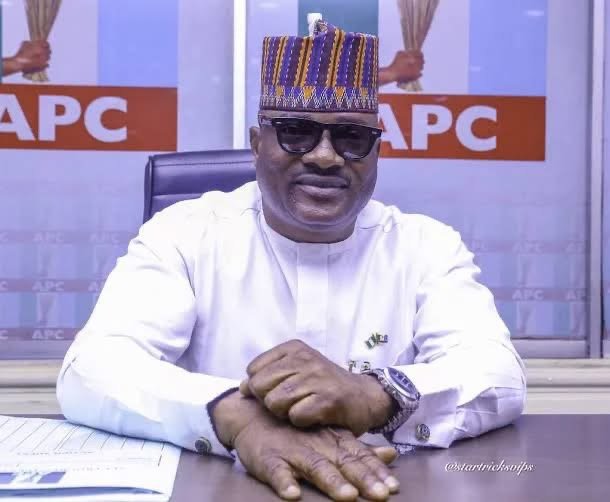
A member of the National Working Committee of the All Progressives Congress (APC), Tolu Bankole, has urged Nigerians to support President Bola Ahmed Tinubu’s economic reform programme, arguing that sustained implementation is necessary to translate recent macroeconomic gains into broader improvements in living standards.
Bankole made the call in an Independence Day message as Nigeria marked its 66th anniversary on October 1, 2026.
The APC chieftain said the country’s economic transformation would require patience, policy continuity and sustained implementation of reforms introduced by the Tinubu administration.
He pointed to recent economic indicators, including Nigeria’s real Gross Domestic Product (GDP) growth of 3.89 per cent in the first quarter of 2026, as evidence that economic activity had strengthened compared with the same period in 2025.
According to data from the National Bureau of Statistics (NBS), Nigeria’s real GDP grew by 3.89 per cent year-on-year in the first quarter of 2026, compared with 3.13 per cent in the first quarter of 2025. However, the first-quarter growth was below the 4.07 per cent recorded in the final quarter of 2025.
Bankole Calls for Continued Support
Bankole argued that the reforms being implemented by the Federal Government should be assessed over the longer term rather than solely by their immediate effects.
He said the return of President Tinubu from his working vacation should provide an opportunity for the administration to intensify implementation and ensure that the benefits of its economic policies reach ordinary Nigerians.
The APC National Working Committee member also called on citizens to maintain confidence in the reform process, saying that nation-building requires collective responsibility and sustained commitment.
His comments form part of the political debate surrounding the direction of Nigeria’s economy ahead of the 2027 general elections.
Bankole is a senior APC figure and has previously publicly defended the Tinubu administration’s economic programme. In May 2026, he said the reforms were intended to deliver long-term benefits for Nigerian workers, while acknowledging that structural changes could create challenges in the short term.
Economic Indicators Cited by Bankole
One of the key figures referenced by Bankole is Nigeria’s first-quarter GDP performance.
The NBS reported that agriculture grew by 3.15 per cent in real terms during the first quarter of 2026, compared with 0.07 per cent in the corresponding quarter of 2025.
The industrial sector expanded by 3.50 per cent, up from 3.42 per cent a year earlier, while the services sector grew by 4.31 per cent compared with 4.33 per cent in the first quarter of 2025.
Services remained the largest contributor to Nigeria’s GDP, accounting for 57.73 per cent of total real GDP during the quarter.
The figures provide evidence of continued economic expansion, although GDP growth alone does not show how changes in national output are being experienced by individual households.
That distinction is significant in assessing the wider impact of economic reforms, particularly as Nigerians continue to deal with changes in prices and household costs.
Inflation Has Slowed, but Prices Remain a Concern
More recent inflation data show that the pace of price increases has moderated.
The NBS reported that Nigeria’s headline inflation rate fell marginally to 15.39 per cent in August 2026 from 15.43 per cent in July. The August figure was also substantially below the 23.14 per cent recorded in August 2025.
Food inflation also declined to 19.57 per cent in August from 20.31 per cent in July, while month-on-month headline inflation fell from 1.57 per cent in July to 0.71 per cent in August.
The moderation means prices were increasing at a slower rate; it does not mean that the general price level had fallen.
For households, that distinction remains important because slower inflation does not automatically reverse earlier increases in the cost of food, transport, housing and other necessities.
Reforms Include Tax and Financial-Sector Changes
Bankole also referenced reforms involving taxation, the foreign exchange market, petroleum policy and the banking sector.
The Nigeria Tax Act, 2025 forms part of a broader overhaul of the country’s tax system. The legislation was gazetted in June 2025 and took effect from January 1, 2026. The Federal Government subsequently issued implementation guidelines to facilitate the transition from the previous tax framework.
The new tax framework is intended to consolidate and reorganise Nigeria’s tax laws and administration. The Nigeria Revenue Service lists the Nigeria Tax Act, the Nigeria Tax Administration Act and related legislation among the country’s current tax laws.
The banking sector is also undergoing recapitalisation following new minimum capital requirements announced by the Central Bank of Nigeria in 2024. The CBN says the programme is intended to strengthen banks and align the financial system with broader economic objectives.
Central Bank Cuts Monetary Policy Rate
Another recent development cited in discussions about Nigeria’s economic direction is the Central Bank of Nigeria’s monetary policy decision in September.
At its September 21–22, 2026 meeting, the Monetary Policy Committee reduced the Monetary Policy Rate to 23 per cent from 26.5 per cent.
The CBN also recalibrated its Standing Facilities Corridor to +50/-300 basis points around the MPR, while retaining the Cash Reserve Requirement for deposit money banks at 45 per cent.
The decision represents a significant change in monetary policy after the central bank maintained the MPR at 26.5 per cent at its July meeting.
Interest-rate decisions are closely watched because they can affect borrowing costs, investment, consumer spending and liquidity in the economy.
Reform Gains and the Cost-of-Living Debate
The economic reform programme remains the subject of competing assessments.
The Tinubu administration has argued that measures including fuel-subsidy removal, exchange-rate reforms and changes to public finances have helped improve macroeconomic stability and investor confidence.
Reuters reported in August that Finance Minister Taiwo Oyedele said the reforms had helped stabilise public finances, increase foreign reserves and attract investment. The minister said subsidy and foreign-exchange reforms generated N15.8 trillion in savings between June 2023 and December 2025.
At the same time, the reforms have imposed significant adjustment costs on households.
Reuters reported in May that Tinubu acknowledged the hardship associated with subsidy removal and the naira’s devaluation while arguing that the measures were producing broader macroeconomic gains.
The International Monetary Fund has similarly recognised improvements in Nigeria’s economic stability while noting that the benefits of the reforms had not yet reached millions of citizens.
That tension — between improving macroeconomic indicators and the lived economic experience of households — remains central to the debate over Nigeria’s reform programme.
What Bankole Wants Nigerians to Consider
Bankole’s message is that the reforms should be given sufficient time to produce their intended structural effects.
He argued that the objective should extend beyond short-term economic indicators to improvements that Nigerians can eventually experience through stronger businesses, investment, employment opportunities and household incomes.
His position reflects the APC’s broader argument that continuity in economic policy is necessary for the government to consolidate reforms already introduced.
However, Bankole’s call is a political position rather than an independent assessment of the reforms. The measurable economic indicators provide part of the context, while questions about household welfare, employment, purchasing power and poverty remain important when assessing whether economic growth is translating into improved living standards.
Nigeria’s Economic Reform Debate Continues
Nigeria’s economy has undergone substantial policy changes since President Tinubu assumed office in 2023.
The removal of the petrol subsidy, foreign-exchange reforms, changes to the tax system, monetary-policy adjustments and banking-sector reforms have altered the operating environment for government, businesses and households.
The effects have been mixed across different parts of the economy and population.
GDP growth has remained positive, while inflation has moderated considerably from its level a year earlier. At the same time, the absolute cost of many goods and services remains an important concern for households.
For policymakers, the next stage of the reform programme will therefore involve converting macroeconomic stability into broader economic opportunities and improvements in living standards.
What Happens Next
Bankole’s appeal comes as political activity gradually builds ahead of Nigeria’s 2027 general elections, making economic performance an increasingly important issue in public debate.
The Federal Government is expected to continue implementing its tax reforms, financial-sector changes and broader economic programme.
The CBN’s September reduction in the monetary policy rate also marks a new phase in monetary management, with future decisions likely to depend on inflation, economic growth, financial conditions and other indicators.
For Nigerians, the key question will be whether improvements in headline economic indicators translate into more affordable living costs, stronger purchasing power, greater employment opportunities and improved conditions for businesses.
The government’s economic performance will consequently continue to be judged not only by GDP, inflation and financial-market data but also by how those changes affect households and businesses across the country.
Bankole, meanwhile, has urged Nigerians to support the administration’s reform programme, arguing that sustained implementation and continuity are necessary to achieve the long-term economic transformation being pursued by the government.
Weng Global – stories beyond borders
Sources:
- National Bureau of Statistics
- Central Bank of Nigeria
- Nigeria Revenue Service
- Federal Ministry of Finance
- Reuters
- Premium Times
- Punch
- National Periscope