Reported by Weng Patrick Atokor l Journalist at Weng Global
Nigeria is deepening discussions with German industrial companies as the Federal Government seeks investment, modern technology and technical expertise to strengthen the country’s steel and metallurgical industries.
The engagement forms part of Nigeria’s broader effort to rebuild its industrial base, increase domestic value addition and reduce dependence on imported manufactured steel products.
Nigeria’s steel development strategy has increasingly focused on attracting credible foreign investors capable of bringing capital, modern production systems and technical knowledge into the country. The Federal Ministry of Steel Development has identified German companies as potential partners in areas including steel production, mineral processing, industrial infrastructure, skills development and technology transfer.
Germany Engagement Focuses on Investment and Technology
The Federal Ministry of Steel Development said Nigeria’s engagement with German industrial companies is aimed at attracting long-term foreign direct investment while developing the country’s steel and minerals value chain.
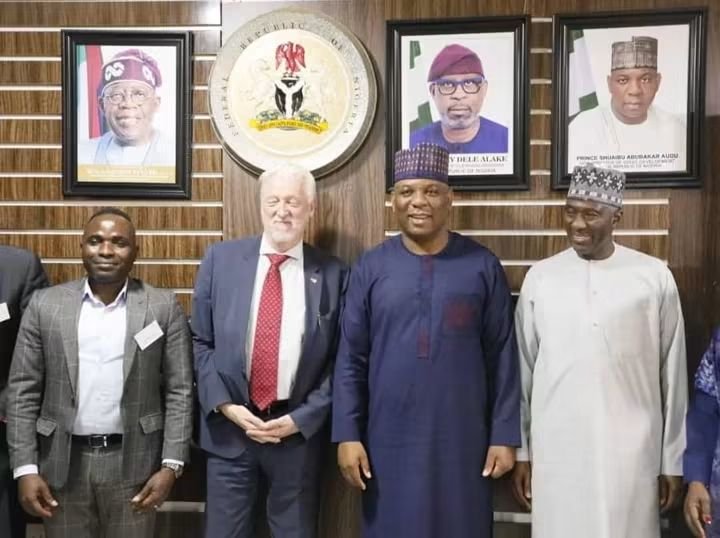
During the Nigeria–German Economic Forum held in Dortmund in March 2026, Minister of Steel Development Prince Shuaibu Abubakar Audu held discussions with German industrial companies, including Hüttenwerke Krupp Mannesmann (HKM) GmbH at its steel facility in Duisburg.
According to the ministry, the discussions covered investment opportunities in Nigeria’s steel industry, technology and knowledge transfer, sustainable steel production, and capacity building for Nigerian professionals in the metallurgical sector.
The ministry said the engagement was part of efforts to reposition steel and aluminium production as important components of Nigeria’s industrialisation and economic diversification strategy.
Audu told participants that Nigeria was seeking credible, long-term partnerships capable of supporting the development of the country’s steel value chain.
The discussions also included the potential development of industrial infrastructure such as power, rail, gas and ports, which are important to large-scale manufacturing and mineral processing.
Nigeria Seeks to Move Beyond Raw Material Exports
A major objective of the Federal Government’s industrial strategy is to increase the amount of value created within Nigeria before raw materials are exported.
The Steel Development Ministry said Nigeria has significant deposits of iron ore and other minerals that could support a larger domestic manufacturing industry.
It estimates that Nigeria has more than three billion tonnes of iron ore, alongside deposits of limestone, manganese, copper, lead-zinc, lithium and rare-earth minerals.
The government is therefore seeking partnerships that can connect these resources to processing and manufacturing facilities inside the country.
For the steel sector, this means developing stronger links between mining, mineral processing, steel production, engineering, construction and other industries that depend on steel products.
The approach could also create opportunities for Nigerian companies to participate in industrial supply chains rather than relying primarily on imported equipment, materials and finished products.
Technology Transfer Central to the Discussions
Technology transfer is one of the most significant elements of Nigeria’s engagement with German manufacturers.
The Federal Ministry of Steel Development said discussions with HKM included the transfer of knowledge and technology for modern steel production, sustainable manufacturing methods and professional skills development.
This is important because the long-term impact of foreign investment can extend beyond the initial capital injected into a project.
When foreign industrial companies work with local manufacturers, engineers, technicians and suppliers, opportunities can emerge for local workers to acquire technical knowledge and for domestic companies to develop new capabilities.
Research on German investment in Africa has similarly identified technology transfer, skills development, local value addition and industrial learning as potential channels through which manufacturing investment can contribute to structural transformation.
For Nigeria, the challenge will be ensuring that technology partnerships result in sustained local capacity rather than simply the importation and operation of foreign machinery.
That makes training, local supplier development, engineering capability and maintenance expertise important components of any long-term industrial partnership.
German Industrial Expertise Could Support Nigeria’s Manufacturing Ambitions
Germany has a large manufacturing base and is particularly known for industrial machinery, engineering and specialised manufacturing.
Nigeria has previously sought to benefit from German technical expertise across several sectors.
The wider Nigeria-Germany relationship also includes cooperation in energy, digitalisation, vocational training and private-sector development.
During the 2026 Nigeria-Germany governmental negotiations, Germany and Nigeria agreed on areas of cooperation covering economic development, training and employment, climate and energy transition, as well as private-sector engagement.
The German development agency GIZ reported that the 2026 negotiations included cooperation involving Siemens Energy on energy-sector skills development and enhanced cooperation involving SAP on digitalisation initiatives.
These wider partnerships provide an existing framework through which industrial cooperation can potentially develop.
Steel Demand Creates a Large Domestic Market
Nigeria’s large domestic market is another factor behind the government’s push to attract investment into steel production.
The Federal Ministry of Steel Development said domestic steel utilisation is worth approximately $10 billion annually, highlighting the potential market available to investors and manufacturers.
Steel is required across major parts of the economy, including construction, transport infrastructure, manufacturing, engineering, energy and industrial equipment.
A stronger domestic steel industry could therefore have effects beyond the steel sector itself.
For example, reliable local supplies could support construction companies, manufacturers of machinery and equipment, automobile-related businesses and infrastructure projects.
Greater domestic production could also reduce some dependence on imported steel products, although the extent of any reduction would depend on production capacity, quality, pricing, infrastructure and the competitiveness of Nigerian manufacturers.
Infrastructure Remains Critical
Attracting technology and investment alone will not be sufficient to establish a competitive steel industry.
Steelmaking is energy-intensive and requires reliable electricity, transportation networks, access to raw materials, water, logistics infrastructure and efficient industrial supply chains.
The Federal Ministry of Steel Development has therefore included power, rail, gas and ports among the infrastructure areas where Nigeria is seeking investment and partnerships.
This highlights one of the central issues facing Nigeria’s industrialisation ambitions: the success of large manufacturing projects depends not only on individual factories but also on the wider infrastructure surrounding them.
Efficient rail and port systems can lower the cost of transporting raw materials and finished products, while reliable energy supplies are essential for continuous industrial operations.
Skills Development Could Determine Long-Term Impact
Another major component of the Nigeria-Germany discussions is the development of technical skills.
The steel and metallurgical industries require engineers, welders, technicians, operators, maintenance specialists, researchers and other highly trained workers.
The ministry said capacity building and skills development for Nigerian professionals were part of its discussions with German industrial partners.
This is particularly relevant as Nigeria seeks to move from simply importing industrial technology to developing the ability to operate, maintain and eventually adapt advanced production systems locally.
German industry associations and companies have also been involved in technical training initiatives in Nigeria. Research published by the Carnegie Endowment for International Peace noted that the German machinery manufacturers’ association VDMA operates professional training centres in Nigeria, Kenya and Botswana.
Such programmes can potentially complement larger investment projects by strengthening the human capital required to operate advanced manufacturing equipment.
The Long-Term Question Is Implementation
While the discussions create opportunities, investment talks do not automatically translate into completed factories or sustained production.
For Nigeria, the next stage will depend on whether discussions with German companies lead to concrete investment agreements, project financing, technology partnerships, training programmes and operational industrial facilities.
The government will also need to maintain a regulatory and investment environment capable of supporting long-term industrial projects.
For potential investors, issues such as energy reliability, infrastructure, foreign-exchange conditions, regulatory certainty, security, access to finance and the availability of skilled workers can influence investment decisions.
For Nigeria, the objective is therefore not simply to attract foreign companies but to ensure that investment contributes to domestic production, employment, technical capacity and value addition.
What Happens Next
The Federal Government’s engagement with German industrial companies is expected to continue as Nigeria seeks investment and technical partnerships for its steel and wider minerals sector.
The March 2026 Nigeria–German Economic Forum provided a platform for discussions with companies including HKM, while broader Nigeria-Germany governmental negotiations have established additional areas of economic and technical cooperation.
Whether these engagements produce new steel plants, expanded processing capacity or formal technology-transfer agreements will depend on subsequent negotiations and investment decisions.
For Nigeria, the central issue will be converting diplomatic and commercial discussions into functioning industrial projects capable of producing steel and other value-added products locally.
A successful partnership would therefore be measured not only by announcements of investment but also by actual production, jobs, technical training, local supplier participation and the development of Nigerian industrial capabilities.
Why It Matters
Nigeria’s steel ambitions are closely linked to its broader industrialisation strategy.
A stronger steel industry could provide inputs for construction and manufacturing while creating opportunities across mining, engineering, transport and related sectors.
The potential value of German cooperation lies not only in capital but also in technology, engineering expertise, training and industrial knowledge.
However, achieving those benefits will require sustained implementation, reliable infrastructure and partnerships that build domestic capacity over time.
For now, the Nigeria-Germany engagement signals continued efforts to connect Nigeria’s mineral resources and large domestic market with international industrial expertise.
The outcome will ultimately depend on whether current discussions develop into concrete investments and long-term technology and skills partnerships.
Weng Global – Stories beyond borders
Sources
- Federal Ministry of Steel Development, Nigeria — Nigeria–German Economic Forum and strategic investment discussions.
- GIZ — Nigeria-Germany 2026 Government Negotiations and areas of economic cooperation.
- Carnegie Endowment for International Peace — German foreign direct investment, technology transfer and skills development in Africa.