Reported by Simon Daniel Yusuph l Journalist at Weng Global
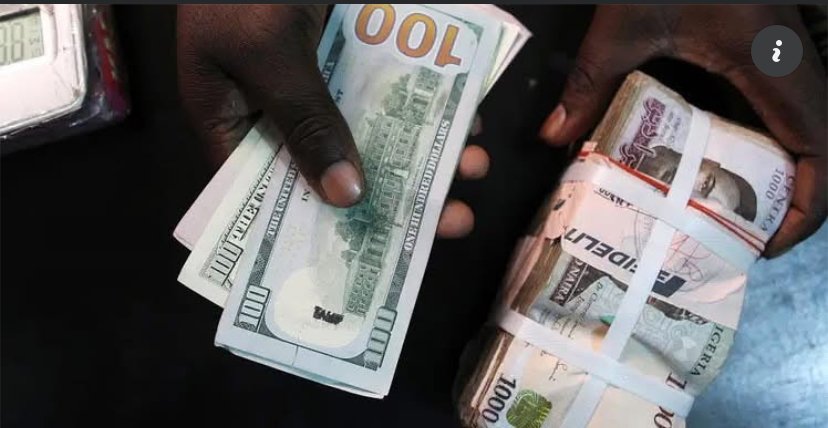
The Nigerian naira strengthened against the United States dollar in both the parallel and official foreign exchange markets on Wednesday, with the local currency appreciating to N1,375 per dollar in the parallel market and N1,328 at the Nigerian Foreign Exchange Market (NFEM).
The latest movement represents an improvement from the N1,383 per dollar recorded in the parallel market on Tuesday, according to market data reported by Vanguard.
At the official market, Central Bank of Nigeria (CBN) data showed that the indicative exchange rate strengthened to N1,328 per dollar from N1,331 the previous trading day, representing a N3 gain for the naira.
Gap Between Markets Narrows
The latest appreciation has reduced the difference between the official and parallel-market exchange rates.
The gap stood at N47 per dollar on Wednesday, compared with N52 on Tuesday. This indicates a narrowing of the spread between the two segments of Nigeria’s foreign exchange market.
A narrower gap can reduce opportunities for arbitrage between different foreign exchange windows and may provide a clearer reference point for businesses and individuals dealing with dollar-denominated transactions.
However, parallel-market rates can vary depending on location, dealer, transaction size and the availability of foreign currency. They should therefore be distinguished from the official NFEM rate.
Foreign Exchange Turnover Rises
Trading activity in the official foreign exchange market also increased significantly during the period.
According to figures cited from the CBN, interbank turnover in the NFEM rose by 181.5 per cent to $279.2 million, compared with $99.2 million recorded on Tuesday.
The increase in turnover points to substantially higher transaction activity in the official market, although a single day’s trading volume does not by itself establish a longer-term trend in foreign exchange liquidity.
For businesses that depend on imported goods, machinery, raw materials and other dollar-linked transactions, developments in foreign exchange liquidity remain important because exchange-rate movements can affect operating costs and ultimately consumer prices.
External Reserves Provide Additional Support
The naira’s recent performance has coincided with an improvement in Nigeria’s external reserves.
Vanguard reported that the country’s external reserves reached $54.674 billion as of September 17. Rising reserves can strengthen the country’s external liquidity position and provide a larger buffer for meeting foreign exchange obligations.
The reserve position has also been cited in recent market reporting as one factor supporting improved sentiment around the naira.
Earlier in September, the naira had already recorded gains in the official market. Reports based on CBN data showed the currency trading around N1,329 per dollar at the beginning of the month, while external reserves had crossed the $53 billion level.
What the Appreciation Means for Nigerians
A stronger naira can have different effects across the economy.
For importers and businesses that need dollars to pay overseas suppliers, an appreciation of the local currency can reduce the naira cost of obtaining foreign exchange, all other factors being equal.
Consumers could also benefit if lower foreign exchange costs are reflected in the prices of imported products. However, exchange-rate movements do not automatically translate into immediate reductions in retail prices because businesses also face transportation, energy, financing, duties and other operating costs.
Exporters, on the other hand, may receive fewer naira for the same amount of foreign-currency earnings when the naira appreciates, depending on their cost structure and pricing arrangements.
The effect on households therefore depends on how the currency movement interacts with inflation, wages, food prices, fuel costs and other major components of household expenditure.
Recent Volatility Shows Currency Remains Sensitive
The latest appreciation comes after periods of movement in both directions.
On September 18, for example, Vanguard reported that the naira had weakened to N1,375 per dollar in the parallel market from N1,370, while the official NFEM rate moved to N1,331 from N1,329.56.
The subsequent movements demonstrate that the naira continues to experience short-term fluctuations even as broader foreign exchange indicators have improved.
Other market reports have also shown variations in parallel-market quotations, highlighting the fact that unofficial rates are not uniform across all locations and dealers.
What Happens Next
The sustainability of the naira’s recent gains will depend on developments in foreign exchange supply and demand, external reserves, oil revenues, import demand, investor sentiment and broader monetary and fiscal conditions.
For now, the latest figures show an improvement in both major market segments, with the parallel-market rate at N1,375 per dollar and the official NFEM rate at N1,328.
The narrowing difference between the two rates and increased official-market turnover will remain important indicators to watch as businesses and consumers assess the direction of the foreign exchange market.
Weng Global – stories beyond borders
Sources
- Central Bank of Nigeria (CBN) — exchange-rate and foreign exchange market data cited in current reporting.
- Vanguard — report on the naira’s September 24, 2026 appreciation to N1,375/$ in the parallel market.
- Business Post Nigeria — recent reporting on naira movements in the official and parallel foreign exchange markets.
- P.M. News Nigeria — reporting on CBN exchange-rate data and foreign exchange turnover.
- Legit.ng — reporting on recent naira and external-reserve developments.