Reported by Simon Daniel Yusuph l Journalist at Weng Global
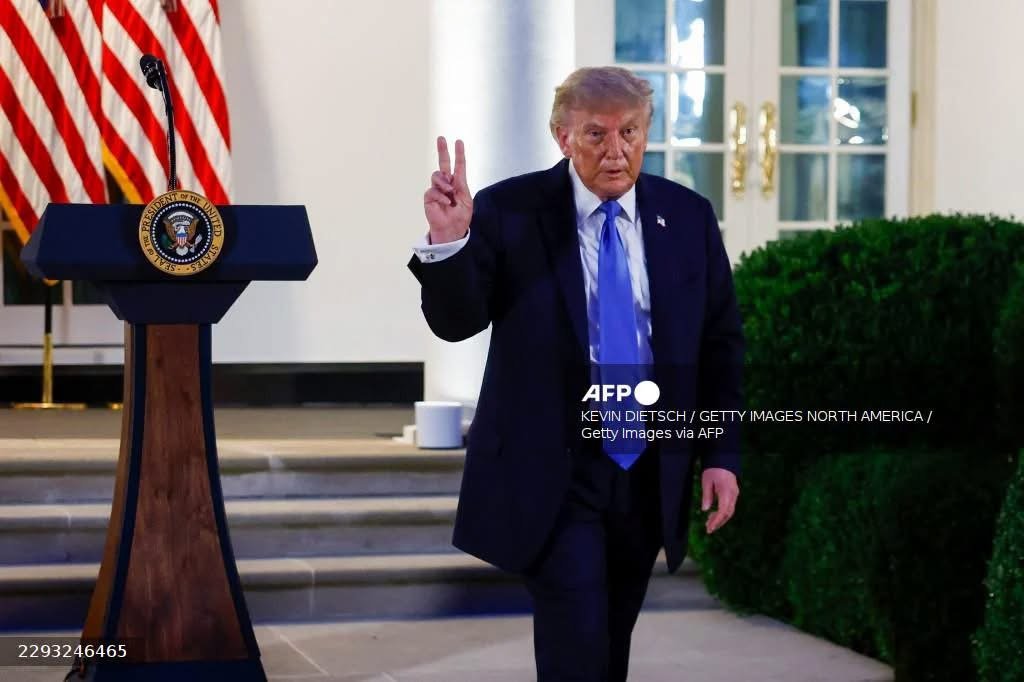
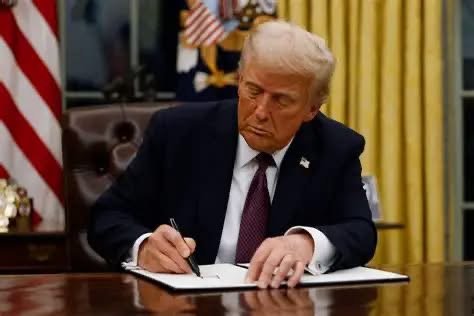
United States President Donald Trump has signed a trilateral security agreement with Denmark and Greenland aimed at strengthening security cooperation in the Arctic and North Atlantic, marking a significant shift after months of tensions over Washington’s interest in the strategically located territory.
Trump signed the agreement on Tuesday, September 22, 2026, alongside Danish Prime Minister Mette Frederiksen and Greenlandic Prime Minister Jens-Frederik Nielsen during the United Nations General Assembly in New York. The agreement expands the framework for US military and security cooperation in Greenland while keeping the territory within the Kingdom of Denmark.
The signing brings a new phase to a dispute that had strained relations between the United States, Denmark and Greenland after Trump repeatedly expressed interest in obtaining greater American control over Greenland.
Agreement strengthens US military presence
The new arrangement allows for an expanded American military presence in Greenland, an autonomous territory within the Kingdom of Denmark that occupies a strategically important position between North America and Europe.
Reuters reported that the agreement includes plans for the United States to establish or re-establish military facilities at Narsarsuaq in southern Greenland and Mestersvig on the island’s east coast, in addition to the existing US presence at Pituffik Space Base.
The military expansion is linked to the wider strategic importance of the Arctic, where the United States and its NATO allies are increasingly focused on monitoring military activity and protecting critical infrastructure and transportation routes.
The agreement also provides a framework for greater US involvement in Greenland’s defence while maintaining the existing relationship between Greenland and Denmark.
Deal follows months of diplomatic tension
The agreement follows months of uncertainty after Trump publicly pushed for greater US control over Greenland.
The issue created tensions with Denmark and raised questions within the NATO alliance because Greenland remains part of the Kingdom of Denmark and therefore falls within the alliance’s broader security framework.
Before the agreement was finalised, Trump had described the proposed arrangement as giving the United States permanent control over Greenland’s security and other security-related needs. Danish and Greenlandic officials, however, stressed that the agreement would respect Greenland’s interests and the sovereignty and territorial integrity of the Kingdom of Denmark.
The Danish government said ahead of the signing that the agreement recognised Greenland’s interests, Denmark’s sovereignty and the Greenlandic people’s right to self-determination.
Greenland Prime Minister Jens-Frederik Nielsen said the agreement would strengthen the security of Greenland, Denmark, the United States and the wider Western alliance, according to the Danish Prime Minister’s Office.
Denmark stresses sovereignty
A central issue surrounding the agreement has been whether expanded American military activity could affect Greenland’s political status or Denmark’s sovereignty over the territory.
Danish officials have maintained that the agreement does not transfer sovereignty over Greenland to the United States.
The Danish government previously said the agreement would strengthen Arctic and North Atlantic security while recognising both the sovereignty and territorial integrity of the Kingdom of Denmark and Greenland’s right to self-determination.
That position is significant because Greenland has extensive autonomy but remains constitutionally part of the Kingdom of Denmark. Its government manages many domestic matters, while Copenhagen retains responsibility for areas including foreign and defence policy.
The agreement therefore represents an expansion of American security cooperation rather than a transfer of Greenlandic territory to the United States.
NATO role remains central
Denmark has also presented the arrangement as part of a broader NATO security framework rather than a purely bilateral US-Danish military agreement.
Reuters reported before the signing that Denmark viewed the agreement as placing Arctic security within the responsibilities of NATO rather than leaving the issue solely to Washington and Copenhagen.
That distinction matters because Greenland’s geographic position gives it strategic importance for the defence of North America and Europe.
The territory sits between the North Atlantic and Arctic regions and is close to important air and maritime routes. Its location has made Greenland increasingly significant to the United States and other NATO members as Arctic competition intensifies.
Strategic importance of Greenland
Greenland is the world’s largest island and has become increasingly important in international security discussions because of its location, natural resources and proximity to North America, Europe and the Arctic.
The island also has strategic relevance because of the changing Arctic environment, which is opening new possibilities for shipping, resource development and military activity.
The United States has maintained a military presence in Greenland for decades. Pituffik Space Base, formerly known as Thule Air Base, plays an important role in American missile warning, space surveillance and other defence activities.
The new agreement could therefore deepen an existing military relationship rather than create an entirely new American presence on the island.
Reuters reported that the planned expansion includes two additional facilities, reflecting a broader American effort to strengthen its position in the Arctic.
Trump’s earlier push to acquire Greenland
The agreement also marks a change in the nature of the dispute between Washington and Copenhagen.
Trump’s earlier statements about acquiring Greenland had raised the possibility of a much more fundamental change in the territory’s political status.
The issue generated strong reactions in Denmark and Greenland, where officials repeatedly emphasised Greenland’s right to determine its own future.
The latest agreement instead focuses on security cooperation and military access while leaving Greenland’s constitutional relationship with Denmark unchanged.
The Danish government said the agreement was intended to strengthen common security in the Arctic and North Atlantic and to benefit NATO and Europe.
What the agreement means for Greenland
For Greenland, the agreement places greater emphasis on security cooperation while preserving the territory’s existing political status.
Greenlandic Prime Minister Jens-Frederik Nielsen has stressed that the agreement recognises Greenland’s interests and its role in international cooperation.
The increased US military presence could bring additional strategic and economic activity to parts of Greenland, but the long-term consequences will depend on how the agreement is implemented and how Greenlandic and Danish authorities manage the expanded military footprint.
The agreement must also pass the necessary national parliamentary procedures before entering fully into force, according to Denmark’s Prime Minister’s Office.
Wider implications for the Arctic
The agreement comes as the Arctic becomes an increasingly contested area involving the United States, Russia, European countries and other global powers.
Greater US military activity in Greenland is likely to strengthen Washington’s ability to monitor developments across the Arctic and North Atlantic.
It also reinforces the role of Greenland within the broader defence architecture of the United States and NATO.
The agreement is therefore about more than the relationship between Washington and Copenhagen. It forms part of a wider effort by Western countries to strengthen security in a region where military, economic and environmental interests are becoming increasingly important.
The presence of critical minerals and other natural resources has added another dimension to international interest in Greenland, although security remains the immediate focus of the agreement.
What happens next
The immediate next step is the completion of the required national parliamentary procedures.
Implementation of the agreement will determine the scale and timing of the expanded American military presence, including developments involving the proposed facilities at Narsarsuaq and Mestersvig.
The agreement is also expected to shape future discussions among the United States, Denmark and Greenland over Arctic defence, infrastructure and security cooperation.
For Greenland, the central issue will remain balancing closer security cooperation with the United States against its political autonomy and its relationship with Denmark.
For Denmark and its NATO partners, the arrangement provides a new framework for addressing security concerns in the Arctic and North Atlantic.
For Washington, it strengthens the United States’ established military position in a strategically important part of the Arctic without changing Greenland’s formal status.
The signing consequently represents a move from months of diplomatic confrontation towards a formal security partnership, although questions about implementation, military infrastructure and the long-term balance of responsibilities remain.
Weng Global – Stories beyond borders
Sources
- Reuters
- Danish Prime Minister’s Office
- PBS NewsHour
- Associated Press
- CBS News
- ABC News
- Anadolu Agency