Reported by Weng Patrick Atokor l Journalist at Weng Global
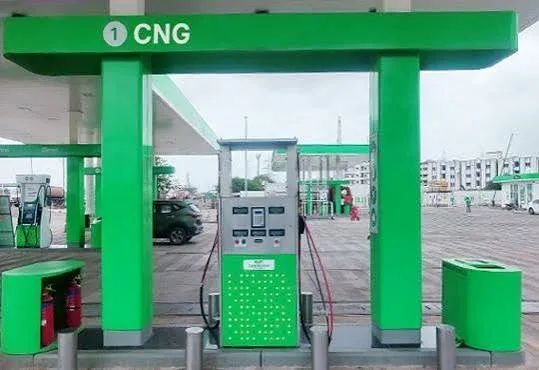
The Federal Government has converted an abandoned petrol filling station at the State House in Abuja into a Compressed Natural Gas (CNG) refuelling facility as part of efforts to expand alternative fuel infrastructure and encourage Nigerians to adopt cheaper transportation energy options.
The facility, located in Karu, Abuja, was inaugurated on Friday, November 6, 2026, through a partnership involving the State House, the Presidential Initiative on Compressed Natural Gas and Electric Vehicles (Pi-CNG & EV), and Rollin Energy Limited.
The project is part of the government’s broader strategy to increase CNG accessibility, reduce dependence on petrol and diesel, and attract private-sector investment into Nigeria’s alternative energy sector.
The Permanent Secretary of the State House, Temitope Fashedemi, said the government provided the abandoned filling station for conversion, while the private-sector partner financed its rehabilitation and installation of the necessary equipment.
According to Fashedemi, the arrangement allowed the government to make productive use of an existing facility without spending public funds on its rehabilitation.
FG Promotes Private Investment in CNG Infrastructure
Speaking during the inauguration, Fashedemi said the project demonstrated the government’s commitment to encouraging private-sector participation in the development of alternative fuel infrastructure.
He explained that one of the major challenges facing Nigeria’s CNG programme was the limited availability of refuelling stations, which had affected motorists’ ability to access the alternative fuel conveniently.
The government, he said, was interested in creating an enabling environment for private investors rather than assuming the entire financial responsibility for establishing and operating commercial refuelling facilities.
He consequently encouraged existing petrol station operators and prospective investors to partner with the Presidential CNG Initiative to expand refuelling infrastructure and vehicle conversion services across the country.
The approach is expected to help accelerate infrastructure development while reducing the financial burden on government institutions.
State House Plans to Expand CNG Vehicle Conversion
Fashedemi also disclosed that the State House had begun incorporating CNG technology into its official vehicle fleet.
He said approximately 10 recently acquired JAC vehicles were CNG-hybrid models, alongside some shuttle buses operating within the Presidential Villa.
The State House is also considering extending the conversion programme to interested personnel who own vehicles suitable for the technology.
According to the Permanent Secretary, arrangements were being made for eligible staff members to present their vehicles for assessment and possible conversion in the coming weeks.
He, however, explained that not every vehicle could be converted, as technical assessments would determine whether individual vehicles met the necessary requirements.
The initiative is intended to demonstrate the practical application of CNG technology within government institutions while encouraging wider public adoption.
New CNG Station Designed to Serve 150 Vehicles Daily
The Chief Executive Officer of Rollin Energy Limited, Mubarak Umar Danbatta, said the facility was designed as an integrated CNG refuelling station.
He explained that the installation contains its compressor, dispenser and other essential equipment within a single system.
The facility also features double-nozzle dispensers, allowing vehicles to refuel from either side.
According to Danbatta, the station has the capacity to serve approximately 150 vehicles daily, depending on cylinder sizes and operating pressure.
He disclosed that the facility underwent a trial period before its formal inauguration, during which CNG was reportedly supplied free of charge to motorists in the surrounding community for more than a week.
The station is expected to provide motorists in the area with another refuelling option as commercial operations commence.
Danbatta described the project as an example of how partnerships between government institutions and private companies could contribute to expanding Nigeria’s alternative fuel infrastructure.
He also disclosed that Rollin Energy had previously collaborated with the Presidential CNG Initiative on another project inaugurated on May 29, 2024.
The company currently operates facilities in Ilorin and Abuja, while additional stations are planned for Kano and Kaduna.
Rollin Energy is targeting nearly 15 CNG refuelling facilities nationwide by the end of 2026.
FG Targets 2,000 Additional CNG Refuelling Stations
The Chairman of the Presidential Initiative on Compressed Natural Gas and Electric Vehicles, Ismael Ahmed, said the Federal Government was targeting the establishment of 2,000 additional CNG refuelling stations to accelerate alternative fuel adoption.
He disclosed that 106 stations were operational, while another 170 were at different stages of development or awaiting regulatory approvals, according to reports published by The Guardian.
Ahmed explained that President Bola Tinubu had directed the establishment of 1,500 additional stations in February 2026, followed by another 500 in August.
The projects are expected to come on stream between 2026 and early 2027.
The expansion is intended to address the shortage of refuelling infrastructure, particularly in locations where motorists currently struggle to access CNG.
However, figures published by different media organisations on November 6 differed. Punch reported that approximately 160 CNG stations were operational, compared with the 106 cited by The Guardian.
The difference highlights the importance of consistent public reporting on the number of functioning CNG facilities nationwide.
Ahmed maintained that the programme had moved beyond its experimental stage, with the government’s attention increasingly focused on expanding infrastructure to meet growing demand.
CNG Adoption Expected to Reduce Transportation Costs
The Federal Government is promoting CNG partly because of its potential to reduce transportation expenses following the removal of petrol subsidies in 2023.
The policy change under President Bola Tinubu significantly altered Nigeria’s fuel pricing structure, increasing financial pressure on households, transport operators and businesses.
CNG has consequently emerged as one of the alternatives being promoted to reduce dependence on conventional petroleum products.
Ahmed said CNG-powered buses had reduced transportation fares by between 30 and 40 per cent on routes where they were operating, including parts of Abuja, Lagos and the Kano-Katsina corridor.
He cited the Kano-Katsina route as an example, explaining that passengers who previously paid between ₦3,000 and ₦4,000 could now travel for approximately ₦1,500 using CNG-powered buses.
These figures were presented by the initiative’s chairman as evidence of the potential economic benefits of alternative fuel adoption.
However, actual savings for motorists and transport operators depend on several factors, including CNG prices, vehicle conversion expenses, maintenance costs and the availability of refuelling stations.
Expanding the infrastructure will therefore be important in determining whether the expected savings can be sustained and extended to more Nigerians.
Government Plans More CNG-Powered Public Transport
The Senior Special Assistant to the President on Domestic Affairs, Toyin Subair, also disclosed that the Federal Government and state governments were expanding investments in CNG-powered buses, trucks, tricycles and other mass transportation vehicles.
He said the National Economic Council had committed to a joint financing arrangement with the Federal Government to support the deployment of more affordable transportation options across the states.
According to Subair, the administration is targeting transportation fare reductions of 40 per cent or more, particularly on interstate routes and in the transportation of agricultural produce.
He also disclosed that more than 30,000 additional vehicle conversion kits were expected to enter the Nigerian market from the following week.
The additional kits are intended to increase conversion capacity ahead of the Christmas travel season, when transportation demand traditionally rises.
The expansion of conversion services and refuelling infrastructure is expected to support the government’s efforts to encourage motorists and commercial transport operators to adopt alternative fuels.
Why the State House CNG Project Matters
The conversion of the abandoned State House petrol station represents more than the opening of another refuelling facility in Abuja.
First, it demonstrates how existing government infrastructure can be repurposed to support emerging energy markets. Rather than leaving the abandoned facility unused, the government made it available for conversion through a partnership with a private company.
Second, the project highlights the importance of private investment in developing Nigeria’s alternative fuel market.
Although Nigeria has substantial natural gas resources, expanding their use in transportation requires investment in compression equipment, storage systems, refuelling stations, vehicle conversion centres and safety standards.
Third, the planned conversion of eligible State House personnel’s vehicles could help demonstrate the practical application of CNG technology within government institutions.
Nevertheless, the success of Nigeria’s transition to alternative fuels will depend on whether infrastructure development can keep pace with the growing number of vehicles being converted.
For ordinary motorists, access to reliable refuelling stations, affordable conversion services and properly maintained equipment will remain essential.
The government will also need to maintain effective safety oversight to ensure that conversion work is carried out using approved equipment and qualified technicians.
What Happens Next?
The newly inaugurated Karu facility is expected to commence commercial operations following its trial period.
Rollin Energy Limited is targeting additional CNG stations in Kano and Kaduna, while the Federal Government intends to accelerate the nationwide expansion of refuelling infrastructure.
The State House is also expected to begin assessing vehicles belonging to interested personnel for possible conversion.
Meanwhile, the planned arrival of more than 30,000 conversion kits is another development to watch as the government prepares for increased transportation demand during the Christmas period.
Ultimately, the success of the programme will depend not only on the number of CNG stations inaugurated but also on their accessibility, reliability, safety and ability to deliver meaningful savings.
For Nigeria, which is seeking to reduce transportation costs and make greater use of its natural gas resources, converting the abandoned State House filling station represents another step towards expanding alternative energy infrastructure.
However, sustained investment and nationwide accessibility will determine whether the initiative can deliver benefits beyond government facilities and major urban centres.
Weng Global – Stories beyond borders
Sources
- The Guardian – FG Leads CNG Transition, Reopens Abandoned Fuel Station, Plans Staff Vehicle Conversion.
- Punch Newspapers – FG Says 160 CNG Stations Operational, Plans 500 More.
- New Telegraph – FG Intensifies CNG Transition, Turns Abandoned Fuel Station to CNG Refuelling Facility.