Reported by Simon Daniel Yusuph l Journalist at Weng Global
Minister of the Federal Capital Territory, Nyesom Wike, has said Senator Ireti Kingibe will not return to the Senate in 2027, escalating an ongoing political dispute between the FCT minister and the lawmaker over the financing and development of Abuja.
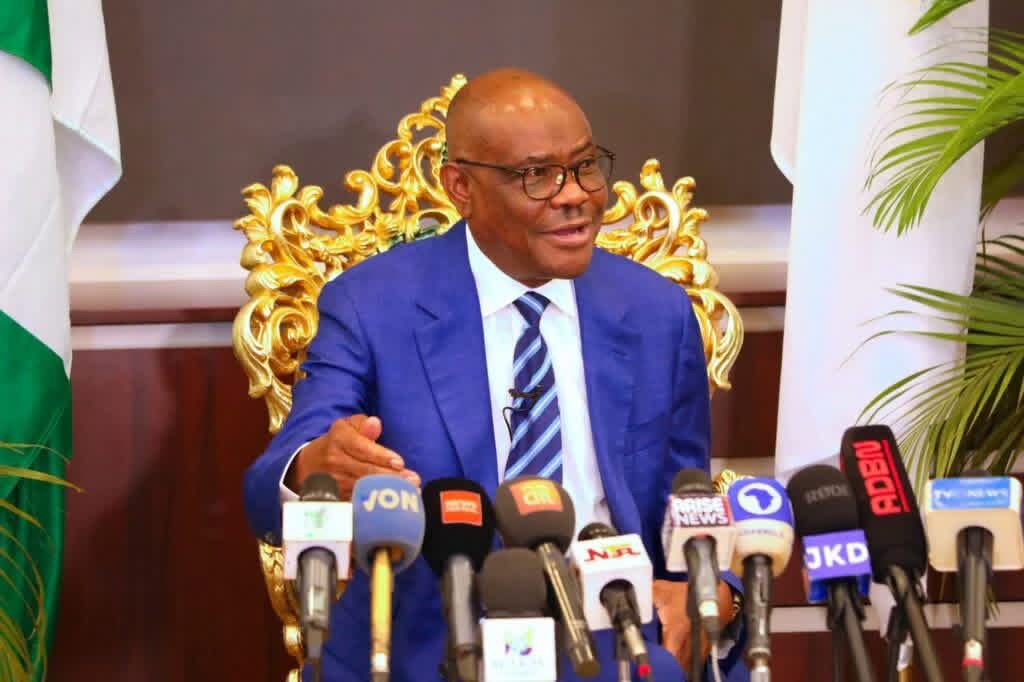
Wike made the statement on Tuesday, September 22, 2026, while speaking to journalists during an inspection of ongoing infrastructure projects in the Federal Capital Territory. He was responding to Kingibe’s allegations that the FCT Administration had obtained loans for capital projects without the required approval of the National Assembly.
Wike rejects Kingibe’s borrowing allegation
The FCT minister dismissed Kingibe’s claim, arguing that government borrowing for capital projects must be incorporated into the budget and subjected to the appropriate legislative process.
Wike said the central issue should not simply be whether the FCT Administration borrowed money, but whether borrowed funds were being used for projects that benefit residents.
He also linked his prediction about Kingibe’s political future to what he described as her record of representation in the FCT.
Wike has previously made similar statements about Kingibe’s prospects ahead of the 2027 elections. Channels Television reported in March that the minister had already said she would not return to the Senate, while criticising what he described as a lack of visible projects associated with her tenure.
Kingibe had raised questions over FCT loans
The latest confrontation follows concerns raised by Kingibe over the FCT’s borrowing and debt position.
Kingibe previously alleged that the FCT Administration had obtained loans without the required approval of the National Assembly. She said her concerns were based on information from the Debt Management Office covering the period from August 2023 to March 2026.
The allegation has not been established as a finding of wrongdoing.
The House of Representatives subsequently rejected the claim that Wike had violated the required procedures in financing FCT projects. Deputy House spokesperson Philip Agbese said there was no evidence that the minister had breached the relevant procedures, according to reports published earlier in September.
Wike has now also rejected the allegation, maintaining that borrowing for FCT infrastructure would be reflected in the budget and go through the necessary approval process.
Political dispute intensifies ahead of 2027
The disagreement has developed into a broader political confrontation as Nigeria approaches the 2027 general elections.
Kingibe currently represents the FCT in the Senate. She was elected in 2023 on the platform of the Labour Party before subsequently moving to the African Democratic Congress.
The senator’s political position has also become part of a wider contest for the FCT Senate seat ahead of the next election.
Wike has publicly supported former Senator Philip Aduda as a contender for the seat. The FCT minister again stated on Tuesday that he would continue supporting President Bola Tinubu and Aduda.
Wike’s comments therefore amount to a political prediction and statement of support, rather than an established outcome of the 2027 election. The eventual winner will be determined by the electoral process.
FCT infrastructure remains at centre of argument
Alongside the political disagreement, Wike defended the FCT Administration’s borrowing by pointing to ongoing infrastructure projects across Abuja and surrounding communities.
During Tuesday’s inspection, the minister reviewed work on roads and other projects, including sections around Tunga Madaki, Zuba and Kagini.
He argued that the value of borrowing should be assessed partly by whether the resulting infrastructure improves the lives and economic activities of residents.
According to reports from the inspection, Wike said completed infrastructure would have an economic impact on rural communities connected by the projects.
The argument reflects a broader debate in public finance: governments often rely on borrowing to fund major infrastructure because such projects require substantial capital, while lawmakers and citizens also have an interest in ensuring that borrowing is properly authorised and transparently used.
National Assembly approval remains a key issue
The dispute has placed legislative oversight at the centre of the disagreement.
Nigeria’s budget process gives the National Assembly an important role in approving public expenditure. The Senate’s consideration of the FCT’s 2026 appropriation illustrates the scale of planned spending in the capital.
In March 2026, the National Assembly reported that the Senate had approved the second reading of the FCT’s N2.2 trillion 2026 Appropriation Bill. The proposed spending included N1.657 trillion for capital projects, with the bill subsequently referred to the relevant Senate committee for further consideration.
However, approval of an annual appropriation is not, by itself, evidence that every specific borrowing arrangement has been authorised. Determining whether particular loans complied with all applicable legal and legislative requirements would require examination of the relevant borrowing documents, budget provisions and approvals.
That distinction is important in assessing the competing claims made by Kingibe and Wike.
Wike links projects to political messaging
Wike also acknowledged the political dimension of the ongoing project inspections.
He said the timing coincided with the campaign period for the 2027 presidential and National Assembly elections and described the infrastructure work as part of the political message being presented to residents.
Vanguard reported that Wike said the project inspections were also serving as a form of campaign activity and connected the projects to President Bola Tinubu’s administration.
Such comments underline the increasingly political environment surrounding infrastructure development in the FCT as the 2027 elections approach.
Kingibe’s position and political future
Kingibe has remained critical of aspects of the FCT Administration and has raised questions about its finances and development priorities.
Her supporters and political allies have argued that legislative oversight requires lawmakers to scrutinise government spending and borrowing.
At the same time, Wike has questioned her record and publicly backed another political figure for the Senate seat.
Kingibe’s own records show that she won the FCT senatorial election in 2023 with 202,175 votes and was sworn into the 10th National Assembly in June that year.
Whether she retains the seat in 2027 will depend on the candidates, political parties, electoral process and votes cast in the election.
Why the dispute matters
The disagreement between Wike and Kingibe extends beyond their personal political differences.
At its core are questions about how public funds are raised and spent in the nation’s capital, how infrastructure projects are financed and the extent of legislative oversight over government borrowing.
For FCT residents, the practical issue is whether major infrastructure investments translate into improved roads, transportation, public services and economic opportunities.
For lawmakers and public officials, the dispute also highlights the importance of transparency around government borrowing, particularly where large infrastructure programmes are involved.
As the 2027 election approaches, these issues are likely to remain part of the political debate over who should represent the FCT in the Senate and how Abuja should be governed.
What happens next
The immediate political issue is the contest for the FCT Senate seat ahead of the 2027 elections.
Wike has made clear that he supports former senator Philip Aduda, while Kingibe remains an active political figure and is seeking another term.
On the financial side, questions surrounding FCT borrowing could continue to attract attention from lawmakers and the public. Any definitive assessment of whether particular loans complied with legal requirements would depend on documentary evidence and the relevant approval records.
Weng Global – stories beyond borders
Sources
- Punch Newspapers
- Voice of Nigeria
- Vanguard
- Channels Television
- National Assembly of Nigeria
- Debt Management Office records, as referenced in reporting on Senator Ireti Kingibe’s allegations