Reported by Simon Daniel Yusuph l Journalist at Weng Global
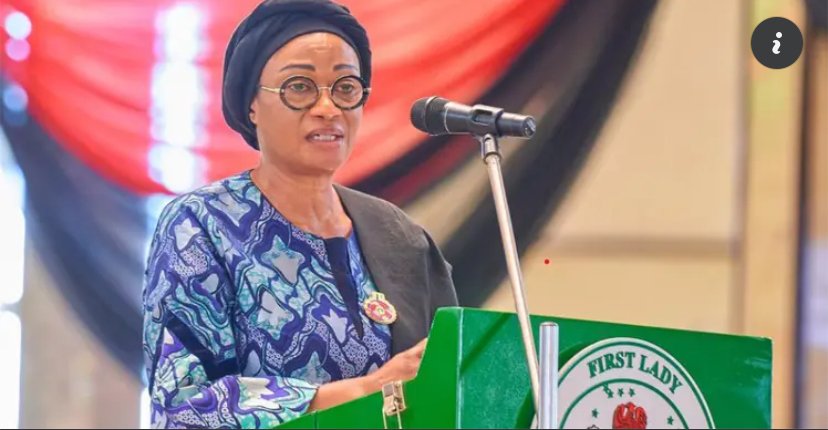
Nigeria’s First Lady, Senator Oluremi Tinubu, has urged households, businesses and communities across the country to reduce food waste, improve refuse disposal and embrace sustainable practices that can help protect the environment.
Tinubu made the appeal in a message marking the 2026 World Cleanup Day, observed on September 20 under the theme “From Clean Plates to Clean Cities.” Her message linked everyday food consumption and waste-management practices with the broader need to build cleaner and healthier communities.
Tinubu Calls for More Responsible Food Consumption
The First Lady urged Nigerians to become more deliberate about how they purchase, prepare, consume and preserve food.
She said the focus on food waste was particularly important at a time when climate change, conflicts and other global challenges were disrupting food production and supply chains.
“I encourage households, businesses, and communities to reduce food waste, dispose of refuse properly, and adopt more sustainable practices that protect our environment,” Tinubu said.
She also stressed the importance of collective action, saying cleaner and healthier communities would require participation from individuals, families, businesses and wider communities.
“Through our collective efforts, we can build cleaner, healthier communities for present and future generations,” she added.
Why Food Waste Is an Environmental Issue
Food waste is not only a matter of discarded meals. It also represents wasted resources used throughout the food system, including land, water, energy, labour, transportation and storage.
The United Nations Environment Programme estimates that about 1.05 billion tonnes of food were wasted globally in 2022 across households, food services and retail. That represented about 19 per cent of food available to consumers.
Households accounted for the largest share, with approximately 631 million tonnes of food waste, according to UNEP. Food-service businesses accounted for about 290 million tonnes, while retail accounted for about 131 million tonnes.
The scale of the waste has environmental consequences because resources used to produce food that is ultimately discarded are also effectively wasted.
UNEP has estimated that food loss and waste contribute around 8 to 10 per cent of global greenhouse-gas emissions.
World Cleanup Day Focuses on Food Waste
The 2026 World Cleanup Day campaign places food waste at the centre of its global message.
The United Nations says the theme, “From Clean Plates to Clean Cities,” connects individual decisions about food with the wider systems that determine the cleanliness and sustainability of cities and communities.
The campaign encourages action to prevent food from being wasted, keep edible food in use, recover unavoidable organic materials and develop more resource-efficient waste-management systems.
World Cleanup Day was formally established by the United Nations General Assembly through Resolution 78/122, adopted on December 8, 2023. The resolution proclaimed September 20 as World Cleanup Day to be observed annually.
The observance is facilitated by the United Nations Human Settlements Programme, UN-Habitat.
What the Appeal Means for Nigerian Households
Tinubu’s message places significant emphasis on actions that can begin at household level.
Careful meal planning, buying quantities that can realistically be consumed, proper food storage and finding uses for suitable leftovers can help reduce avoidable household waste.
Proper disposal is also important when food can no longer be consumed. Poorly managed waste can contribute to environmental pollution and place additional pressure on already stretched waste-management systems.
The appeal therefore extends beyond the question of how much food is thrown away. It also concerns how waste is handled after it has been generated.
For businesses, the issue includes how food is purchased, stored, prepared and managed before it reaches consumers. Restaurants, markets, retailers and other food-related businesses can influence the amount of edible food that ultimately becomes waste.
The Wider Food-Security Connection
Food waste also has implications for food security.
UNEP’s data show that substantial quantities of food are discarded even as hunger remains a major global challenge. The organisation has described food-waste reduction as relevant to food security, climate action and more sustainable food systems.
For Nigeria, where food affordability and access remain important public concerns, reducing unnecessary waste can form part of broader efforts to use available food resources more efficiently.
However, reducing food waste alone cannot resolve food insecurity. Access to food is also affected by production, incomes, prices, transportation, storage, distribution and other economic and social factors.
Tinubu’s message is therefore primarily a call for greater responsibility in everyday consumption and waste management rather than a claim that household behaviour alone can address the country’s wider food challenges.
Cleaner Communities Require Collective Action
The First Lady’s appeal also reflects the broader principle behind World Cleanup Day: environmental protection involves responsibilities shared across households, businesses, communities and public institutions.
Government agencies have important roles in waste collection, recycling, sanitation infrastructure and environmental regulation. Businesses can improve waste-reduction and recovery practices, while households and communities can limit unnecessary waste and dispose of refuse responsibly.
The United Nations says World Cleanup Day is intended to raise awareness of the contribution of cleanup activities to sustainable development and encourage participation from governments, civil society, businesses, communities and other stakeholders.
This approach makes waste management both an environmental and public-interest issue.
What Happens Next
Tinubu’s World Cleanup Day message does not announce a new national regulation or specific enforcement programme. Instead, it is a public call for Nigerians to change everyday practices around food consumption and waste disposal.
The immediate focus is therefore on awareness and individual and collective responsibility.
For the wider environmental challenge, sustained progress will depend on how such awareness translates into practical waste-reduction measures, improved waste-management systems and more responsible consumption practices.
As Nigeria joins the global observance, the message from the First Lady is that cleaner communities begin not only with removing waste after it has been discarded, but also with reducing unnecessary waste at its source.
Weng Global – stories beyond borders
Sources
- The Guardian Nigeria — Report on Oluremi Tinubu’s World Cleanup Day message.
- The PUNCH — Report on the First Lady’s call to reduce food waste.
- United Nations — World Cleanup Day 2026 information and global food-waste data.
- United Nations Environment Programme (UNEP) — Food Waste Index Report 2024.
- United Nations General Assembly — Resolution 78/122 establishing World Cleanup Day.