Reported by Simon Daniel Yusuph l Journalist at Weng Global
The All Progressives Congress (APC) has highlighted the education sector achievements of President Bola Tinubu’s administration, claiming that the Federal Government has disbursed ₦372.62 billion in student loans, enrolled 156,446 Nigerians in technical and vocational training programmes and secured $552 million in funding for basic education reforms.
The figures were disclosed by the spokesperson of the APC Presidential Campaign Council, Dele Alake, in a statement issued on Wednesday, November 4, 2026, as the ruling party assessed the administration’s performance in the education sector.
According to the council, the interventions form part of the Federal Government’s broader education reform agenda, which covers basic, secondary, technical, vocational and tertiary education.
The APC said the reforms had also contributed to returning more than one million out-of-school children to learning, expanding educational opportunities for girls, improving teachers’ professional development and strengthening welfare arrangements for workers in tertiary institutions.
The council based its assessment on the Federal Ministry of Education’s 2026 Nigerian Education Sector Renewal Initiative (NESRI) report, which outlines government interventions across several areas of the country’s education system.
However, the figures and achievements were presented by the ruling party as an assessment of its administration’s performance, making continued scrutiny of implementation, access and measurable learning outcomes important in determining their wider impact.
NELFUND Disburses ₦372.62 Billion to Students Across 319 Institutions
One of the major achievements highlighted by the APC is the Nigerian Education Loan Fund (NELFUND), established to provide financial assistance to Nigerian students facing difficulties paying for higher education.
According to the Presidential Campaign Council, NELFUND had disbursed ₦372.62 billion to students across 319 tertiary institutions.
The amount comprises ₦192.89 billion allocated towards tuition and institutional fees, while ₦179.73 billion was provided as upkeep allowances to support students with their daily expenses.
The council also disclosed that the fund had processed 1,659,853 student loan applications, describing the initiative as an important intervention aimed at reducing financial barriers to university and other tertiary education.
The figures were also reflected in NELFUND’s October 30 disbursement report, which put the number of beneficiaries at 1,659,853. The fund had received 2,330,263 applications since its portal opened in May 2024.
The student loan programme was introduced to address financial difficulties confronting students from households unable to meet the rising costs of tertiary education.
Nigeria’s higher education system has faced persistent concerns over affordability, particularly as families struggle with tuition-related expenses, accommodation, transportation, feeding and other educational requirements.
For many students, these financial pressures have affected their ability to remain in school and complete their academic programmes.
The NELFUND initiative is therefore designed to provide eligible students with financial support while helping institutions receive the fees required for their operations.
Nevertheless, the long-term effectiveness of the programme will depend on transparent administration, timely disbursement, accessibility for qualified applicants and a sustainable repayment framework.
156,446 Nigerians Enrolled in Technical and Vocational Training
Beyond university education, the APC also highlighted the Federal Government’s Technical and Vocational Education and Training (TVET) programme as another major component of its education reforms.
The council said the programme had attracted more than 2.8 million applications, with 156,446 verified trainees receiving free technical and vocational training.
Beneficiaries are reportedly entitled to monthly stipends and start-up support to help them establish businesses or pursue employment opportunities after completing their training.
According to the statement, more than ₦65.7 billion had been disbursed directly to trainees, while an additional ₦30.2 billion had been paid to participating training centres.
The government also reportedly rehabilitated 38 technical colleges and introduced free technical education covering tuition, boarding, textbooks and uniforms in participating institutions.
The programme targets practical skills development in areas where Nigeria requires a stronger technical workforce.
These include vocational trades, technical services and other employment-oriented skills that can support industrial development, entrepreneurship and economic productivity.
The initiative is particularly significant given Nigeria’s youth unemployment challenges and the growing demand for workers with practical and industry-relevant skills.
While university education remains important, technical and vocational training provides an alternative pathway for young Nigerians who wish to acquire employable skills without necessarily following the conventional university route.
However, the number of applications and trainees alone does not establish the programme’s long-term success.
Its impact will also depend on the quality of training, availability of accredited centres, access to equipment, industry partnerships and the ability of graduates to secure employment or establish sustainable businesses.
Government Highlights $552 Million Basic Education Funding
The APC Presidential Campaign Council also identified basic education as a major area of intervention under the Tinubu administration.
According to the council, the Federal Government secured $552 million for the Human Capital Opportunities for Prosperity and Equity for Quality Basic Education for All programme, known as HOPE-EDU.
The programme is designed to reach approximately 29 million children, support more than 500,000 teachers and cover 65,000 public schools.
The funding, backed by the World Bank and the Global Partnership for Education, is intended to improve foundational learning, expand access to schooling and strengthen the delivery of basic education across participating states.
The initiative comes amid persistent concerns about the quality of education available to millions of Nigerian children.
Nigeria continues to face challenges involving inadequate classroom infrastructure, insufficient learning materials, teacher shortages and limited access to quality schooling, particularly in underserved communities.
The HOPE-EDU programme is expected to address some of these challenges through investments in education delivery and improvements in the learning environment.
Its success will depend significantly on how effectively the funds are deployed, the transparency of implementation and the ability of participating states to deliver measurable improvements in schools.
Over One Million Out-of-School Children Reportedly Returned to Learning
The ruling party also credited the administration with making progress in efforts to reduce the number of children excluded from formal education.
According to the APC, the Better Education Service Delivery for All (BESDA) programme had returned more than one million out-of-school children to learning.
The council further disclosed that 1,400 Tsangaya teachers had received training, while 200 bilingual learning centres had been established across 17 northern states.
The interventions are particularly relevant to northern Nigeria, where insecurity, poverty, inadequate educational infrastructure and social barriers have contributed to persistent challenges in school enrolment.
The Tsangaya education system, traditionally associated with Quranic learning, has also featured in government efforts to integrate children into a more structured educational framework.
The establishment of bilingual centres is intended to improve learning opportunities by supporting education through languages that can make instruction more accessible to children in different communities.
Despite the reported progress, the scale of Nigeria’s out-of-school children challenge remains substantial.
The World Bank-backed HOPE-EDU programme identifies approximately 14.8 million Nigerian children between the ages of five and 14 as being out of school, with about 95 per cent concentrated in northern Nigeria.
The programme also estimates that 45.8 million children within the age group cannot read and understand a simple text.
These figures highlight the extent of the challenge confronting policymakers and demonstrate why sustained investment in foundational education remains essential.
Returning children to classrooms is an important first step, but ensuring that they attend regularly, receive quality instruction and develop basic literacy and numeracy skills is equally important.
Girl-Child Education Receives Additional Attention
The APC also highlighted the Adolescent Girls Initiative for Learning and Empowerment (AGILE) as one of the programmes contributing to improved educational opportunities for girls.
According to the council, the initiative had reached 7.19 million girls, with 3.7 million enrolled in secondary schools.
It also said more than 10,000 schools had benefited from improvements to their facilities.
The programme is designed to address barriers preventing adolescent girls from accessing and completing secondary education.
In several Nigerian communities, girls continue to face challenges associated with poverty, early marriage, cultural restrictions, inadequate school facilities and limited opportunities for continued education.
Expanding access to secondary education for girls is important not only for individual development but also for broader social and economic progress.
Educated girls are better positioned to participate in the workforce, make informed decisions and contribute to their communities.
However, maintaining enrolment requires more than providing access to school facilities. Issues such as safety, affordability, sanitation, teaching quality and family support remain important considerations.
New Curriculum Reintroduces Nigerian History
On curriculum development, the APC said the Federal Government had introduced a revised national curriculum that reintroduced Nigerian History and strengthened Civic and Heritage Studies.
The council also said the National Learning Assessment had been restored to monitor pupils’ academic performance and identify learning gaps.
The revised curriculum is part of efforts to make Nigeria’s education system more relevant to contemporary national and global realities.
The inclusion of Nigerian History is particularly significant in strengthening historical awareness, national identity and understanding of the country’s political, cultural and social development.
Civic and Heritage Studies are also expected to provide students with greater knowledge of citizenship, national responsibilities and the country’s cultural diversity.
The government has additionally introduced the Inspire Live initiative, which provides online lessons for pupils from Primary One to Senior Secondary School Three.
The programme reportedly uses certified teachers and artificial intelligence-assisted learning to support access to educational content.
However, digital learning initiatives must also consider the realities of unequal internet access, electricity supply and the availability of digital devices, particularly in rural and economically disadvantaged communities.
Government Highlights Teacher Professional Development
The APC further identified teacher development as another area of progress under the administration’s education reforms.
According to the council, 53,553 teachers had registered under the EduRevamp initiative, while 51,794 participated in the first cohort of the Accelerated Teacher Professionalisation Pathway.
The six-month programme provides professional qualifications, certification and licensing opportunities for participating teachers.
With ₦2 billion backing, the initiative is targeting 250,000 teachers by 2027.
The administration is also promoting improvements in teaching standards through professional development and efforts to strengthen the quality of instruction in schools.
Teacher development remains a critical component of education reform because the availability of classrooms, textbooks and modern curricula cannot independently guarantee good learning outcomes without qualified and adequately supported teachers.
Nigeria’s education system continues to require improvements in teacher recruitment, training, remuneration and working conditions.
The effectiveness of the initiatives will therefore depend on whether professional development translates into better classroom instruction and improved performance among pupils and students.
Tinubu Administration Highlights Improved University Staff Welfare
On tertiary education, the APC said the Federal Government had resolved the longstanding dispute between the government and the Academic Staff Union of Universities (ASUU).
The council also stated that an agreement providing for a 40 per cent increase in academic staff remuneration and improved welfare benefits had been implemented.
The development is significant given the history of disagreements between university lecturers and successive Nigerian administrations over salaries, funding, working conditions and the management of public universities.
Industrial disputes involving ASUU have previously disrupted academic calendars, forcing students to spend additional time completing their programmes.
The APC said the administration’s interventions had contributed to stabilising academic activities and improving the university environment.
The council also highlighted the Tertiary Institutions Staff Support Fund, which it said had disbursed ₦28 billion to 15,000 workers across 153 public tertiary institutions.
Eligible beneficiaries can reportedly access loans of up to ₦10 million for housing, healthcare, transportation and education.
Such interventions are intended to improve staff welfare and provide financial support to employees working in public tertiary institutions.
Nevertheless, the long-term stability of Nigeria’s university system will require sustained government engagement with academic and non-academic unions, predictable funding and improvements in institutional infrastructure.
₦110 Billion Investment in Medical and Science Education
The APC also highlighted government investment in medical and science education, describing it as part of efforts to strengthen Nigeria’s capacity to produce skilled professionals.
According to the council, the Federal Government was spending ₦110 billion on the rehabilitation of 18 federal medical schools across the country’s six geopolitical zones.
The statement also reported that nursing enrolment increased from 81,480 in 2023 to 114,300 in 2025.
Additionally, 20 tertiary institutions focusing on science, technology, engineering, mathematics and medicine had reportedly been approved.
Twelve engineering and technology faculties are also expected to benefit from rehabilitation projects.
Investment in medical education is particularly important as Nigeria continues to face concerns over healthcare workforce shortages and the migration of trained professionals to other countries.
Strengthening medical schools and expanding enrolment could improve the country’s capacity to train doctors, nurses and other healthcare workers.
However, expanding admissions must be accompanied by adequate teaching facilities, qualified lecturers, clinical training opportunities and sufficient funding to maintain educational standards.
Government Supports Student Entrepreneurs and Research
The ruling party also identified research, innovation and entrepreneurship as important areas of the administration’s education agenda.
According to the APC, the Federal Government had provided ₦365 million annually for research through the National Laureate Prize.
The council further said the Student Venture Capital Grant had disbursed more than ₦2.5 billion to 45 student entrepreneurs.
Each beneficiary could reportedly access up to ₦50 million in equity-free funding.
Entrepreneurship certification was also ongoing in 14 federal universities.
The council added that the Diaspora BRIDGE initiative had registered 1,141 Nigerian experts living abroad and reached 16,675 students across 107 tertiary institutions.
These programmes are intended to strengthen the relationship between higher education, research, innovation and economic development.
Nigeria’s universities have considerable potential to contribute to technological advancement and industrial growth, but translating academic research into commercially viable products remains a challenge.
Providing financial support to student entrepreneurs could help address some of the difficulties young innovators face when attempting to develop businesses from ideas generated within academic institutions.
However, transparent selection processes, effective monitoring and access to mentorship will remain important in ensuring that public resources produce sustainable results.
Education Receives ₦3.52 Trillion Allocation in 2026 Budget
The APC Presidential Campaign Council also disclosed that the Federal Government allocated ₦3.52 trillion to education in the 2026 national budget.
The council described the allocation as evidence of the administration’s commitment to improving access to quality education and strengthening the country’s education system.
However, budgetary allocation and actual expenditure are different measures of government performance.
The effectiveness of the allocation will ultimately depend on the amount released, how the funds are distributed and whether projects are completed as planned.
Nigeria’s education sector requires substantial and sustained investment to address infrastructure deficits, improve teacher quality, expand access and strengthen learning outcomes.
The government will also need to ensure that public spending reaches schools and communities where educational needs are greatest.
Minister Says Education Reforms Must Be Measured by Their Impact
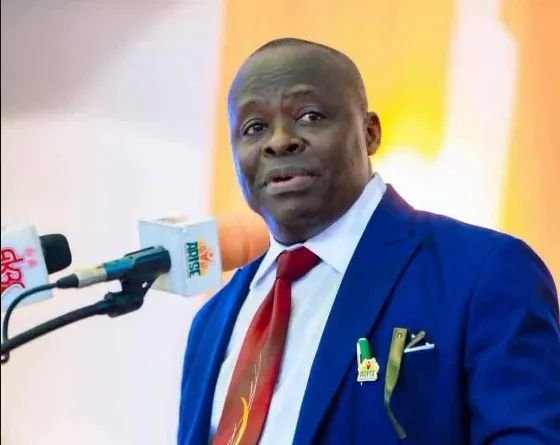
The Minister of Education, Dr Tunji Alausa, also commented on the administration’s education interventions, emphasising that the success of reforms should be determined by their actual impact on learners, teachers and institutions.
According to the statement reported by the APC council, Alausa said:
“Our measure of success is not merely the amount of money allocated to education or the number of programmes introduced. It is the difference these interventions make in the lives of our children, students, teachers and institutions.”
The minister’s position highlights an important distinction between announcing programmes and achieving measurable improvements in education.
For Nigeria, the real test of the reforms will be whether more children gain access to quality education, students complete their studies without unnecessary financial difficulties, teachers receive adequate professional support and graduates acquire skills that improve their employment prospects.
Why Tinubu’s Education Reforms Matter to Nigeria
Education remains one of the most important foundations for Nigeria’s long-term economic development, social stability and competitiveness.
With a large young population, the country needs an education system capable of preparing students for employment, entrepreneurship, technological innovation and participation in a rapidly changing global economy.
The reported ₦372.62 billion student loan disbursement could help reduce financial barriers to tertiary education, while vocational training initiatives could provide young Nigerians with practical skills needed in different sectors.
Similarly, investments in basic education, girls’ education and teacher development could contribute to addressing some of the structural challenges affecting learning across the country.
However, the scale of Nigeria’s education challenges means that individual programmes must be assessed against measurable national outcomes.
The reported return of more than one million out-of-school children to learning is significant, but the country still faces a substantial population of children without access to formal education.
Likewise, the expansion of student loans must be assessed alongside the affordability of repayment, the financial circumstances of beneficiaries and the capacity of the scheme to remain sustainable.
There is also a need to ensure that vocational training translates into meaningful employment opportunities rather than simply increasing the number of people who complete training programmes.
For parents, students, teachers and education stakeholders, the most important consideration is whether these interventions produce lasting improvements in the quality and accessibility of education.
What Happens Next?
The Federal Government is expected to continue implementing the education programmes outlined under the Nigerian Education Sector Renewal Initiative.
The APC’s assessment places particular emphasis on expanding student financing, strengthening technical and vocational education, improving basic education and supporting teachers.
The Accelerated Teacher Professionalisation Pathway is targeting 250,000 teachers by 2027, while the HOPE-EDU programme is designed to reach millions of children and strengthen education delivery across participating states.
The continued implementation of NELFUND will also remain important as more students seek financial assistance to complete their tertiary education.
Going forward, Nigerians will be watching how effectively the government translates the reported financial commitments and programme achievements into measurable improvements in classrooms, universities, technical colleges and communities.
Ultimately, the success of the Tinubu administration’s education reforms will not be determined solely by the amount of money disbursed or the number of programmes introduced.
It will be measured by the number of children who gain access to quality education, the skills students acquire, the opportunities available to graduates and the extent to which education improves the lives of ordinary Nigerians.
For a country facing significant educational and economic challenges, delivering these outcomes remains one of the most important responsibilities of government.
Weng Global – stories beyond borders
Sources
- Federal Ministry of Education – Nigerian Education Sector Renewal Initiative (NESRI).
- Nigerian Education Loan Fund (NELFUND) – October 30, 2026 disbursement figures.
- All Progressives Congress Presidential Campaign Council – Statement by spokesperson Dele Alake, November 4, 2026.
- Voice of Nigeria – Report on President Tinubu’s comments on NELFUND and education reforms, November 4, 2026.
- Punch Newspapers – Report on APC’s assessment of Tinubu’s education reforms, November 5, 2026.
- Premium Times – Report on student loans and technical and vocational training, November 4, 2026.
- World Bank – HOPE-EDU programme information.