Reported by Weng Patrick Atokor l Journalist at Weng Global
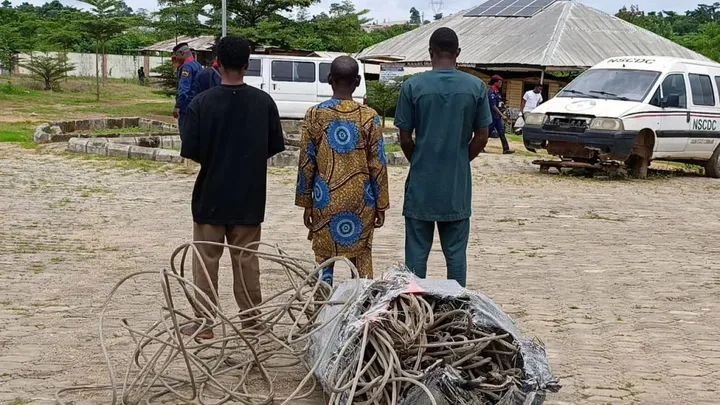
The Nigeria Security and Civil Defence Corps (NSCDC), Osun State Command, has arrested a 60-year-old man, his son and his nephew over the alleged theft of electricity cables kept for safekeeping in Iwo, Osun State.
The suspects were reportedly apprehended following allegations that they unlawfully took the electrical cables that had been stored in their custody.
The development highlights continuing concerns over the theft and diversion of electricity infrastructure, which can disrupt power distribution and impose additional costs on communities, businesses and electricity providers.
What happened in Iwo
According to the information available from the NSCDC Osun State Command, the three suspects were taken into custody in connection with the alleged disappearance and theft of electricity cables kept for safekeeping in Iwo.
The principal suspect, identified as a 60-year-old man, was arrested alongside his son and nephew.
The circumstances surrounding the alleged theft, including the quantity and value of the cables involved, remain subject to further investigation.
The NSCDC, which is responsible for protecting critical national assets and infrastructure among other duties, routinely investigates cases involving the theft or vandalism of electricity infrastructure.
Investigation continues
The arrest does not by itself establish the suspects’ guilt. They remain suspects until the allegations against them are proven in accordance with the law.
Investigators are expected to establish how the cables allegedly disappeared, who had access to them and whether other individuals may have been involved.
The authorities may also determine the intended destination of the cables and whether the incident forms part of a wider pattern of electricity infrastructure theft in the area.
Why electricity cable theft matters
Electricity cable theft is a significant concern because damaged, removed or diverted infrastructure can affect electricity distribution and create additional risks for residents.
When electrical cables are stolen or vandalised, electricity supply may be disrupted while utility operators undertake repairs or replace damaged equipment.
Such incidents can also expose people to serious safety hazards, particularly where electrical infrastructure is interfered with without proper technical knowledge.
For communities, prolonged interruptions can affect households, businesses, schools, health facilities and other essential services that depend on reliable electricity.
NSCDC’s role in protecting infrastructure
The NSCDC has a mandate that includes protecting critical national assets and infrastructure across Nigeria.
Electricity infrastructure is among the assets that require protection because of its importance to the country’s economic and social activities.
The arrest in Osun therefore forms part of the broader efforts by security agencies to tackle vandalism and theft affecting infrastructure.
Authorities have repeatedly urged members of the public to report suspicious activities involving public infrastructure and to avoid purchasing stolen electrical materials.
What happens next
The suspects are expected to remain subject to investigation as authorities establish the circumstances surrounding the alleged theft.
Further developments could include the recovery of the missing cables, additional arrests or the commencement of legal proceedings, depending on the outcome of the investigation.
Weng Global will continue to monitor the case and report confirmed developments from the relevant authorities.
Weng Global – Stories beyond borders
Sources
- Nigeria Security and Civil Defence Corps (NSCDC), Osun State Command — information concerning the arrest.
- Relevant official security and law-enforcement records, where made available.