Reported Simon Daniel Yusuph l journalist at wengglobal
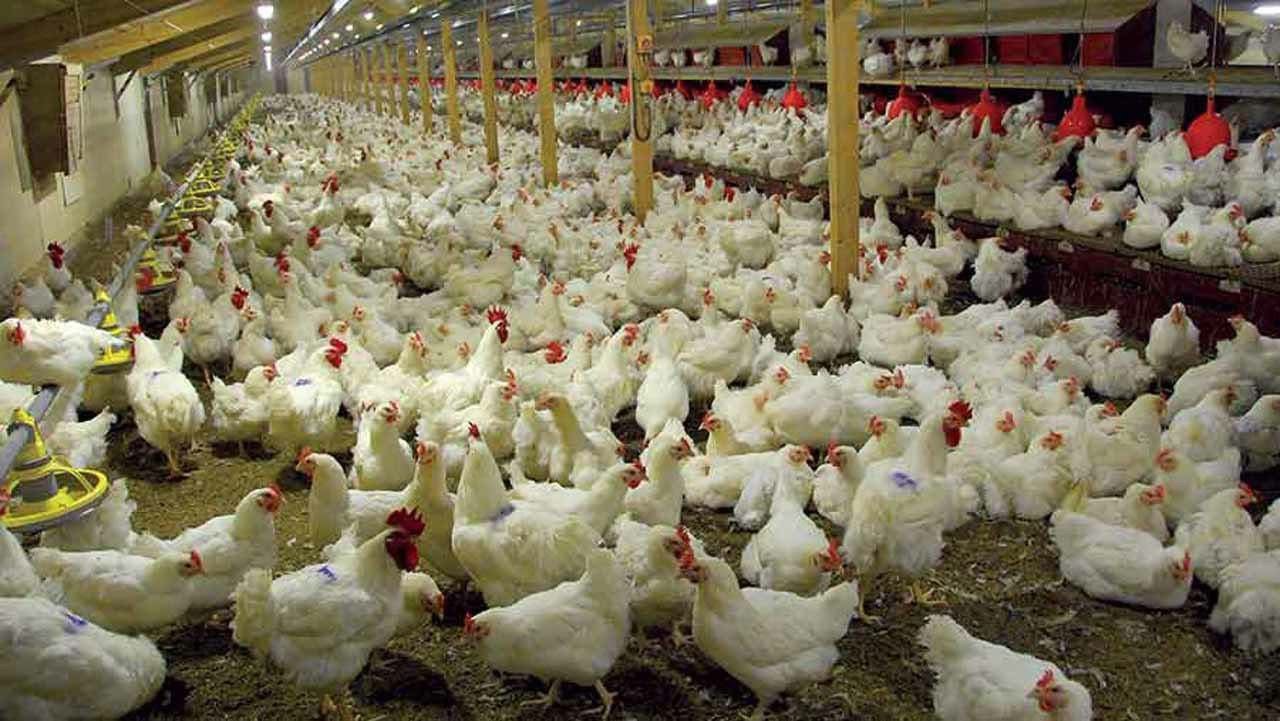
Nigeria’s poultry industry is facing a critical policy and investment moment, with veterinary experts, farmers, regulators and other stakeholders calling for stronger reforms in disease surveillance, laboratory diagnosis, biosecurity, financing and value-chain management to unlock the sector’s economic potential.
The renewed call for reform comes as stakeholders increasingly position poultry as one of the most important components of Nigeria’s livestock economy, with the industry supporting millions of livelihoods and playing a central role in the country’s food-security system.
At a two-day Public-Private Laboratory Forum on Strengthening Poultry Disease Surveillance in Nigeria held in Abuja, veterinary professionals stressed that weaknesses in disease detection and reporting remain among the major constraints limiting the sector’s growth.
The forum was organised by GALVmed and the Federal Ministry of Livestock Development in collaboration with the Nigerian Veterinary Medical Association (NVMA), bringing together government officials, veterinary professionals, laboratory experts and other stakeholders.
The President of the Veterinary Council of Nigeria, Professor Matthew Adamu, called for stronger collaboration between public and private laboratories, improved disease reporting and greater investment in diagnostic capacity.
According to reports by The Guardian and The Independent, Adamu said Nigeria’s poultry industry was valued at about ₦12 trillion and employed more than 20 million people. He argued that tackling poultry diseases could significantly increase the sector’s economic value. (The Guardian Nigeria)
The intervention highlights a broader reality: Nigeria’s poultry industry has substantial production and employment potential, but structural weaknesses continue to prevent it from operating at the scale required to meet domestic demand and compete more effectively.
Disease control emerges as a major priority
Poultry diseases remain one of the most serious risks facing commercial and smallholder farmers.
Outbreaks can cause high mortality, reduce productivity, increase production costs and force farmers to spend additional resources on medication, vaccination and flock replacement.
The consequences extend beyond individual farms.
When disease outbreaks disrupt production, they can affect the availability and price of eggs, chicken meat and other poultry products. For consumers already facing high food costs, such disruptions can place additional pressure on household budgets.
The Federal Ministry of Livestock Development has acknowledged the importance of strengthening Nigeria’s animal-health systems.
In June 2026, the ministry and the Food and Agriculture Organisation launched an initiative aimed at strengthening preparedness, detection and response to Highly Pathogenic Avian Influenza in Nigeria. The ministry described poultry as a critical component of the livestock sector, contributing to food security, employment and economic growth. (FMLD)
The initiative demonstrates that disease surveillance is increasingly being treated as an economic priority rather than solely a veterinary concern.
Early detection can help authorities and farmers respond before an outbreak spreads widely, reducing losses and protecting food supplies.
Laboratory capacity requires urgent attention
Experts at the Abuja forum also highlighted the importance of laboratory infrastructure.
Effective disease control depends on the ability to identify pathogens quickly and accurately. Without reliable diagnostic facilities, farmers and veterinary authorities may struggle to determine the cause of illness, potentially delaying appropriate treatment or containment measures.
Strengthening laboratories would therefore provide benefits across the poultry value chain.
Private farms could obtain more reliable diagnostic services, veterinary professionals could make better-informed decisions, while government authorities could improve national disease surveillance.
The call for greater public-private collaboration is particularly relevant because Nigeria’s poultry industry contains operators ranging from large integrated farms to small and medium-sized producers.
A disease-surveillance system that depends exclusively on public laboratories may struggle to cover the scale and geographical spread of the industry.
Private veterinary clinics, diagnostic laboratories, farms, universities and research institutions can potentially provide additional capacity if they operate within effective regulatory and reporting frameworks.
Biosecurity remains essential
Beyond laboratory diagnosis, experts have stressed the importance of stronger biosecurity measures on poultry farms.
Biosecurity refers broadly to the measures used to prevent disease from entering or spreading within a farm.
These measures can include controlling access to poultry facilities, maintaining hygiene, disinfecting equipment, managing visitors, isolating sick birds and ensuring appropriate handling of poultry products and waste.
For farmers, biosecurity is often cheaper than dealing with a major outbreak.
However, maintaining high standards can be difficult for small-scale producers who lack adequate infrastructure, technical knowledge or financial resources.
This creates an important policy challenge.
Government support programmes should not focus solely on production expansion while ignoring animal health. Increasing the number of birds without strengthening disease prevention could expose farmers to greater financial risks.
Vaccination and reporting need stronger coordination
Vaccination is another critical component of disease prevention.
However, vaccination programmes are most effective when they are supported by reliable disease surveillance, proper vaccine handling, appropriate administration and accurate information about circulating diseases.
Stakeholders have therefore advocated a coordinated system in which farmers, veterinarians, laboratories and government agencies share information more effectively.
Timely reporting can help authorities identify disease patterns and respond before outbreaks become widespread.
Yet under-reporting remains a potential challenge.
Farmers may hesitate to report suspected disease outbreaks because of concerns about losses, possible restrictions or the financial consequences of disease-control measures.
Building trust between producers and regulatory authorities is therefore essential.
Farmers need assurance that reporting disease will lead to practical assistance and professional support rather than simply punitive measures.
Production costs remain a major obstacle
While disease control was central to the latest expert intervention, poultry farmers face a broader range of structural challenges.
Feed remains one of the largest components of poultry production costs.
The price and availability of maize, soybean meal and other feed ingredients can significantly influence the profitability of poultry farms.
Energy costs, transportation, equipment, veterinary services, labour and access to finance also contribute to production expenses.
Industry stakeholders have repeatedly called for measures that reduce production costs and improve access to affordable financing.
In December 2025, Tribune Online reported that poultry farmers and industry stakeholders were calling for strategic reforms to achieve greater self-sufficiency in day-old chick production. Their recommendations included stronger government policy, private-sector investment, local innovation and improved farmer support. (Tribune Online)
The Independent similarly reported that poultry operators were seeking reforms to address day-old chick shortages, rising input costs and unpredictable market conditions. (Independent Newspaper Nigeria)
These challenges are interconnected.
If farmers cannot obtain quality chicks at reasonable prices, production suffers. If feed becomes prohibitively expensive, farmers reduce flock sizes or exit the industry. If diseases increase mortality, already high production costs rise further.
Government moves to strengthen domestic chick production
The Federal Government has begun taking steps aimed at addressing some of these structural weaknesses.
In June 2026, the Federal Ministry of Livestock Development announced plans to strengthen oversight of poultry import allocations and introduce stricter performance measures to address supply bottlenecks affecting day-old chicks.
The ministry said underutilisation of approved import quotas had contributed to shortages and increased production costs.
At the same time, Valentine Chickens presented a proposal for a $5.6 million investment in local grandparent-stock production infrastructure, supported through a partnership with Aviagen.
According to the ministry, the proposed infrastructure could help reduce Nigeria’s dependence on imported breeding stock and strengthen domestic poultry genetics. (FMLD)
The development is significant because Nigeria’s ability to produce high-quality breeding stock locally could reduce vulnerabilities associated with international supply disruptions, foreign exchange pressures and import constraints.
It could also create opportunities for investment in hatcheries, feed production, veterinary services, logistics and other parts of the poultry value chain.
Financing remains critical
Experts have also identified access to finance as a major issue affecting the growth of poultry businesses.
Poultry production requires substantial working capital because farmers must continuously purchase feed, vaccines, chicks and other inputs before generating revenue from eggs or mature birds.
High interest rates or limited access to suitable agricultural credit can therefore make expansion difficult.
In 2025, agribusiness expert AyoOluwa Okediji advocated cooperative-driven investment as a strategy for improving the sustainability of Nigeria’s poultry industry.
The Nation reported that Okediji urged farmers, financial institutions, policymakers and cooperative leaders to move away from fragmented individual operations towards stronger cooperative structures capable of attracting sustainable financing. (The Nation)
Cooperative models can potentially improve farmers’ bargaining power by allowing producers to purchase inputs collectively, access larger markets and negotiate financing on better terms.
However, such arrangements require strong governance, financial transparency and professional management.
Technology can improve productivity
Innovation is another area where experts see significant opportunities.
Modern poultry production increasingly relies on technology to monitor temperature, feed consumption, flock health, egg production and other indicators.
Automation can reduce labour requirements and improve efficiency, while data-driven systems can help farmers identify problems earlier.
At the 2026 annual conference of the Poultry Association of Nigeria’s Lagos State Chapter, stakeholders reportedly emphasised innovation, investment and private-sector collaboration as important pathways for transforming the industry.
The Independent reported that the conference examined ways of addressing soaring production costs, expensive feed, market uncertainty, limited access to finance and technological gaps. (Independent Newspaper Nigeria)
For Nigeria, greater technology adoption could be particularly valuable if it is made accessible to medium-sized and smaller farms rather than remaining concentrated among large commercial operators.
Regulation must support growth without weakening standards
Another important area for reform is regulation.
The poultry sector involves several government institutions with responsibilities covering animal health, food safety, environmental protection, agricultural production and trade.
A fragmented regulatory environment can create additional costs for businesses if agencies have overlapping responsibilities or inconsistent requirements.
Research into Nigeria’s day-old chick value chain has previously identified concerns about overlapping regulatory responsibilities involving the Nigerian Institute of Animal Science and the Veterinary Council of Nigeria.
The study recommended clearer regulatory roles and processes to reduce uncertainty and improve the business environment for value-chain operators. (ResearchGate)
The solution, however, should not be deregulation at the expense of safety.
Effective regulation is necessary to protect consumers, prevent disease, maintain animal-health standards and ensure that poultry products meet quality requirements.
The objective should be smarter regulation — clear responsibilities, transparent procedures, consistent enforcement and minimal unnecessary administrative burdens.
Poultry and Nigeria’s food-security ambitions
The reform debate comes as the Federal Government seeks to expand Nigeria’s livestock economy.
President Bola Tinubu recently said Nigeria intends to more than double the livestock sector’s annual economic contribution, currently estimated at more than $32 billion.
Speaking at the 9th All Africa Conference on Animal Agriculture in Abuja, Tinubu described livestock as a major source of food, employment and economic opportunity. The Guardian reported that the President said the government wanted to position Nigeria as a leading African hub for livestock production and processing. (The Guardian Nigeria)
Poultry will inevitably form an important part of that ambition.
Nigeria has a large and growing population, creating strong domestic demand for affordable animal protein.
Eggs and poultry meat can provide relatively accessible sources of protein, making the industry’s performance relevant not only to farmers and investors but also to national nutrition.
The road to a more competitive poultry sector
For Nigeria to unlock the full potential of its poultry industry, experts’ recommendations will need to translate into coordinated policy action.
That means improving disease surveillance, expanding laboratory capacity, strengthening farm biosecurity, supporting vaccination programmes, improving access to finance, reducing input costs, encouraging local breeding capacity and simplifying regulatory processes.
It also requires reliable infrastructure.
Electricity, roads, cold-chain facilities, storage and transportation all influence the cost and efficiency of poultry production.
A poultry farmer may achieve excellent production results on the farm but still lose money if products cannot reach consumers efficiently or if transportation costs make the final product uncompetitive.
The industry therefore needs a value-chain approach rather than isolated interventions.
Wengglobal perspective
Nigeria’s poultry industry has the scale to become a much stronger contributor to food security, employment, rural development and economic diversification.
But its potential cannot be unlocked through production expansion alone.
The recent calls from veterinary professionals and other stakeholders show that disease control, laboratory diagnosis and surveillance are among the foundations on which a sustainable poultry industry must be built.
At the same time, farmers need access to affordable finance, quality chicks, reasonably priced feed, technology and predictable markets.
Government has already taken steps on some of these fronts, including efforts to strengthen local breeding capacity and tighten oversight of poultry import allocations. (FMLD)
The next challenge is ensuring that policies are implemented consistently and that farmers, investors and consumers can see measurable results.
For Wengglobal, the central issue is straightforward: Nigeria does not lack poultry-sector potential; it lacks a sufficiently coordinated framework to convert that potential into sustained productivity and competitiveness.
With better disease management, stronger institutions, responsible regulation, improved financing and increased private-sector investment, the sector could become an even more important pillar of Nigeria’s agricultural economy.
The ₦12 trillion industry represents not merely a statistic but a substantial economic ecosystem involving farmers, hatcheries, feed producers, veterinarians, laboratories, processors, transporters, retailers and millions of consumers.
Reforming that ecosystem will require sustained collaboration between government and the private sector.
If those reforms are effectively implemented, Nigeria could move closer to building a poultry industry capable of supplying more of its domestic protein needs, creating jobs and competing more effectively within African and international markets.
Sources
- The Guardian Nigeria — Reported veterinary experts’ call for stronger poultry disease surveillance, laboratory collaboration and disease reporting, citing the industry’s estimated ₦12 trillion value. (The Guardian Nigeria)
- The Independent Nigeria — Reported calls by veterinary professionals for stronger laboratory diagnosis, disease reporting, biosecurity and vaccination to unlock the poultry industry’s potential. (Independent Newspaper Nigeria)
- Federal Ministry of Livestock Development — Reported the Federal Government’s partnership with FAO to strengthen preparedness, detection and response to avian influenza. (FMLD)
- Federal Ministry of Livestock Development — Reported plans to address poultry supply gaps, improve day-old chick availability and strengthen local grandparent-stock production. (FMLD)
- The Independent Nigeria — Reported industry stakeholders’ emphasis on innovation, investment and stronger collaboration to address poultry-sector challenges. (Independent Newspaper Nigeria)
- The Nation — Reported calls for cooperative-driven investment and structural reforms to improve the sustainability of Nigeria’s poultry industry. (The Nation)
- Tribune Online — Reported poultry farmers’ recommendations for achieving self-sufficiency in day-old chick production through policy reform, investment and farmer empowerment. (Tribune Online)
- Poultry Association of Nigeria — Provides industry information on farmer advocacy, training, policy engagement and sector development. (Poultry Association of Nigeria)