Reported Simon Daniel Yusuph l journalist at wengglobal
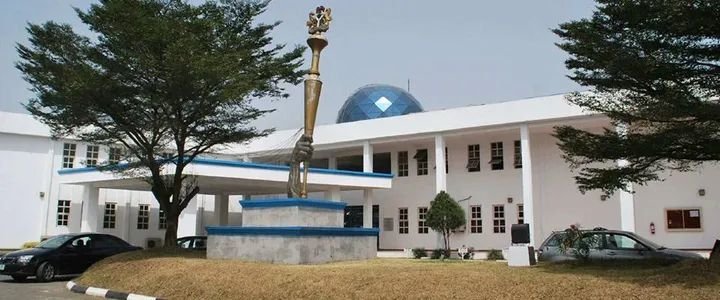
The Kano State Government has entered into a long-term arrangement with the Aliko Dangote Foundation to manage the Aliko Dangote Skills Acquisition Centre for the next 20 years, in a move aimed at expanding technical and vocational training opportunities for young people across the state.
The development places renewed attention on the role of public-private partnerships in addressing Nigeria’s skills gap, youth unemployment and the growing demand for practical training that can translate directly into employment, entrepreneurship and industrial productivity.
The centre, established to provide demand-driven vocational and technical education, is expected to serve as an important platform for equipping young Nigerians with practical skills in areas linked to the labour market.
The Federal Government confirmed in July that discussions between the Kano State Government and the Aliko Dangote Foundation were progressing towards the eventual takeover of the centre by the foundation. The State House said the partnership formed part of broader efforts under Nigeria’s National Skills Council to strengthen vocational education and create more employment opportunities for young Nigerians.
The 20-year arrangement is particularly significant because it gives the private-sector foundation a long-term role in the management and development of a skills institution originally established through government involvement.
Rather than treating vocational training as a short-term intervention, the arrangement could provide an opportunity for sustained investment, curriculum development, industry partnerships and expansion of training capacity.
A response to Nigeria’s growing skills challenge
Nigeria faces a persistent gap between the skills possessed by many young people and those required by employers and emerging industries.
While the country has a large and youthful population, access to quality technical and vocational education remains uneven. Many young Nigerians enter the labour market without practical skills that can immediately translate into productive employment.
The Kano-Dangote partnership is therefore significant beyond the state’s borders.
If effectively implemented, the centre could become a model for connecting government-owned infrastructure with private-sector expertise, funding and industry knowledge.
The Federal Government has increasingly emphasised technical and vocational education as part of its economic transformation strategy.
At a National Skills Council meeting in July, Education Minister Tunji Alausa said the government was focused on creating more employment opportunities for young Nigerians, while Minister of State for Industry John Enoh stressed the importance of developing specific skills needed to support Nigeria’s industrialisation agenda.
The emphasis reflects a growing recognition that university education alone cannot address the country’s employment challenge.
Technical skills in areas such as renewable energy, automotive repair, construction, electrical installation, refrigeration, plumbing, hospitality and manufacturing are increasingly important to an economy seeking to expand productive capacity.
What the Dangote skills centre offers
The Dangote Ultra Modern Skills Acquisition Centre, commonly known as DUMSAC, describes its mission as developing demand-driven practical technical and vocational skills through sustainable training, capacity building, innovation and partnerships.
The centre currently lists more than a dozen training areas, including auto mechanics, electrical installation, office technology, carpentry and joinery, catering and hospitality, cosmetology, fashion design, masonry, leather work, plumbing, refrigeration and air-conditioning, and solar photovoltaic installation.
The range of programmes is significant because it covers both traditional trades and emerging areas of economic activity.
Solar photovoltaic training, for example, is increasingly relevant as Nigerian households and businesses seek alternatives to unreliable grid electricity.
Similarly, skills in refrigeration and air-conditioning are essential to businesses operating in Nigeria’s increasingly urbanised economy, while construction-related trades remain important because of the country’s infrastructure and housing needs.
Leather work also has particular relevance to Kano and northern Nigeria, where the leather and hides-and-skins value chain has historically supported commerce and manufacturing.
The centre’s stated objective is not simply to train young people but to produce skilled manpower capable of generating income and contributing to national development.
Why the 20-year arrangement matters
A major challenge facing public training institutions in Nigeria is continuity.
Projects can lose momentum when administrations change, governing councils are dissolved, funding arrangements become uncertain or management structures are altered.
A long-term partnership could help address some of those challenges by establishing a clearer framework for investment and institutional development.
The 20-year period also gives the Dangote Foundation an opportunity to develop the centre beyond short-term training programmes.
This could include modernising workshops, upgrading equipment, strengthening instructor capacity, developing industry-standard curricula and establishing stronger relationships with employers.
However, the success of the arrangement will ultimately depend on the terms governing the partnership, the level of investment committed, the accountability mechanisms in place and the number of young people who eventually benefit.
The duration of an agreement alone does not guarantee results.
Questions over capacity and implementation
While the partnership has generated optimism, the centre’s recent operational history demonstrates why implementation will require sustained attention.
A Guardian investigation reported in April that the centre had experienced significant operational challenges, including a dispute over staffing and funding.
The newspaper reported that 63 directly recruited workers had gone for months without salaries following the dissolution of the centre’s governing council. It also reported that the Federal Ministry of Education said 300 trainees had been undergoing training since November 2025 under the Federal Government’s Technical and Vocational Education and Training programme.
The Guardian noted that the facility was designed for 20 trades and a capacity of about 1,000 trainees per cycle, while only three trades involving about 300 trainees were active at the time of its report.
TheCable separately reported the same broad picture, noting that the Federal Ministry of Education had maintained that the facility was not abandoned and that Dangote had committed to managing it for 20 years.
These details provide important context to the latest development.
The handover should therefore be viewed not simply as an administrative change but as an opportunity to address existing institutional challenges and restore the centre’s full potential.
Federal Government links partnership to national skills agenda
The Kano arrangement also fits into a broader national push to strengthen vocational education.
At the National Skills Council’s ninth meeting, the Federal Government discussed efforts to harmonise skills qualifications and improve coordination among agencies responsible for technical and vocational training.
The government has also been encouraging private-sector participation in skills development.
In March, the National Skills Council considered a Dangote Industries proposal for a one-month “train-the-trainer” programme for 100 candidates in five high-demand areas: industrial mechanics, industrial electronics, instrumentation, welding and fabrication, and heavy-duty earth-moving equipment operations.
Such initiatives illustrate the increasing importance being attached to partnerships between government and industry.
The private sector is often better positioned to identify the practical competencies required by employers, while government institutions can provide infrastructure, regulation and wider access.
Combining the two can help reduce the gap between training and employment.
Potential benefits for Kano youths
Kano has one of Nigeria’s largest populations and a substantial informal economy.
Thousands of young people are engaged in small businesses and trades, often without formal certification or access to modern equipment.
A stronger vocational training system could help transform some of these informal activities into more productive enterprises.
Young people trained at the centre could potentially move into employment, establish businesses or become trainers themselves.
The benefits could extend beyond individual trainees.
Skilled technicians can improve the productivity of small and medium-sized businesses, support manufacturing and construction, maintain equipment and contribute to the growth of local supply chains.
If graduates are also connected to finance, apprenticeships and markets, vocational training could have a stronger impact on household incomes.
The importance of certification
Certification will also be important.
Training programmes become more valuable when employers recognise the qualifications awarded and when graduates can use them to demonstrate their competence.
DUMSAC says its programmes are accredited by the Kano State Government and that it provides internationally recognised certification.
Maintaining credible standards will be essential as the centre expands.
The institution must ensure that certification reflects actual competence rather than simply attendance.
This requires qualified instructors, modern equipment, practical examinations, industry participation and regular curriculum reviews.
Aligning training with market demand
Another important consideration is the selection of courses.
Vocational education is most effective when programmes correspond with real economic opportunities.
Training thousands of young people in trades with limited demand could produce certificates without sustainable employment.
The centre will therefore need to continually assess labour-market trends.
Kano’s commercial economy provides opportunities in manufacturing, agriculture, construction, logistics, leather production, hospitality, renewable energy and repair services.
Training programmes should evolve alongside these sectors.
The inclusion of solar photovoltaic installation, for example, demonstrates how vocational education can respond to emerging economic needs.
A potential model for public-private partnerships
The Kano-Dangote arrangement could become an important case study for other Nigerian states.
Across the country, governments own training centres, schools and other facilities that sometimes struggle with funding, equipment and management.
Private foundations and companies, meanwhile, have resources and expertise but may lack access to public infrastructure or large populations of potential beneficiaries.
Partnerships can bridge that gap.
But such arrangements require clear responsibilities.
The public sector must retain appropriate oversight and ensure that public assets are used transparently, while private partners must demonstrate measurable outcomes.
There should also be clear benchmarks for trainee numbers, completion rates, employment outcomes, equipment upgrades, instructor development and financial accountability.
Youth empowerment beyond certificates
For vocational training to produce meaningful economic results, graduates need more than certificates.
They need pathways into employment or entrepreneurship.
That means partnerships with manufacturers, construction companies, hospitality businesses, renewable-energy firms, automobile workshops and financial institutions could be as important as classroom training.
A graduate who knows how to install solar systems, for example, may require access to equipment, financing and customers before that skill becomes a sustainable source of income.
The same applies to graduates in fashion, leather work, catering, auto mechanics and other trades.
The centre’s long-term success should therefore be measured by what happens to graduates after training.
Kano’s existing vocational ecosystem
The state already has a wider vocational education structure.
The Kano State Ministry of Higher Education lists the Kano State Institute of Entrepreneurship and Vocational Skills among the institutions under its supervision, with multiple skills acquisition schools covering areas including hospitality, fisheries, poultry, farm mechanisation, security, film, sports, driving, irrigation, entrepreneurship, horticulture, livestock and development journalism.
The Dangote centre can potentially complement these existing institutions rather than operate in isolation.
Coordination between vocational institutions could prevent duplication, improve standards and allow trainees to access specialised programmes across different facilities.
Wengglobal perspective
The Kano State Government’s decision to give the Aliko Dangote Foundation a 20-year management role at the skills acquisition centre represents an important experiment in using private-sector capacity to strengthen public vocational infrastructure.
The opportunity is substantial.
Nigeria needs a workforce equipped not only with academic qualifications but also with practical competencies capable of supporting manufacturing, construction, agriculture, technology, renewable energy and small-business development.
Kano, with its large youth population and extensive commercial economy, is well positioned to benefit from a stronger technical skills ecosystem.
But the success of the partnership should not be judged by the signing or announcement of a 20-year arrangement.
It should be judged by measurable outcomes.
How many young people will be trained? How many will complete their programmes? How many will secure jobs? How many businesses will be established? What proportion of graduates will remain economically active after one, three or five years?
These are the indicators that will determine whether the partnership delivers meaningful value.
The centre’s previous operational difficulties also make accountability particularly important. The reports of unpaid workers, limited active programmes and underutilised capacity demonstrate that infrastructure alone cannot deliver skills development.
For Wengglobal, the most constructive approach is therefore to view the Dangote Foundation’s long-term involvement as an opportunity for renewal, while maintaining close public scrutiny of its implementation.
If the partnership succeeds in restoring the centre to full capacity, introducing industry-relevant training and creating genuine employment pathways for thousands of young Nigerians, it could become a model for similar initiatives across Nigeria.
If it fails to resolve existing institutional problems, however, the 20-year term could become little more than a change of management without the transformation young Nigerians need.
The central objective must remain clear: turning public infrastructure into practical opportunities, and practical skills into sustainable livelihoods for Nigeria’s youth.
Sources
- State House – National Skills Council and Dangote Skills Acquisition Centre partnership
- Dangote Ultra Modern Skills Acquisition Centre – Official Centre Information
- The Guardian – Aliko Dangote Centre: An institution abandoned with lights still on
- TheCable – The institution that was abandoned with the lights still on
- Kano State Ministry of Higher Education – Vocational and Skills Institutions
- State House – 8th National Skills Council Meeting
- Kano State Government – 2025 Approved Budget