Reported by Weng Patrick Atokor | Journalist at Weng Global
South Africa’s controversial anti-immigration movement, March and March, has issued a fresh September 30, 2026 deadline for the mass deportation of undocumented foreign nationals, escalating an already tense debate over immigration, unemployment, crime and xenophobia in the country.
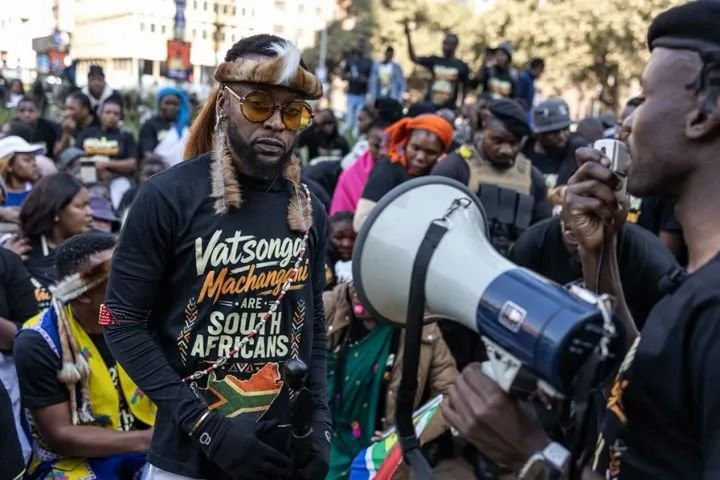
The announcement was made during a demonstration in Durban on Monday, August 17, as South Africa hosted the 46th Ordinary Summit of the Southern African Development Community (SADC).
March and March said its latest campaign was aimed at pressuring SADC leaders to take responsibility for their citizens living in South Africa without valid documentation. The movement marched under the theme “It’s time to fetch your people”, calling on neighbouring governments to prepare for the return of their nationals.
According to the group’s spokesperson, Sandile Dube, March and March is calling for what it described as a “massive deportation” of undocumented foreign nationals by September 30.
“The March and March movement hereby announces its second wave of June 30 National Day of Action and calls on all heads of state to prepare for a massive deportation of all illegal foreign nationals in South Africa by September 30, 2026,” Dube said, according to reports from the demonstration.
The latest declaration comes less than two months after the movement organised nationwide anti-immigration protests on June 30.
Those protests generated widespread concern after demonstrations in several parts of South Africa were accompanied by violence, clashes with police, looting and attacks targeting foreign nationals. Reuters reported that at least four people died during the unrest, while thousands of foreign nationals had already left or temporarily relocated because of fears of violence.
March and March’s growing campaign
March and March describes itself as a citizen-led movement advocating stronger immigration enforcement and the protection of opportunities for South African citizens.
On its official website, the organisation says its mission is centred on protecting South African citizens, enforcing immigration laws and promoting accountability. It has also presented its activities as peaceful demonstrations and civic advocacy.
However, the movement has become increasingly controversial because of the atmosphere surrounding some of its protests and the fear reported among foreign nationals.
Earlier in 2026, March and March had set June 30 as a deadline for undocumented foreigners to leave South Africa. The deadline was followed by demonstrations across the country and heightened security concerns.
The new September deadline therefore represents a continuation rather than an entirely new campaign. The group has indicated that it intends to intensify its mobilisation and maintain pressure on government and regional leaders.
Dube said the movement was now in a “structurally better position” than it was during the June 30 action and described the proposed next phase as potentially the “mother of all National Day of Action” protests.
SADC leaders drawn into immigration debate
The announcement was deliberately made during the SADC summit in Durban, bringing the immigration dispute directly into a regional diplomatic setting.
The SADC bloc consists of 16 member states, many of which have citizens living and working in South Africa. These include Zimbabwe, Mozambique, Malawi, Zambia, Lesotho, Eswatini, Botswana, Namibia, Tanzania and the Democratic Republic of Congo.
March and March wants governments across the region to take responsibility for citizens who are in South Africa without valid immigration status.
The movement has accused the South African government of failing to respond adequately to concerns surrounding undocumented immigration.
However, a demand from a civic movement does not itself constitute a government deportation order. Immigration enforcement and deportation remain matters for the South African state and must be conducted under the country’s laws and applicable legal protections.
Government faces delicate balancing act
South African authorities face a difficult balancing act between enforcing immigration laws and protecting the rights and safety of migrants.
President Cyril Ramaphosa has acknowledged concerns around illegal immigration but has also strongly condemned discrimination and attacks against people from other African countries.
In remarks reported during the SADC summit period, Ramaphosa said South Africa should be concerned and ashamed when nationals from other countries face discrimination and ill-treatment.
He argued that regional integration cannot succeed if people are intimidated or harassed because they are perceived as coming from another country.
The president’s position highlights the distinction between immigration enforcement and xenophobia.
South Africa has the sovereign right to regulate who enters, works and resides in the country. However, critics argue that undocumented migrants should not automatically be portrayed as criminals or collectively blamed for unemployment, crime or pressure on public services.
Human rights concerns
Human rights organisations have raised serious concerns over the rhetoric and potential consequences of anti-migrant campaigns.
Amnesty International South Africa previously warned against the June 30 deadline and urged political leaders to confront xenophobia while protecting the rights of migrants and refugees.
The organisation also recalled the devastating 2008 xenophobic violence in South Africa, during which 62 people were killed, including both South Africans and migrants.
South Africa’s Department of Justice has similarly acknowledged growing tensions involving migrants. A government report published in June identified anti-immigration protests, intimidation, discrimination, vigilante-style activities and informal enforcement actions as developments that could undermine the rule of law.
The concern is that aggressive rhetoric surrounding immigration could create an environment in which ordinary foreign nationals, including those legally resident in South Africa, become targets.
Economic and social pressures
March and March’s campaign draws strength from genuine frustrations within sections of South African society.
The movement and its supporters have repeatedly raised concerns about unemployment, access to jobs, competition in informal markets, crime and pressure on public services.
Foreign nationals have frequently been blamed by some communities for these challenges.
However, analysts and rights groups have warned against reducing complex socioeconomic problems to immigration alone. Reuters reported that experts have questioned claims that migrants are responsible for South Africa’s unemployment and strained public services.
South Africa continues to face major structural challenges, including high unemployment, inequality and poverty. These problems require government policies addressing economic growth, skills development, job creation, policing and public-service delivery.
Fear among foreign nationals
The renewed September deadline is likely to increase anxiety among undocumented migrants and other foreign nationals living in South Africa.
Previous protests already created fear in communities, with reports of people leaving their homes and businesses because they were concerned about possible attacks.
The situation also affects migrants who have legal documentation but may face suspicion or harassment because of their nationality or appearance.
The distinction is important: South Africa’s immigration laws apply to immigration status, not nationality alone.
As the September 30 deadline approaches, authorities will face pressure to ensure that any enforcement action is carried out lawfully while preventing vigilante groups from taking immigration enforcement into their own hands.
What happens next?
March and March has made clear that it intends to continue campaigning and mobilising communities.
Its latest announcement places additional pressure on the South African government and SADC governments to address undocumented migration while preventing xenophobic violence.
The September 30 date could therefore become another major test for South Africa’s immigration policy, policing and regional diplomacy.
For neighbouring countries, the issue also raises questions about the responsibility of governments to protect their citizens abroad and cooperate with South Africa on documentation, border management and lawful repatriation.
For South Africa, the challenge is to enforce immigration laws without allowing frustration over undocumented migration to become collective punishment of foreigners.
The coming weeks are likely to determine whether the September 30 deadline remains primarily a political demand from March and March or develops into another period of nationwide protests and heightened tensions.
For now, the movement’s announcement has added another chapter to South Africa’s increasingly heated immigration debate — one in which concerns about national resources and immigration enforcement are colliding with warnings over xenophobia, human rights and regional solidarity.