Reported by Weng Patrick Atokor | Journalist at Weng Global
The Federal Government, in partnership with the International Fund for Agricultural Development (IFAD) through the Value Chain Development Programme (VCDP), has continued to strengthen agricultural livelihoods in Kogi State by providing farmers and Persons With Disabilities (PWDs) with equipment, farm inputs and other empowerment support.
The intervention is aimed at improving agricultural productivity, reducing post-harvest losses, strengthening rural businesses and creating greater economic opportunities for vulnerable groups across the state.
The FGN/IFAD-VCDP initiative focuses particularly on strengthening the rice and cassava value chains, supporting smallholder farmers, processors, marketers and other actors involved in agricultural production.
According to IFAD, VCDP was designed to develop agricultural value chains by building stronger relationships between smallholder farmers, producers and private-sector actors. The programme also promotes climate-resilient farming practices, improved productivity and better access to markets.
Supporting farmers beyond farm inputs
The intervention in Kogi goes beyond the distribution of seeds and fertilisers. Beneficiaries have received different forms of equipment and infrastructure intended to address challenges encountered at various stages of agricultural production and processing.
Previous interventions have included processing equipment, transportation facilities, farm inputs and other tools designed to improve the efficiency of rural enterprises.
The Kogi State Government has also reported that VCDP distributed equipment, including grinding machines, to PWDs and vulnerable widows in five benefiting local government areas. The initiative was presented as part of efforts to make agricultural development more inclusive and ensure that vulnerable members of society can participate in income-generating activities.
For farmers, access to appropriate equipment can reduce dependence on expensive manual labour while improving the speed and scale of production.
Transportation support is also important because poor access to affordable transport can increase the cost of moving farm produce from rural communities to processing centres and markets.
In a previous intervention, FGN/IFAD-VCDP distributed cargo tricycles to farmers in Kogi to ease the transportation of agricultural commodities. The state programme explained that the tricycles were procured through a joint funding arrangement in which farmers contributed 30 per cent while IFAD-VCDP provided 70 per cent.
PWDs included in agricultural development
One of the notable elements of the VCDP intervention is its focus on persons with disabilities.
IFAD’s programme documents show that PWDs have been deliberately incorporated into the beneficiary structure, with support ranging from training and capacity building to agricultural inputs, starter packs, transportation and equipment.
An IFAD supervision report stated that 1,505 PWDs had been profiled across participating states, with 208 receiving support. In Kogi, the programme provided tricycles, starter packs, inputs and capacity-building support to 45 PWDs.
The approach reflects a broader recognition that inclusive agricultural development can provide vulnerable groups with opportunities to become economically independent.
IFAD has documented similar cases in Nigeria where young people with disabilities received agricultural inputs and transportation support, enabling them to participate more effectively in farming and entrepreneurship.
Building stronger rice and cassava value chains
Kogi remains an important agricultural state, with rice and cassava among the major value chains targeted by VCDP.
The programme’s strategy is not limited to increasing production. It also seeks to improve processing, transportation, storage and marketing so that farmers can capture greater value from what they produce.
Previous VCDP interventions in Kogi included support for rice milling and polishing equipment, trailer tricycles for transporting commodities, quality-control equipment, cassava-processing equipment, drying facilities and other infrastructure.
Such investments can help farmers and processors move away from subsistence production towards more commercially oriented agriculture.
The importance of this approach has also been demonstrated by individual beneficiaries. IFAD documented the experience of a Kogi rice farmer who increased his harvest from 2.5 tonnes to 5.6 tonnes after receiving improved seeds and training in better agricultural practices and record-keeping.
Focus on food security and rural incomes
The distribution of equipment and empowerment tools comes at a time when food production, agricultural productivity and rural incomes remain major priorities for Nigeria.
Improving the ability of farmers to produce and process food efficiently can contribute to increased food availability while also creating employment opportunities within rural communities.
The VCDP model links farmers with markets and processors, helping them become more commercially connected.
IFAD says almost 100,000 rural people have benefited from VCDP since its implementation, with women and young people among the key beneficiaries. The organisation also reports that poverty among participating households has fallen significantly.
Training complements equipment
Equipment alone cannot guarantee improved agricultural outcomes. Farmers and beneficiaries need the skills to operate, maintain and manage the tools effectively.
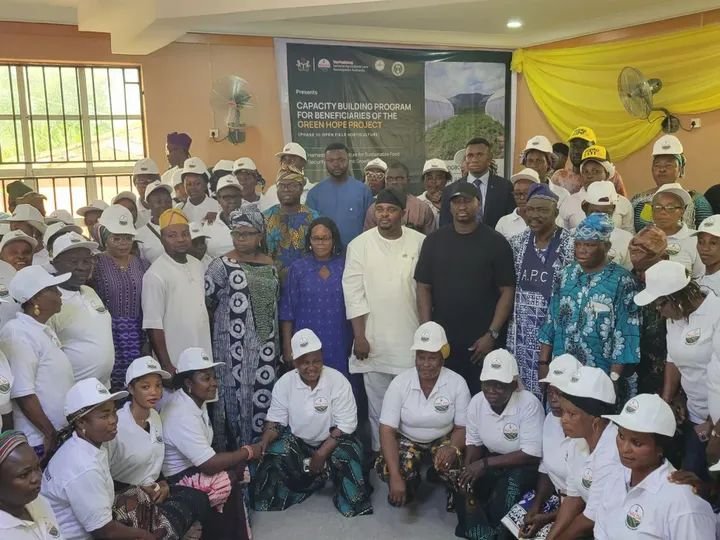
That is why the FGN/IFAD-VCDP intervention has also incorporated training and capacity building.
In January 2026, FGN/IFAD-VCDP launched a three-week programme to train 20 young farmers in Kogi in agricultural equipment fabrication and maintenance, with emphasis on the rice and cassava value chains. The programme was organised in collaboration with the Nigeria-Korean Institute of Vocational and Advanced Technology.
Such programmes can help create a pool of local technicians capable of maintaining agricultural machinery and reducing downtime caused by equipment breakdown.
Sustaining the intervention
The long-term impact of the programme will depend not only on the number of beneficiaries reached but also on how effectively beneficiaries use and maintain the equipment provided.
Kogi authorities have previously urged beneficiaries to use the tools productively rather than sell them, stressing that the purpose of the intervention is to improve agricultural efficiency and household livelihoods.
For the farmers, the equipment represents more than physical assets. Properly utilised, the support can reduce production costs, increase output, improve processing capacity and open opportunities for additional income.
For PWDs, the intervention can also help remove some of the physical and economic barriers that limit participation in agriculture and small businesses.
As Nigeria continues to search for sustainable ways to improve food security and strengthen rural economies, partnerships such as FGN/IFAD-VCDP demonstrate the importance of combining agricultural inputs with infrastructure, training, market access and inclusive empowerment.
For Kogi State, continued investment in farmers, processors, youth and PWDs could help deepen the state’s agricultural value chains and strengthen its contribution to Nigeria’s food production.
Sources:
- International Fund for Agricultural Development (IFAD)
- Kogi State Government
- Punch
- BusinessDay
- Kogi Reports