Reported Simon Daniel Yusuph l journalist at wengglobal
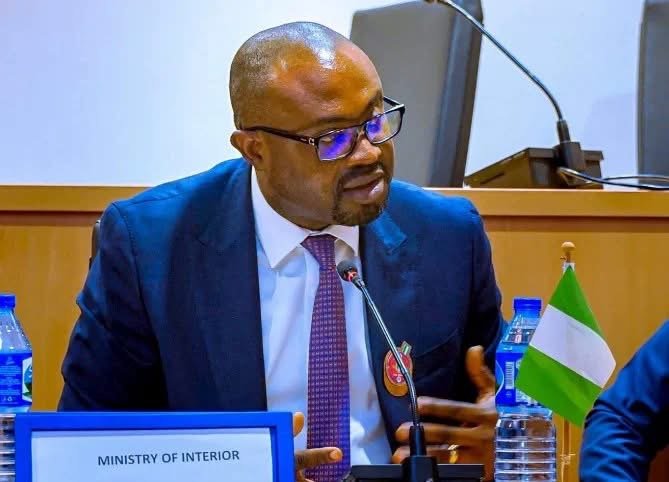
A youth-development initiative involving DevMe and the Minister of Interior, Dr Olubunmi Tunji-Ojo, is set to equip 100 secondary school students in Ondo State with leadership, self-mastery, emerging-career and digital technology skills as part of efforts to prepare young people for a rapidly changing future.
The initiative, identified with DevMe’s FutureProofed programme, is designed to move beyond conventional classroom learning by exposing selected students to practical skills, leadership development and emerging technologies.
Available information indicates that the programme targets secondary school students in Ondo State and is built around the idea that young people require more than academic qualifications to navigate the demands of higher education, employment, entrepreneurship and civic participation.
DevMe has described its latest FutureProofed 2.0 programme as a two-week residential bootcamp for teenagers, with a focus on four core areas: self-mastery, leadership, emerging careers and digital literacy. The programme is aimed at students aged 12 to 19 in Ondo State, with 100 participants expected to be selected. (LinkedIn)
The initiative comes at a time when digital literacy and future-oriented skills are increasingly viewed as essential components of youth development, particularly as artificial intelligence, automation and digital platforms continue to reshape education and employment.
Building Skills Beyond the Classroom
The FutureProofed programme is structured around the belief that academic performance alone does not necessarily provide young people with all the skills required to succeed beyond school.
According to information published by DevMe, the programme seeks students who are curious, creative and willing to approach problems differently. Participants are expected to engage with real-world challenges while working in teams and developing practical abilities. (LinkedIn)
The four pillars of the programme — self-mastery, leadership, emerging careers and digital literacy — are intended to address different dimensions of adolescent development.
Self-mastery focuses on helping young people understand their strengths, interests, values and personal capabilities. Leadership training, meanwhile, is intended to develop the ability to work with others, communicate effectively and take responsibility.
The emerging-careers component is particularly relevant as the nature of work continues to evolve. Students entering the labour market in the coming years are likely to encounter occupations and technologies that are still developing today.
Digital literacy provides another important component, particularly with the growing influence of artificial intelligence and digital tools in education, business and professional life.
DevMe’s published description says students will learn to use AI and digital tools intentionally rather than simply consume technology. (LinkedIn)
Selection of 100 Students
The planned selection of 100 students is part of a wider effort by DevMe to identify and develop young people with interests beyond conventional academic performance.
The organisation’s previous FutureProofed programme provides some context for the latest initiative. A 2025 account by Temiloluwa Asagunla, a DevMe executive, stated that the organisation assessed almost 400 students from different schools across Ondo State before selecting 100 participants for the first FutureProofed bootcamp. (LinkedIn)
That earlier programme was presented as an attempt to help young people overcome uncertainty about their direction and develop the cognitive and personal readiness required for future learning and work.
The new programme builds on that model while expanding its emphasis on emerging careers and digital literacy.
The initiative therefore has the potential to create a pipeline through which students are introduced early to leadership, technology and career possibilities that may otherwise remain unfamiliar to them.
Technology and the Changing Future of Work
The focus on digital skills is particularly significant given the pace of technological change globally.
Artificial intelligence, cloud computing, robotics, data analytics, cybersecurity and other digital technologies are altering the skills employers seek and the way organisations operate.
For young Nigerians, early exposure to these fields could help improve awareness of opportunities within the digital economy. However, access to technology and quality digital education remains uneven, making initiatives that provide structured exposure potentially valuable.
Recent activities associated with DevMe and youth-development organisations in Ondo have included exposure to robotics, artificial intelligence, coding and emerging technologies. One public account by a DevMe-linked educator noted that students across Ondo State had been introduced to robotics, AI, coding and other emerging technologies. (LinkedIn)
Such programmes can complement formal education by allowing students to experiment, collaborate and apply concepts to practical problems.
The challenge, however, is ensuring that these opportunities are sustained beyond short-term programmes. A two-week bootcamp can provide exposure and motivation, but lasting impact depends on continued mentorship, access to learning resources and opportunities for students to practise and develop the skills they acquire.
Why Leadership Training Matters
The leadership component of the programme is equally important.
Leadership education at the secondary-school level does not necessarily mean preparing students for political office or executive positions. It can involve teaching young people how to communicate, make decisions, resolve disagreements, collaborate and take responsibility for their actions.
These abilities can influence academic performance, career development and participation in community life.
For a state such as Ondo, investing in youth leadership could also contribute to the development of a generation capable of participating more effectively in civic and economic activities.
The programme’s emphasis on self-mastery further suggests an attempt to connect leadership with personal development. Students are encouraged to understand themselves before attempting to influence others.
This approach is increasingly relevant in youth-development discussions, where emotional intelligence, adaptability and communication are often considered alongside technical competencies.
Tunji-Ojo’s Involvement
The involvement of Interior Minister Olubunmi Tunji-Ojo adds a public-sector dimension to the initiative.
Tunji-Ojo, who is from Ondo State, has previously spoken publicly about the importance of skills development for Nigerian youths. Punch reported in August 2024 that the minister urged young Nigerians to acquire vocational skills as part of efforts to improve their prospects amid unemployment challenges. (Punch Newspapers)
His involvement in an initiative focused on leadership and technology therefore aligns with a broader national discussion around youth employability, skills acquisition and preparation for a changing economy.
At the same time, partnerships involving public officials and non-governmental organisations require clear accountability, particularly where public resources, sponsorship or government influence may be involved.
The available information does not establish that the federal government is directly funding the programme. Wengglobal therefore does not attribute government financing to the initiative without further official confirmation.
Ondo’s Youth Development Landscape
Ondo State has a significant population of young people whose future opportunities will depend partly on access to quality education, digital resources, mentorship and employment pathways.
Technology-focused programmes can help bridge some of the gaps between formal education and the skills increasingly demanded by employers and entrepreneurs.
However, such programmes should be viewed as complementary rather than substitutes for investment in the wider education system.
Schools still require qualified teachers, adequate infrastructure, reliable electricity, internet access, laboratories and learning materials. Students from low-income households also require equitable access to opportunities so that technology programmes do not become accessible only to those who can afford them.
DevMe’s programme includes a participation fee of ₦50,000 for shortlisted students, according to its published FutureProofed 2.0 information. (LinkedIn)
That detail makes questions around affordability and inclusion relevant. If the initiative is intended to develop a broad pipeline of future leaders, mechanisms such as scholarships or sponsorships could help ensure that capable students are not excluded because of household income.
From Bootcamp to Long-Term Impact
The success of FutureProofed should ultimately be measured not only by the number of students trained but by what participants are able to do afterwards.
Effective youth-development programmes typically require continuity. Students need opportunities to practise leadership, pursue technology projects, access mentors and receive guidance as they progress through secondary school and into higher education or employment.
A strong alumni network could also enable participants to support future cohorts and create a cycle of peer mentorship.
For technology training, continued access to computers, internet connectivity and digital learning platforms would be particularly important.
Without such continuity, students may leave a bootcamp inspired but lack the resources necessary to translate their new knowledge into practical projects.
Wider Implications for Nigeria
Nigeria’s large youth population presents both an opportunity and a development challenge.
A generation equipped with relevant technical, leadership and entrepreneurial skills could contribute significantly to economic growth, innovation and social development. Conversely, inadequate access to education and employment opportunities can deepen unemployment, inequality and social vulnerability.
This makes youth-skills programmes relevant beyond individual beneficiaries.
The emphasis on digital literacy is especially timely because Nigeria’s economy is increasingly connected to technology. Financial technology, e-commerce, digital media, software development, artificial intelligence and other technology-enabled industries are creating new opportunities, although access to these sectors remains uneven.
Early exposure can help students make better-informed decisions about subjects, careers and skills they may wish to pursue.
A Partnership With Potential
The planned training of 100 Ondo students by DevMe, with the involvement of Interior Minister Olubunmi Tunji-Ojo, represents an attempt to connect youth development with leadership and technological preparedness.
Its strongest potential lies in its practical orientation: helping students understand themselves, develop leadership abilities, explore emerging careers and gain familiarity with digital tools.
For the initiative to produce sustained impact, however, attention will need to remain on inclusion, quality of instruction, mentorship, access to technology and measurable outcomes after the programme.
For wengglobal, the development is significant because it speaks to a larger national question: how can Nigeria prepare its young population for an economy where adaptability, digital competence and leadership are increasingly important?
The answer will require more than isolated programmes. It will require sustained investment by government, schools, private organisations, civil society groups, families and communities.
Initiatives such as FutureProofed can contribute to that process by giving young people practical exposure and encouraging them to see themselves not merely as students preparing for examinations, but as future professionals, entrepreneurs, innovators and community leaders.
As 100 students prepare to participate, the real measure of the programme will be whether the knowledge and confidence acquired during the training translate into continued learning, stronger leadership and practical opportunities long after the bootcamp ends.
Sources
- DevMe Limited — programme information on FutureProofed 2.0, including the target of 100 Ondo State secondary-school students, age range, programme pillars and digital-literacy focus. (LinkedIn)
- Temiloluwa Asagunla / DevMe — account of the first FutureProofed bootcamp, including the assessment of students across Ondo State and selection of 100 participants. (LinkedIn)
- LinkedIn / DevMe-linked education activity — information on exposure of Ondo students to robotics, artificial intelligence, coding and emerging technologies. (LinkedIn)
- Punch Newspapers — previous report on Minister Olubunmi Tunji-Ojo’s call for Nigerian youths to acquire vocational skills. (Punch Newspapers)
- Vanguard Newspapers — broader reporting on youth and digital-skills development in Nigeria, including calls for stronger digital inclusion. (Vanguard News)
Editorial Note: Wengglobal found publicly available evidence supporting DevMe’s FutureProofed programme and its target of 100 Ondo students. However, a major independent national or international news report specifically confirming the claimed partnership between DevMe and Minister Olubunmi Tunji-Ojo was not located in the available search results. The partnership is therefore presented as stated in the supplied report and should be further confirmed through an official statement from DevMe, the minister’s office or another authoritative source.