Reported Simon Daniel Yusuph l journalist at wengglobal
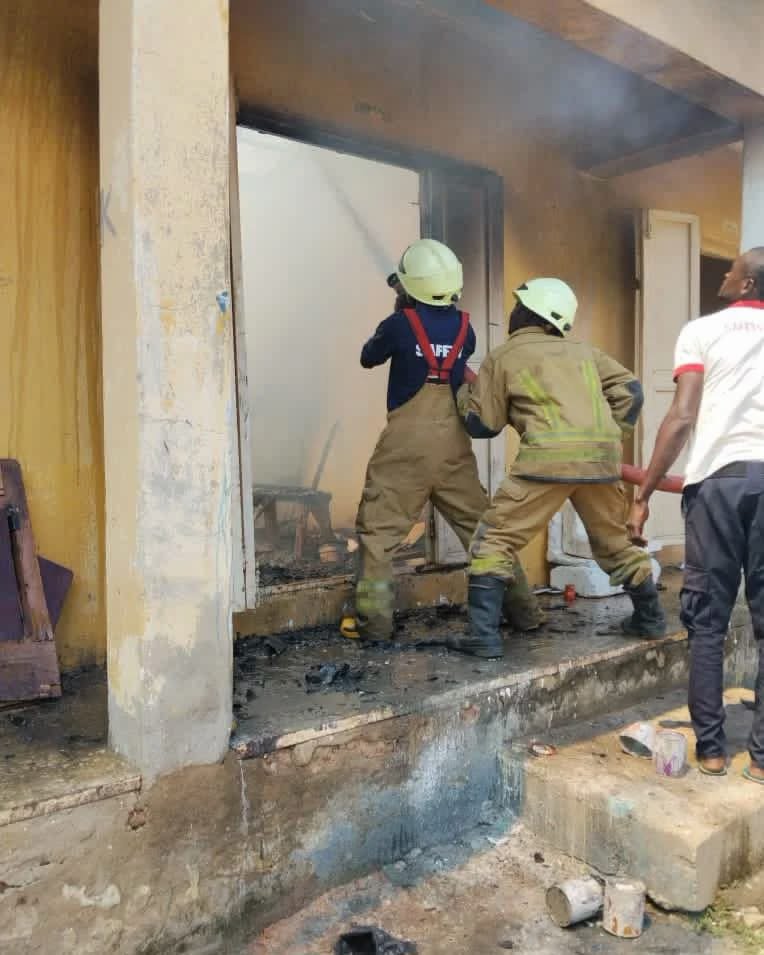
A fire outbreak at the Technology Incubation Centre in Gombe State has destroyed property estimated at about ₦4 million, affecting five shops within the facility.
The incident, which disrupted commercial activities at the technology-oriented facility, was contained by personnel of the Federal Fire Service after firefighters responded to the emergency and prevented the blaze from spreading to adjoining sections of the centre.
The fire adds to a series of incidents involving commercial and institutional properties across Nigeria, highlighting continuing concerns over fire prevention, emergency preparedness and the need for functional firefighting infrastructure in business environments.
According to details surrounding the Gombe incident, the fire affected five shops operating within the Technology Incubation Centre. Property and goods stored in the affected premises were destroyed, with the estimated value of losses put at approximately ₦4 million.
No confirmed report of loss of life has emerged in connection with the incident at the time of reporting. The available information also does not indicate that the fire spread beyond the affected section of the facility.
The Federal Fire Service’s intervention was crucial in containing the blaze. Rapid response by professional firefighters is particularly important in commercial environments where combustible materials, electrical installations and other equipment can accelerate the spread of fire.
The exact cause of the Gombe fire had not been independently established in the information available to wengglobal as of publication. Consequently, the incident should not be attributed to an electrical fault, negligence or any other specific cause without an official determination from the relevant authorities.
Technology Incubation Centre and Its Role
The Gombe Technology Incubation Centre forms part of Nigeria’s network of technology incubation facilities established to support innovation, entrepreneurship, small businesses and technology-based enterprises.
The National Assembly’s 2023 National Agency for Technology Incubation Bill lists the Technology Incubation Centre in Gombe among the centres established under the national technology incubation framework. (NILDS)
Such centres are designed to provide an environment where entrepreneurs and emerging businesses can develop products, improve production processes, access technical support and commercialise innovative ideas.
The destruction of property in five shops therefore represents more than a financial setback for individual businesses. Incidents of this nature can interrupt business operations, damage equipment and inventory, affect employees and customers, and create additional financial pressure for entrepreneurs who may already be operating with limited capital.
The estimated ₦4 million loss also demonstrates the potential economic consequences of relatively contained fires. While the affected area may have been limited to five shops, the destruction of productive assets can have longer-term consequences for the businesses involved.
Fire Safety Concerns
The Gombe incident once again places attention on the importance of fire-safety measures in commercial and technology-focused facilities.
Business owners and facility managers are expected to maintain appropriate fire-prevention systems, including accessible fire extinguishers, clearly marked emergency exits, functional electrical installations and adequate emergency-response arrangements.
Regular fire-safety inspections can also help identify hazards before they develop into emergencies. In facilities hosting multiple businesses, the responsibility for safety extends beyond individual shop operators to landlords, managers and relevant regulatory authorities.
Fire prevention is particularly important in environments where several businesses operate close to one another. A fire that begins in one shop can quickly threaten neighbouring premises if there are inadequate safety measures or delays in emergency response.
The role of the Federal Fire Service in containing the Gombe incident underscores the importance of maintaining emergency-response capacity across the country. Effective response depends not only on the availability of firefighters but also on timely reporting, accessible premises, functioning equipment and cooperation from members of the public.
Economic Impact on Small Businesses
For small businesses, the destruction of inventory, equipment and business premises can result in significant financial difficulties.
Unlike large corporations that may have insurance coverage, diversified operations and substantial reserves, many small enterprises depend heavily on daily trading income. A fire can therefore interrupt cash flow immediately while simultaneously creating costs associated with replacing goods, repairing premises and restarting operations.
The reported ₦4 million loss at the Gombe Technology Incubation Centre should consequently be viewed within the broader challenge facing small and medium-sized businesses in Nigeria.
Entrepreneurs operating from incubation centres and similar facilities often depend on the infrastructure provided by such institutions to develop their businesses. Protecting those facilities from avoidable hazards is therefore essential to sustaining the enterprises they are designed to support.
Business owners can also reduce their exposure to catastrophic losses by maintaining appropriate insurance coverage where available and ensuring that electrical and other potentially hazardous installations are regularly inspected.
Need for Stronger Fire Prevention Measures
The Gombe incident provides another reminder that fire safety should be treated as a continuous responsibility rather than a response that begins only after an emergency occurs.
Relevant authorities and facility managers can strengthen prevention by conducting periodic fire-risk assessments, ensuring that firefighting equipment remains functional, training occupants on emergency procedures and keeping access routes clear for emergency vehicles.
Business operators should equally avoid unsafe electrical connections, overloading of sockets and improper storage of combustible materials.
Public awareness is another important component of fire prevention. Early reporting can make a significant difference, particularly in densely occupied commercial areas where flames can spread rapidly.
Although firefighters succeeded in containing the Gombe blaze, the destruction of goods worth millions of naira demonstrates the importance of acting before emergencies occur.
Broader Context
The incident comes against a wider backdrop of fire outbreaks affecting homes, markets, shops and commercial establishments in different parts of Nigeria.
The frequency of such incidents has repeatedly raised questions about electrical safety, fire-prevention practices, emergency access and the availability of firefighting infrastructure.
Recent reports of fire incidents in Gombe and other parts of the country have similarly demonstrated how quickly commercial and residential properties can be affected. However, each incident requires its own official investigation before its cause or responsibility can be conclusively established.
For the businesses affected by the Gombe Technology Incubation Centre fire, the immediate priority will likely be recovery and restoration of operations. Government agencies and relevant stakeholders can assist by ensuring that affected entrepreneurs have access to appropriate support mechanisms and that the facility receives any necessary safety assessment before normal activities resume.
The incident also reinforces the importance of documenting losses accurately. An independent assessment of damaged property, equipment and merchandise can help establish the actual scale of the financial impact and support any insurance or institutional recovery process.
As investigations and assessments continue, the priority should remain on protecting lives, supporting affected businesses and strengthening preventive measures to reduce the likelihood of similar incidents.
For wengglobal, the Gombe fire serves as a reminder that economic resilience is closely linked to basic infrastructure and safety. Protecting technology incubation centres, markets, workshops and other commercial facilities is essential not only for safeguarding property but also for preserving the livelihoods and entrepreneurial opportunities they support.
Sources:
- Federal Government of Nigeria / Office of the Accountant-General of the Federation — records identifying the Technology Incubation Centre, Gombe, as a federal technology-incubation facility. (OAGF)
- National Assembly of Nigeria — National Agency for Technology Incubation Bill, 2023, which lists the Technology Incubation Centre, Gombe. (NILDS)
- Federal Fire Service — emergency firefighting and fire-response agency referenced in reports concerning fire incidents across Nigeria.
- Punch Newspapers — reporting on previous major fire incidents involving commercial properties and shops in Gombe, providing broader context on fire emergencies in the state. (Punch Newspapers)