Reported Simon Daniel Yusuph l journalist at wengglobal
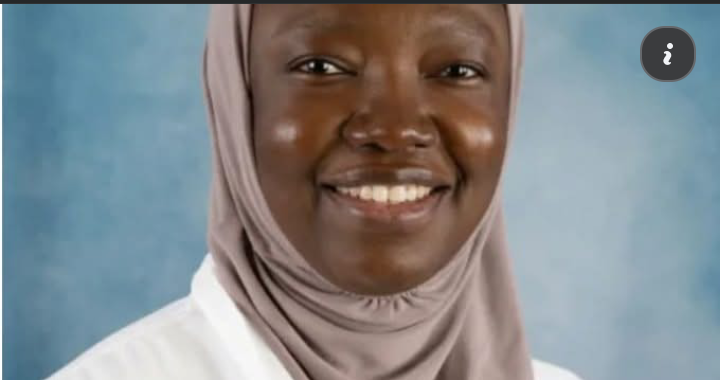
Artificial intelligence (AI), telepathology and other digital health technologies could significantly reshape healthcare diagnostics in Nigeria over the next decade, but their impact will depend on sustained investment, effective regulation and coordinated action across government and the private sector, according to Dr Olayemi Dawodu, Managing Director and Chief Executive Officer of Cerba-Lancet Laboratories Nigeria.
Dawodu’s assessment places technology at the centre of a broader debate about how Nigeria can expand access to reliable diagnostic services, particularly for people living in rural and underserved communities where specialist medical expertise and advanced laboratory infrastructure remain limited.
In separate recent interviews with Nigerian media, Dawodu argued that digital technologies can help bridge geographical barriers in healthcare by connecting patients and healthcare facilities outside major cities with specialists and diagnostic laboratories in urban centres. Leadership reported her call for Nigeria to accelerate policies supporting AI, automation and telepathology, while the Nigerian Tribune similarly reported her position that digital healthcare is essential if the country is to address access challenges and a shortage of healthcare professionals. (Leadership)
Telepathology could bring specialist expertise closer to rural communities
One of the key technologies highlighted by Dawodu is telepathology, a digital approach that enables pathology information, including digitised slides, to be transmitted electronically to specialists who may be located far from the facility where samples were collected.
For Nigeria, the potential significance is considerable. Specialist pathologists and sophisticated diagnostic facilities are concentrated disproportionately in urban centres, creating geographical and financial barriers for patients in remote areas.
Dawodu has argued that rural communities do not necessarily need to possess the same sophisticated infrastructure available in major cities. Instead, healthcare facilities can be equipped with appropriately selected, validated, verified and calibrated technologies capable of producing dependable diagnostic results.
A practical example is cervical cancer screening. Under a telepathology model, trained community health workers could collect and prepare Pap smear samples, digitally scan slides and transmit them to qualified pathologists in urban locations for assessment.
Such an arrangement could reduce the need for patients to travel long distances simply to access specialist pathology services while allowing expertise to be shared across geographical boundaries.
Leadership reported that Dawodu sees this approach as particularly relevant to underserved communities, where access to specialist diagnostic services remains a challenge. (Leadership)
The technology, however, should not be regarded as a substitute for professional medical judgment. Rather, telepathology can function as a connection between local healthcare workers, diagnostic infrastructure and specialist expertise. Its effectiveness would therefore depend on appropriate clinical protocols, quality assurance, trained personnel, reliable connectivity and regulatory oversight.
AI could improve speed, efficiency and diagnostic capacity
Artificial intelligence represents another component of the emerging digital-health landscape.
AI-enabled systems are increasingly being explored globally for applications such as image analysis, workflow automation, pattern recognition and decision support. In pathology, digital images can potentially be analysed with computational assistance, helping specialists identify patterns that may require closer examination.
For Nigeria, such technologies could be particularly valuable in addressing workload pressures and shortages of highly trained professionals. Dawodu has pointed to the country’s shortage of healthcare workers, including the consequences of brain drain, as one reason digital technology can no longer be regarded simply as an optional innovation.
The Nigerian Tribune reported her view that technology and digital solutions are necessary to improve access to quality healthcare, while also stressing that technological innovation must be accompanied by government support and appropriate policy frameworks. (Tribune Online)
AI should nevertheless be deployed carefully. Diagnostic medicine involves potentially life-changing decisions, meaning technology must operate within clearly defined professional and regulatory boundaries. Human oversight, data quality, patient privacy, cybersecurity and accountability will remain essential as Nigerian laboratories explore increasingly sophisticated digital tools.
The objective should therefore not be to replace pathologists or other healthcare professionals, but to give them better tools with which to deliver timely and accurate services.
Policy and infrastructure remain critical
Dawodu has repeatedly emphasised that technology alone cannot resolve Nigeria’s healthcare challenges.
For digital diagnostics to work at scale, the country requires dependable telecommunications infrastructure, electricity, digital systems, trained personnel and regulatory frameworks capable of keeping pace with technological developments.
This means healthcare institutions cannot operate in isolation. Dawodu has called for collaboration among healthcare authorities, telecommunications stakeholders, educational institutions and regulators, including the Nigerian Communications Commission, to create the infrastructure required for wider deployment.
She has also advocated roundtables and think tanks involving relevant stakeholders to develop practical and scalable solutions rather than allowing promising digital-health initiatives to remain confined to isolated pilot programmes. (Tribune Online)
This emphasis on collaboration reflects the complexity of Nigeria’s healthcare environment. A telepathology programme may have modern scanners and qualified specialists but still fail if the community facility lacks stable electricity or broadband connectivity. Likewise, AI tools cannot deliver dependable results when they are trained or deployed using poor-quality data.
The technology must therefore be supported by a wider ecosystem of infrastructure, skills, governance and financing.
Accurate diagnostics remain fundamental to better healthcare
The conversation around AI and telepathology also comes at a time when healthcare stakeholders are placing renewed emphasis on the importance of accurate laboratory data.
In a separate interview published by The Guardian, Dawodu described laboratory-generated information as an important foundation for understanding disease trends, shaping health policies and improving healthcare planning. She also stressed the importance of quality-management systems, qualified personnel and internationally recognised standards in delivering dependable diagnostic results. (The Guardian Nigeria)
Cerba-Lancet Nigeria says it operates an ISO 15189:2022-accredited private pathology practice and provides laboratory and pathology consultation services to public and private institutions. The company says its Nigerian network offers routine, specialised and advanced diagnostic testing and operates laboratories and collection locations across several parts of the country. (cerbalancetafrica.com)
The organisation’s focus on preventive diagnostics has also expanded in recent years. In December 2024, BusinessDay reported the opening of a new reference laboratory by Cerba-Lancet Nigeria, with Dawodu describing preventive healthcare and early detection as central to the company’s strategy. (Business Day)
Digital healthcare could help address Nigeria’s healthcare workforce gap
Nigeria’s healthcare system continues to face challenges relating to workforce capacity and uneven distribution of specialists.
Digital health cannot completely resolve the shortage of healthcare professionals, but it could enable existing specialists to serve a larger geographical area.
A pathologist based in Lagos, Abuja or another major city, for instance, could potentially review digitised pathology materials from facilities in communities where a specialist is not physically available. This creates an opportunity to extend expertise without requiring every community to maintain a full complement of highly specialised personnel.
That model could become particularly important for cancer diagnosis, where timely pathology assessment can influence treatment decisions and patient outcomes.
Dawodu has previously highlighted telepathology and AI as tools for reducing geographical constraints and improving turnaround times in cancer diagnosis. In a public reflection on her participation in the US-Africa Business Summit, she also argued for stronger national screening programmes and data-driven approaches to cancer detection and planning. (LinkedIn)
Investment must accompany innovation
For the digital-health vision to become sustainable, investment will be as important as technology itself.
Nigeria will need funding for digital infrastructure, diagnostic equipment, laboratory information systems, workforce training, cybersecurity and maintenance. Rural facilities will require particular attention because the cost of deploying technology in remote areas can be significantly higher than in established urban centres.
Solar-powered and alternative energy solutions could help address some electricity constraints, while telecommunications partnerships could improve connectivity.
But investment should also be accompanied by measurable standards. Policymakers will need to establish clear requirements for the validation of diagnostic technologies, protection of patient information, professional accountability and quality assurance.
Leadership reported Dawodu’s call for stronger government involvement in accelerating digital-health adoption, while Tribune reported her argument that comprehensive policies and regulatory frameworks are necessary for telemedicine and telepathology to expand sustainably. (Leadership)
The next decade could determine Nigeria’s digital diagnostic future
Dawodu’s projection of the next 10 years presents an opportunity for Nigeria to move from fragmented digital-health experimentation towards a coordinated national strategy.
The country already has examples of digital health initiatives, diagnostic laboratories with advanced capabilities and growing interest in telemedicine. The challenge is to connect these developments into a system capable of delivering equitable, safe and reliable services.
For patients, the ultimate measure of success will not be the sophistication of the technology but whether it produces tangible improvements: faster diagnosis, earlier detection, reduced travel for specialist services, better treatment decisions and greater access to quality healthcare.
AI and telepathology could contribute substantially to those objectives. But technology will only become transformative if supported by sound policy, adequate infrastructure, skilled professionals, strong quality controls and sustained public and private investment.
For Nigeria, the opportunity is therefore larger than simply adopting new diagnostic tools. It is about building a healthcare system in which geography does not determine the quality of medical expertise available to a patient.
As Dawodu’s argument suggests, the coming decade could provide Nigeria with an important window to make digital diagnostics a practical component of mainstream healthcare rather than an innovation available only to a limited number of urban facilities.
Sources
- Nigerian Tribune — “Future of healthcare is digital, Nigeria must not be left behind — Dr Dawodu”
- Leadership — “‘Nigeria Must Fast-Track Diagnostic Policy For Rural Healthcare’”
- The Guardian Nigeria — “‘Laboratory data should drive health policies, planning’”
- BusinessDay — “Cerba Lancet Nigeria opens new reference laboratory to lead preventive health”
- Cerba Lancet Africa — Cerba-Lancet Nigeria profile and services