KAI Rescues Four Nursing Mothers and Babies From Lagos Dumpsite as Authorities Intensify Environmental Enforcement!
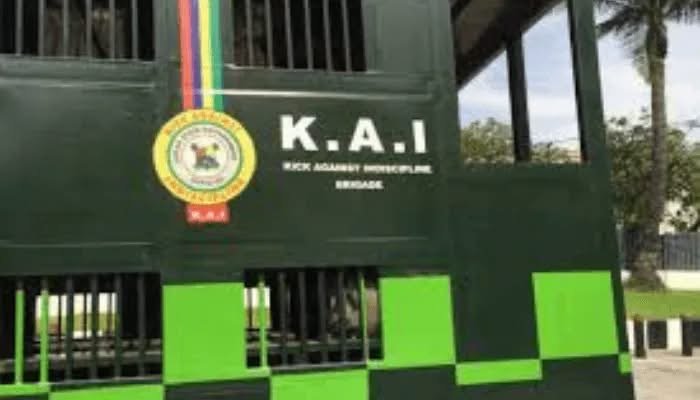
LAGOS, Nigeria — Operatives of the Lagos State Environmental Sanitation Corps, popularly known as Kick Against Indiscipline (KAI), have reportedly rescued four nursing mothers and their babies from an illegal dumpsite in Lagos, in an operation that has drawn renewed attention to the intersection of environmental enforcement, homelessness and the welfare of vulnerable families in the state.
The women were reportedly found living or staying at the dumpsite with their infants, prompting the KAI personnel to intervene and remove them from the hazardous environment. The operation reportedly included the provision of medical attention and efforts to establish contact with relatives in a bid to facilitate family reunification.
The reported rescue comes against the backdrop of an intensified environmental enforcement campaign by the Lagos State Government, which has increasingly focused not only on indiscriminate waste disposal but also on activities and settlements regarded by authorities as contributing to environmental degradation and public-health risks.
While the specific details surrounding the four women and their children have not been independently reported in sufficient detail by major national news organisations, recent reporting confirms that KAI has been carrying out large-scale operations involving people living in vulnerable conditions across Lagos.
The development therefore raises important questions about how the state balances environmental regulation with humanitarian responsibilities when enforcement operations involve women, infants, homeless people and other vulnerable residents.
Vulnerable families found amid environmental hazards
Dumpsites are designed for waste disposal, but unregulated or illegal waste sites can become informal settlements for people with limited access to housing and social services.
People living or spending extended periods around such locations may be exposed to contaminated materials, smoke from open burning, sharp objects, hazardous substances, polluted water and disease-carrying organisms.
For nursing mothers and infants, such conditions can pose additional risks because babies are particularly vulnerable to environmental contaminants and infectious diseases.
The reported intervention by KAI therefore carries implications beyond environmental sanitation. It also highlights the circumstances that can push vulnerable families into unsafe environments in search of shelter, income or basic survival.
The precise reasons the four mothers were reportedly at the dumpsite have not been publicly established in the available reports. It would therefore be premature to assume that homelessness, poverty or any single factor was responsible without further information from the women, their families or relevant social-welfare authorities.
KAI’s wider enforcement campaign
The reported rescue follows a broader enforcement campaign by the Lagos State Environmental Sanitation Corps.
KAI operates under the Lagos State Government and has historically been responsible for enforcing aspects of environmental and public-order regulations across the state.
In July 2026, TheCable reported that 396 beggars had been arrested in Lagos during an ongoing environmental sanitation enforcement drive conducted by KAI.
According to the report, Lagos Commissioner for the Environment and Water Resources Tokunbo Wahab said the exercise formed part of the state’s efforts to improve environmental sanitation and curb illegal activities.
TheCable reported that those apprehended were to be profiled, provided with necessary assistance where required and handed over to appropriate authorities for safe return to their respective states. (The Cable)
A video accompanying the commissioner’s announcement reportedly showed several vulnerable people among those apprehended, including elderly persons, nursing mothers and people using wheelchairs.
That operation demonstrates the breadth of the state’s current enforcement programme and provides relevant context for the reported rescue of the four nursing mothers and their babies.
Environmental enforcement meets social welfare
The involvement of vulnerable people in environmental enforcement operations creates a difficult policy question for authorities.
Lagos faces longstanding challenges associated with rapid urbanisation, population growth, inadequate housing and waste management. The city’s enormous daily waste output places pressure on collection systems and creates opportunities for informal settlements and economic activities to emerge around waste-disposal sites.
The Guardian has previously documented life around Lagos dumpsites and informal settlements, including communities where people survive by scavenging recyclable materials from discarded waste.
A 2023 Guardian report on Oke-Afa described the location as a former refuse-disposal site that had evolved into an informal settlement and scrap market. The report documented poor living conditions, limited access to basic amenities and the dependence of some residents on scavenging for their livelihoods. (The Guardian Nigeria)
Such conditions demonstrate why environmental enforcement alone may not resolve the underlying problems.
Removing people from hazardous locations can address an immediate environmental or safety concern, but sustainable outcomes may require access to shelter, healthcare, social protection, employment opportunities and family support.
Medical intervention is significant
The reported provision of medical assistance to the rescued mothers and their babies is particularly important.
Women who are breastfeeding require adequate nutrition, clean water and appropriate healthcare to protect their own health and support their infants. Babies living in unsanitary surroundings can face heightened exposure to infections and environmental hazards.
Any official intervention involving vulnerable mothers and children should therefore extend beyond removal from an illegal dumpsite.
Medical assessment can help determine whether the mothers or babies require treatment, vaccination, nutritional support or other forms of healthcare.
Social workers can also help determine whether the families have relatives capable of providing safe accommodation and care.
Where family reunification is possible and safe, it may offer a more sustainable solution than temporary detention or displacement.
Where families cannot be reunited, authorities would need to consider appropriate child-protection and social-welfare mechanisms.
Lagos intensifies crackdown on illegal dumping
The reported rescue also comes at a time when the Lagos Government is intensifying efforts to address indiscriminate waste disposal.
Authorities have repeatedly warned residents against dumping refuse in unauthorised locations, particularly drainage channels, roadsides, vacant plots and other public spaces.
The government argues that indiscriminate waste disposal contributes to flooding, blocked drainage infrastructure, environmental pollution and public-health concerns.
Recent state enforcement efforts have included the apprehension of people accused of violating environmental regulations.
The Newsroom, in a June 2026 report based on NAN material, reported that Commissioner Tokunbo Wahab defended the state’s environmental enforcement efforts amid public criticism over waste management. The commissioner said authorities had continued to apprehend and sanction people found violating environmental laws. (The Newsroom)
The government’s position is that effective enforcement requires both official action and public cooperation.
However, enforcement operations involving vulnerable people require particular care because environmental violations and social vulnerability can overlap.
The humanitarian dimension
The reported rescue of the four nursing mothers highlights the humanitarian dimension of Lagos’ environmental challenge.
People living in or around dumpsites are not necessarily there because they deliberately choose unsafe environments. Some may depend on waste picking or informal recycling for income, while others may lack affordable accommodation.
The Guardian’s earlier reporting from Oke-Afa showed how an informal economy developed around waste, with residents collecting metals, plastics, bottles and other discarded materials for resale. (The Guardian Nigeria)
For government, this creates a policy dilemma.
A dumpsite may represent an environmental and health hazard, yet for some vulnerable people it may also be a source of livelihood.
A purely punitive approach may remove people from the immediate site without addressing the economic circumstances that brought them there.
A more comprehensive response would combine environmental regulation with social intervention.
Child welfare remains a central concern
Whenever infants are found in hazardous environments, child welfare becomes an immediate consideration.
The priority should be ensuring that children are safe, medically assessed and protected from preventable exposure to dangerous conditions.
At the same time, authorities must avoid treating vulnerable mothers solely as environmental offenders when their circumstances may be linked to poverty, homelessness or lack of access to social services.
The reported effort to identify relatives and facilitate family reunification could therefore be an important component of the intervention if carried out with appropriate safeguarding procedures.
Family reunification should, however, be based on assessments that prioritise the safety and welfare of the children.
Need for stronger social protection
The incident also reinforces calls for stronger social-protection mechanisms in Nigeria’s major cities.
Lagos remains Nigeria’s commercial centre and one of Africa’s most populous urban areas. Its economic opportunities attract people from across the country, but the cost of housing and basic services can place significant pressure on low-income residents.
Without accessible shelters, affordable housing, healthcare and employment support, vulnerable families can find themselves in environments that expose them to serious risks.
Environmental enforcement can remove people from unsafe locations, but social services are needed to help prevent them from returning to similar conditions.
The reported KAI intervention therefore presents an opportunity for authorities to demonstrate that environmental regulation and humanitarian protection can operate together.
KAI operation raises broader questions
The reported rescue is significant not simply because four mothers and their babies were removed from a dumpsite, but because it illustrates the complex realities behind Lagos’ environmental challenges.
The city needs effective waste-management systems, enforcement against illegal dumping and measures to protect public health.
At the same time, vulnerable people encountered during enforcement operations require appropriate treatment, medical attention and access to social services.
The challenge for policymakers is to ensure that environmental sanitation does not become detached from the social realities affecting people who live or work in informal and hazardous environments.
For the four mothers and their babies reportedly rescued in the latest operation, the immediate priority is safety, healthcare and stable accommodation.
For Lagos authorities, the longer-term challenge is addressing the circumstances that allowed vulnerable families to be living in such an environment in the first place.
Wengglobal will continue to monitor developments surrounding the reported rescue and any official clarification from the Lagos State Environmental Sanitation Corps, the Ministry of Environment and Water Resources or relevant social-welfare agencies.
As further details emerge, the focus should remain on verified facts, the welfare of the affected families and the broader environmental and social issues confronting Lagos.
Sources and related reporting
- TheCable — Report on the Lagos environmental sanitation enforcement operation in which 396 beggars were apprehended, including vulnerable persons such as nursing mothers and people using wheelchairs. (The Cable)
- The Guardian Nigeria — Background reporting on life around Oke-Afa, an informal community that developed around a former dumpsite, including the conditions faced by people dependent on waste scavenging. (The Guardian Nigeria)
- The Newsroom / NAN — Report on the Lagos Government’s continuing environmental enforcement campaign and its position on indiscriminate waste disposal. (The Newsroom)
- The Nation — Earlier reporting documenting KAI enforcement operations involving pedestrians, including expectant and nursing mothers, illustrating the agency’s longstanding public-order and environmental enforcement role. (The Nation Newspaper)
- The Guardian Nigeria — Earlier reporting on the challenges associated with informal activity and vulnerable populations around Lagos roads and public infrastructure. (The Guardian Nigeria)