Sowore Vows to Restore Fuel Subsidy if Elected President, Puts Nigeria’s Cost-of-Living Crisis at Centre of 2027 Campaign
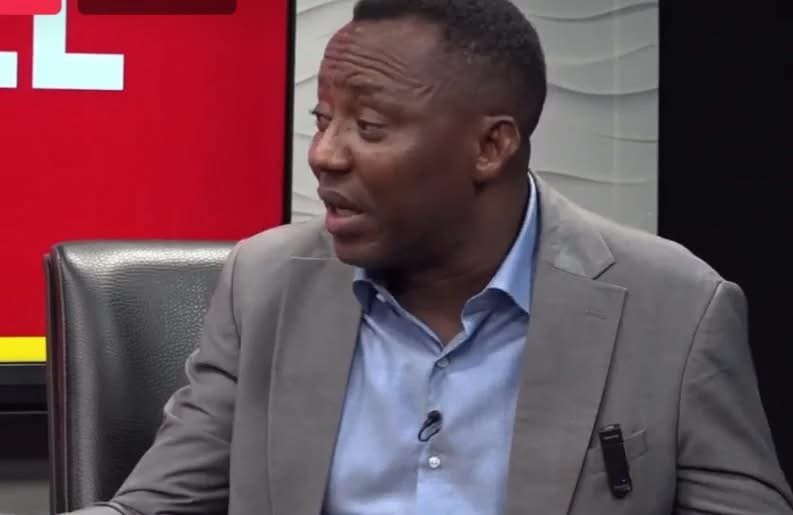
ABUJA, Nigeria — African Action Congress (AAC) presidential candidate Omoyele Sowore has renewed his opposition to Nigeria’s fuel-subsidy removal, pledging to restore a form of government support for petrol prices if elected president in the 2027 general election.
Sowore’s position places fuel pricing and the wider question of how Nigeria should manage its petroleum market at the centre of his emerging campaign agenda, setting his economic pitch apart from the market-oriented reforms implemented by President Bola Ahmed Tinubu’s administration.
The AAC candidate has argued that the removal of the petrol subsidy, implemented by President Tinubu shortly after assuming office in May 2023, has contributed to the sharp increase in the cost of living faced by Nigerians. At the same time, Sowore has maintained that the subsidy system itself was vulnerable to corruption and abuse, distinguishing between support intended to reduce the burden on ordinary Nigerians and what he describes as benefits captured by powerful interests.
The latest position is consistent with Sowore’s long-standing criticism of subsidy removal. In 2022, while campaigning for the presidency, he said he would retain fuel subsidy if elected but would target what he described as corrupt interests benefiting from the system. A recording of that position was published by Nigeria Info FM. (YouTube)
His renewed position comes as he prepares for the 2027 presidential contest after securing the presidential ticket of the African Action Congress.
Sowore emerges as AAC candidate for 2027
The fuel-subsidy pledge comes against the backdrop of a significant development in Nigeria’s opposition politics.
On May 26, 2026, the African Action Congress adopted Sowore as its consensus presidential candidate for the 2027 election. The decision was announced during the party’s presidential primary in Abuja.
TheCable, Premium Times, the International Centre for Investigative Reporting and other Nigerian media organisations reported Sowore’s emergence as the AAC candidate. He subsequently stepped down as national chairman of the party, with Samuel Ajeyigbe taking over the leadership position. (ICIR News)
Sowore has presented the AAC as an alternative to the established political parties and has promised what he describes as a fundamental restructuring of Nigeria’s political and economic system.
During his acceptance speech, he criticised the removal of fuel subsidy without what he considered adequate measures to protect vulnerable Nigerians. He also accused the government of adopting economic policies that have placed an excessive burden on ordinary citizens. (ICIR News)
His latest campaign message therefore seeks to connect the fuel-price debate to broader concerns over inflation, wages, unemployment and declining household purchasing power.
Why the subsidy debate remains politically sensitive
Fuel subsidy has been one of Nigeria’s most contentious economic policy issues for more than a decade.
Successive administrations have struggled with the cost, administration and economic consequences of subsidising petrol. Supporters of subsidy removal have argued that the policy placed a heavy burden on government finances, encouraged inefficiencies and created opportunities for fraud.
Critics, however, have consistently maintained that abruptly ending the subsidy without sufficient alternatives exposes low- and middle-income Nigerians to severe economic hardship.
President Tinubu ended the longstanding petrol subsidy regime in his inaugural address on May 29, 2023. The decision immediately changed the economics of petrol consumption, contributing to a substantial increase in pump prices and triggering widespread concern over the rising cost of transportation and other necessities.
The policy has remained politically consequential because fuel prices affect almost every part of Nigeria’s economy.
Petrol is not merely a household consumption item. It is also an important input for transportation, small businesses and power generation. Consequently, changes in petrol prices can influence the cost of moving people and goods and operating businesses.
This is one reason the subsidy debate remains central to Nigeria’s political conversation.
Sowore challenges the economic direction
Sowore’s argument is that government policy should prioritise the welfare of ordinary Nigerians rather than simply pursue fiscal or market reforms.
In his May 2026 acceptance speech, he described the subsidy removal as a policy decision that had increased economic pain, arguing that the government should have combined any reform with stronger protective measures and increased domestic refining capacity. (ICIR News)
He has also criticised the government’s broader economic programme and accused it of relying on what he characterises as externally influenced economic prescriptions.
However, his proposed restoration of subsidy would face significant fiscal and policy questions if implemented.
A central issue would be determining how much government support should be provided, who should benefit, how the programme would be funded and what mechanisms would prevent the corruption and leakages that historically plagued Nigeria’s subsidy system.
The fiscal question behind a subsidy restoration
Restoring a fuel subsidy would require the government to absorb some portion of the difference between the market cost of petrol and the price paid by consumers, depending on the structure eventually adopted.
That could create substantial fiscal obligations, particularly if international oil prices rise, the naira weakens or domestic production fails to meet demand.
This does not necessarily make subsidy impossible, but it means any proposal would require a clearly defined financing mechanism.
For Sowore, the argument appears to be that government intervention can be justified where it protects citizens from excessive economic hardship. Critics of such an approach would likely question whether subsidising consumption is the most efficient way of protecting vulnerable Nigerians.
The policy debate therefore extends beyond the simple question of whether petrol should be cheaper.
It concerns how public resources should be allocated and whether Nigeria should subsidise fuel consumption, directly support vulnerable households, invest in public transportation, accelerate domestic refining or pursue a combination of these measures.
Domestic refining could change the equation
One factor that could significantly influence the subsidy debate is the growth of domestic refining capacity.
Nigeria has historically depended heavily on imported refined petroleum products despite being a major crude oil producer. That dependence exposed consumers and government finances to international market movements, foreign-exchange pressures and import-related costs.
The emergence of large-scale domestic refining capacity has the potential to alter that equation.
Sowore has argued for greater investment in domestic refining and a restructuring of the petroleum sector. During his AAC campaign activities, he linked the country’s fuel-price challenges to the structure of the downstream petroleum industry and what he described as excessive concentration of economic power. (ICIR News)
If domestic refining expands significantly, the cost structure of Nigeria’s fuel market could change. But domestic production alone would not automatically eliminate the need for difficult decisions about pricing, taxation, transportation, crude supply and market regulation.
Sowore’s broader economic programme
The subsidy proposal is only one part of Sowore’s wider economic message.
After securing the AAC presidential ticket, he pledged what he described as a programme of revolutionary political and economic change. His agenda includes stronger government intervention in strategic sectors, tackling corruption, addressing unemployment and expanding public services.
In a separate campaign announcement reported by Pulse Nigeria, Sowore promised a ₦500,000 minimum wage, an end to the casualisation of workers and the construction of one million public homes if elected president. (Pulse Nigeria)
These proposals indicate that his campaign is positioning itself around an interventionist economic model in which the government would play a more direct role in protecting incomes and providing essential services.
Whether such proposals are fiscally sustainable would ultimately depend on the details of implementation, including projected government revenues, expenditure priorities and financing arrangements.
The political significance of the pledge
The fuel-subsidy pledge is also significant because it speaks directly to one of the most visible consequences of Nigeria’s economic reforms: the rising cost of living.
For many Nigerians, the debate is not primarily about economic theory. It is about the price of transportation, food, electricity, rent and other household expenses.
That reality gives subsidy policy substantial political weight heading into the 2027 election.
Sowore’s position allows him to present himself as a candidate willing to reverse or substantially modify one of the most unpopular aspects of the current economic reform programme among sections of the population.
At the same time, voters will likely demand more than a promise to reduce petrol prices. Any candidate proposing subsidy restoration will face questions about how the policy would be financed, how corruption would be prevented and how the government would maintain investment in infrastructure and other public services.
A debate over protection versus reform
The central economic disagreement is increasingly becoming a question of sequencing.
Should Nigeria prioritise immediate relief for consumers even if that requires greater government expenditure? Or should it maintain market-oriented reforms while using targeted social interventions to protect vulnerable citizens?
Sowore clearly favours a stronger role for government in cushioning citizens from the impact of fuel prices.
The Tinubu administration, by contrast, has continued with its broader reform agenda following the 2023 subsidy removal, while the government has argued that reforms are necessary to address longstanding structural weaknesses in the Nigerian economy.
The competing approaches will likely become more prominent as the 2027 election approaches.
What voters will need to scrutinise
For Nigerian voters, the critical issue will be the details behind the promises.
If Sowore proposes restoring fuel subsidy, Nigerians will need to know the proposed cost, funding source, duration, eligibility framework and safeguards against abuse.
They will also need to understand whether the policy would be accompanied by investment in domestic refining, mass transit, renewable energy, public infrastructure and targeted assistance for low-income households.
The effectiveness of any subsidy programme ultimately depends not only on how much money government spends but on how efficiently the benefit reaches its intended recipients.
Nigeria’s previous experience demonstrates that a subsidy programme can become expensive and vulnerable to manipulation when oversight is weak.
A credible alternative therefore requires more than reversing an existing policy. It requires demonstrating how the replacement system would work better.
2027 contest begins to take shape
Sowore’s emergence as the AAC presidential candidate adds another voice to an increasingly competitive 2027 political landscape.
His campaign is built around a sharp critique of the political establishment and economic policies pursued by successive governments. Fuel subsidy is likely to remain one of the issues through which he seeks to distinguish his platform from those of larger political parties.
His promise to restore subsidy, if elected, represents a significant policy position because it challenges the assumption that the 2023 reform must remain permanent in its current form.
But whether the proposal can be translated into a sustainable national economic policy will depend on the details that emerge as the campaign progresses.
For Wengglobal, the most important question is not simply whether fuel subsidy should be restored or retained. It is whether Nigeria can develop an energy and economic policy that delivers affordable transportation and energy for citizens without recreating the fiscal leakages, opacity and inefficiencies associated with previous subsidy regimes.
As the 2027 election approaches, Nigerians will have the opportunity to compare competing economic visions.
Sowore’s proposal has put fuel subsidy back at the centre of that debate.
The task now is for political candidates, parties and policymakers to move beyond slogans and provide Nigerians with transparent numbers, credible funding plans and measurable targets.
The country’s economic future will depend not only on the price Nigerians pay at the pump, but on whether government policies can simultaneously protect household incomes, strengthen domestic production, create jobs and preserve public finances.
Sources
- TheCable — “AAC adopts Sowore as consensus presidential candidate,” May 26, 2026. (The Cable)
- Premium Times — “2027: Sowore emerges AAC presidential candidate,” May 26, 2026. (Premium Times Nigeria)
- International Centre for Investigative Reporting (ICIR) — “AAC adopts Sowore as consensus candidate for 2027 presidential election,” May 26, 2026. (ICIR News)
- The Guardian Nigeria — “AAC Picks Sowore as Presidential Candidate, unveils New Economic Agenda,” May 26, 2026. (The Guardian Nigeria)
- Pulse Nigeria — “Sowore promises ₦500,000 minimum wage, one million public homes if elected president,” May 29, 2026. (Pulse Nigeria)
- Radio Nigeria Abuja — “Sowore Emerges AAC Presidential Candidate,” May 26, 2026. (Radio Nigeria Abuja)
- Nigeria Info FM — Interview report: “I Won’t Remove Fuel Subsidy If I Become President – Sowore,” October 12, 2022. (YouTube)