Reported by Simon yusuph,| Journalist at wengglobal
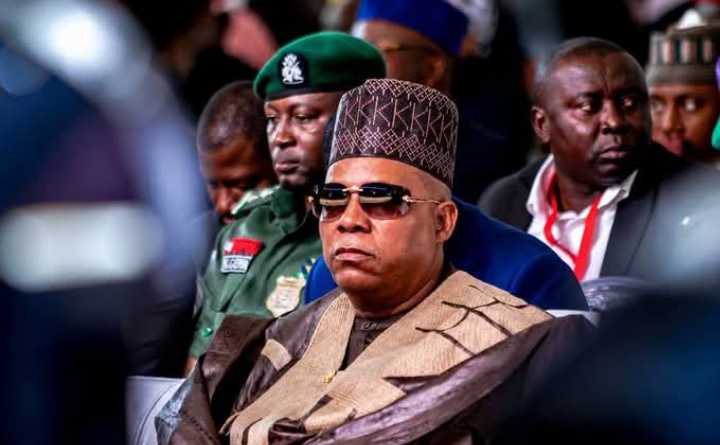
Nigeria’s ambition of transforming into a $1 trillion economy will remain unattainable without a firm commitment to corporate governance, institutional accountability, and sustainable reforms, Vice-President Kashim Shettima has said.
Speaking at a corporate governance forum attended by public and private sector stakeholders, Shettima stressed that economic transformation cannot be achieved through political rhetoric or short-term populist measures. Instead, he argued that the country must strengthen governance structures, improve transparency, and build institutions capable of inspiring investor confidence and supporting long-term economic growth.
His remarks come as Nigeria continues to pursue wide-ranging economic reforms under the administration of President Bola Ahmed Tinubu, with policymakers targeting rapid economic expansion despite persistent challenges, including inflation, exchange rate volatility, unemployment, infrastructure deficits, and declining purchasing power.
The Vice-President emphasized that the aspiration to grow Nigeria into a $1 trillion economy is not merely about increasing gross domestic product (GDP), but about creating resilient institutions capable of sustaining economic progress across generations.
According to Shettima, strong corporate governance remains one of the most important foundations of modern economies. He noted that countries that have recorded sustained economic growth achieved their success by strengthening institutions, enforcing accountability, protecting investors, and ensuring ethical leadership in both public and private organisations.
He warned that governance failures continue to undermine investment, weaken public confidence, and reduce the competitiveness of African economies in the global marketplace.
Governance as the Engine of Economic Growth
Shettima argued that governance should not be viewed as a bureaucratic obligation but as an economic asset capable of attracting domestic and foreign investment.
He explained that transparent institutions reduce business risks, improve market confidence, and create an environment where innovation and entrepreneurship can flourish.
The Vice-President further observed that investors increasingly evaluate governance standards before committing capital to emerging markets. Countries with predictable regulations, independent institutions, and responsible corporate leadership are generally more attractive investment destinations than those characterised by weak accountability and policy uncertainty.
According to him, Nigeria’s private sector also has a critical responsibility to embrace ethical business practices, strengthen internal controls, and promote transparency in corporate decision-making.
Nigeria’s $1 Trillion Economic Vision
The Federal Government has consistently projected that Nigeria can become a $1 trillion economy within the next decade through comprehensive reforms across key sectors, including energy, agriculture, digital technology, manufacturing, infrastructure, and financial services.
Economic analysts, however, note that achieving such a target requires sustained GDP growth, macroeconomic stability, increased productivity, improved revenue generation, and a more favourable business environment.
Recent reforms—including the removal of fuel subsidies, exchange rate liberalisation, tax reforms, and efforts to improve public finances—have been presented by the Tinubu administration as necessary steps toward long-term economic stability.
While international financial institutions have acknowledged some reform efforts, they have also cautioned that structural reforms must be accompanied by stronger institutions, effective social protection programmes, and improved governance to minimise economic hardship on citizens.
Corporate Governance Beyond Compliance
During his address, Shettima highlighted that corporate governance extends beyond compliance with regulations.
He described it as a culture built on integrity, accountability, transparency, and responsible leadership.
According to him, businesses that prioritise good governance are more resilient during economic downturns, better positioned to attract long-term investment, and more capable of delivering sustainable value to shareholders and society.
He also encouraged corporate leaders to strengthen environmental, social, and governance (ESG) practices, noting that global investors increasingly consider these factors when making investment decisions.
Experts argue that improved governance standards can reduce corruption, strengthen financial reporting, improve risk management, and enhance Nigeria’s competitiveness within Africa and globally.
Building Institutions That Outlast Governments
One of the central themes of the Vice-President’s remarks was the importance of institutional continuity.
He argued that successful economies are built on institutions rather than individuals, stressing that governance frameworks should remain effective regardless of changes in political leadership.
This approach, he said, provides certainty for investors, encourages long-term planning, and protects economic reforms from political transitions.
Analysts have long maintained that policy consistency remains one of Nigeria’s biggest challenges. Frequent regulatory changes and implementation gaps have historically affected investor confidence, despite the country’s significant market potential and youthful population.
Strengthening institutions, observers say, could help address these concerns by ensuring that economic policies are implemented consistently and transparently.
The Wider African Perspective
Shettima’s message also resonates with broader discussions across Africa regarding governance and sustainable development.
Several African economies have prioritised governance reforms as part of strategies to attract foreign direct investment, improve public sector efficiency, and stimulate inclusive economic growth.
Regional organisations, including the African Union and the African Development Bank, have repeatedly highlighted the importance of good governance, anti-corruption measures, and institutional reforms in accelerating Africa’s economic transformation.
As implementation of the African Continental Free Trade Area (AfCFTA) progresses, governance standards are expected to become even more significant in improving cross-border investment and regional economic integration.
Challenges Ahead
Despite growing optimism surrounding Nigeria’s long-term economic potential, experts caution that achieving a $1 trillion economy will require more than ambitious targets.
The country must continue addressing inflationary pressures, infrastructure shortages, insecurity affecting agricultural production, limited electricity supply, and constraints facing manufacturers and small businesses.
Improving the ease of doing business, expanding access to finance, strengthening the judiciary, modernising regulatory institutions, and enhancing digital governance are also widely viewed as essential reforms.
Economists further stress that inclusive growth—one that creates jobs, reduces poverty, and improves living standards—will ultimately determine whether economic expansion delivers meaningful benefits for Nigerians.
Looking Forward
Vice-President Shettima’s remarks reinforce an increasingly recognised principle among economists and governance experts: sustainable economic growth depends not only on ambitious policy goals but also on credible institutions capable of implementing them.
As Nigeria pursues its long-term economic transformation agenda, the quality of governance in both public institutions and private enterprises is expected to play a decisive role in determining whether the country can realise its trillion-dollar economic aspiration.
For investors, businesses, and policymakers alike, the message is clear: strong institutions, transparency, accountability, and responsible leadership remain indispensable pillars of sustainable development.
Sources
- Reuters
- Bloomberg
- Premium Times Nigeria
- The Guardian Nigeria
- Channels Television
- Nairametrics
- ThisDay Live
- Presidency of the Federal Republic of Nigeria