Reported by Weng Patrick Atokor | Journalist at Weng Global
A coalition of influential Nigerians under the platform known as the G-100 has called on opposition political parties across the country to unite behind a single presidential candidate ahead of Nigeria’s 2027 general election, arguing that only a broad alliance can effectively challenge the ruling establishment and address the nation’s growing economic, security and governance concerns.
The group, which comprises over 100 eminent Nigerians drawn from politics, academia, civil society, business, and public service, said Nigeria’s current challenges require a united political front rather than fragmented opposition forces competing against one another.
In a statement issued after consultations among members, the coalition warned that divisions among opposition parties could weaken democratic competition and limit the chances of presenting an alternative vision for the country.
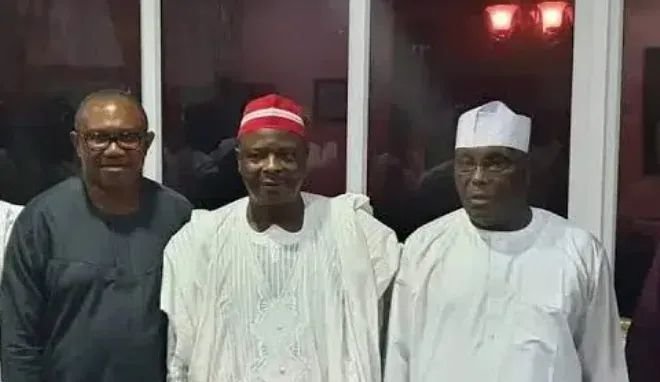
The call comes amid increasing political realignments ahead of the 2027 elections, with several opposition leaders engaging in consultations aimed at building alliances capable of reshaping Nigeria’s political landscape.
Need for Opposition Unity
According to the G-100, Nigeria is facing significant economic pressures, insecurity, unemployment, inflation, and declining public confidence in governance, making it imperative for opposition parties to put national interest above individual ambitions.
Members of the coalition argued that past elections have demonstrated how multiple candidates from opposition parties often split votes, reducing their collective electoral strength.
“The country needs a credible and united alternative capable of inspiring hope and restoring confidence among Nigerians,” the coalition stated.
Political observers note that coalition-building has become a recurring strategy in Nigerian politics, especially in presidential elections where broad regional and political support is essential.
The G-100 maintained that opposition leaders should engage in constructive dialogue to identify a consensus candidate who can represent diverse interests across Nigeria’s geopolitical zones.
Analysts believe such an arrangement could potentially create a more competitive electoral environment and encourage issue-based campaigns.
Growing Political Consultations
The call by the coalition comes at a time when political activities ahead of 2027 are beginning to gather momentum, despite the elections being nearly two years away.
Prominent political figures across different parties have held consultations in recent months, sparking discussions about possible mergers, alliances and strategic partnerships.
Several opposition groups have argued that collaboration is necessary to strengthen democratic institutions and provide voters with a clear alternative.
However, reaching a consensus on a single candidate remains one of the biggest challenges due to differing political interests, regional considerations and leadership ambitions.
Nigeria’s political history shows that coalition politics can be both effective and complex.
The merger that led to the formation of the ruling party before the 2015 general election remains one of the country’s most notable examples of successful political alliances.
Observers say any new coalition would require extensive negotiations, compromises and agreements on policy direction, power-sharing arrangements and national priorities.
Economic Concerns Driving the Debate
The G-100 linked its appeal to current economic realities facing many Nigerians.
The coalition cited rising living costs, unemployment, foreign exchange pressures, insecurity and infrastructure deficits as issues requiring fresh ideas and stronger leadership.
Recent economic reforms have generated intense public debate, with supporters arguing they are necessary for long-term stability while critics say they have increased hardship for ordinary citizens.
The coalition stressed that political competition should focus on practical solutions rather than personal attacks.
According to the group, Nigerians are increasingly interested in policies that can improve livelihoods, strengthen institutions, expand economic opportunities and ensure security.
Experts believe that any opposition alliance seeking electoral success must present clear proposals on economic recovery, job creation, energy, education, healthcare and national security.
Challenges of Building a Coalition
Despite growing calls for unity, political analysts caution that forming a broad opposition alliance is not without difficulties.
One major challenge is balancing regional interests and ensuring fair representation across the country’s diverse political landscape.
Leadership ambitions could also complicate negotiations, especially among politicians with strong support bases.
Another issue is ideological differences among political parties, which may hold varying positions on economic management, governance reforms and constitutional matters.
Nevertheless, supporters of a united opposition argue that compromise is a necessary component of democratic politics.
They insist that a shared vision for national development can outweigh individual political calculations.
Some civil society organisations have also urged political actors to prioritise policies and governance reforms over personality-driven politics.
Implications for Nigeria’s Democracy
Analysts say the emergence of stronger political coalitions could deepen Nigeria’s democracy by promoting greater competition and wider citizen participation.
A vibrant opposition, they argue, is essential for accountability, policy debate and democratic consolidation.
The G-100 emphasised that its intervention is not about endorsing any individual but about encouraging dialogue that places Nigeria’s future at the centre of political discussions.
The coalition called on political leaders to engage responsibly, avoid divisive rhetoric and focus on solutions that address citizens’ concerns.
As consultations continue, attention will remain on whether opposition parties can overcome historical divisions and forge a common platform ahead of 2027.
For many Nigerians, the coming months may provide important signals about the direction of the country’s political future and the capacity of leaders to build consensus in a highly competitive environment.
With political activities gradually intensifying, analysts believe that coalition-building, negotiations and strategic alliances could become defining features of the road to the next presidential election.
Whether opposition parties ultimately agree on a single candidate remains uncertain, but the G-100’s call has added a new dimension to the national conversation about governance, democracy and Nigeria’s future.
Sources: Coalition statement, political analysts, national media reports.