Reported by Simon yusuph,| Journalist at wengglobal
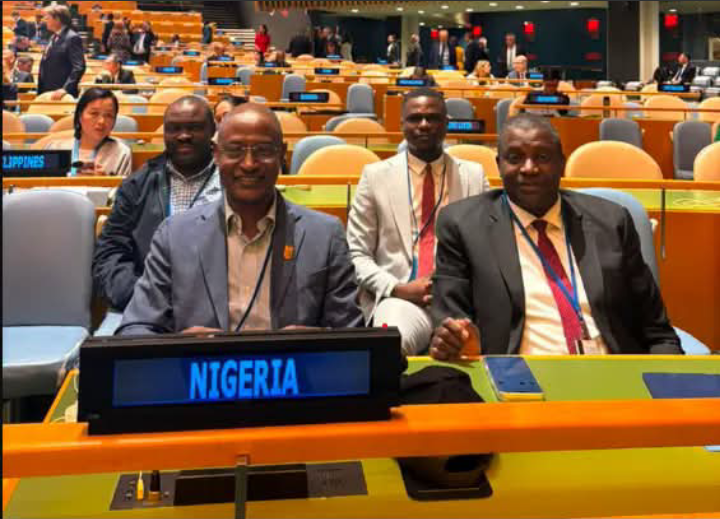
Nigeria has renewed its commitment to reducing road traffic deaths and strengthening international cooperation on road safety, with the Federal Road Safety Corps (FRSC) calling for deeper global partnerships during a high-level United Nations meeting focused on safer roads and sustainable mobility.
The Corps Marshal of the Federal Road Safety Corps, Shehu Mohammed, made the call while representing Nigeria at a United Nations road safety engagement, where policymakers, transport experts, and international stakeholders gathered to evaluate progress toward achieving the global target of halving road traffic deaths and injuries by 2030 under the UN Decade of Action for Road Safety.
Addressing delegates at the meeting, the FRSC chief stressed that road crashes remain one of the world’s most pressing public health and development challenges, requiring coordinated action that extends beyond national borders. He emphasized that effective road safety strategies demand stronger collaboration among governments, international organizations, development partners, civil society groups, and the private sector.
According to the Corps Marshal, no country can effectively tackle the growing burden of road traffic crashes in isolation, particularly as increasing urbanization, expanding transport networks, and cross-border movement continue to reshape mobility across regions.
He reaffirmed Nigeria’s commitment to implementing globally recognized road safety standards while strengthening domestic policies aimed at improving road infrastructure, promoting safer driving behaviour, enhancing vehicle safety, and increasing emergency response capacity.
Nigeria Reaffirms Commitment to Global Road Safety Goals
Nigeria is among countries that have pledged support for the United Nations Decade of Action for Road Safety 2021–2030, an ambitious global framework designed to reduce road traffic deaths and serious injuries by at least 50 percent before the end of the decade.
The FRSC Corps Marshal noted that Nigeria has continued to align its road safety strategies with international best practices through stronger enforcement, public education campaigns, technological innovation, improved driver licensing systems, and closer cooperation with development partners.
He said the country’s road safety agenda goes beyond law enforcement, stressing that creating safer roads requires sustained investments in infrastructure, intelligent transport systems, vehicle inspection programmes, data-driven policymaking, and continuous public awareness initiatives.
The FRSC also highlighted ongoing efforts to improve coordination among federal and state agencies responsible for transport planning, emergency medical services, highway maintenance, and traffic management.
According to the Corps Marshal, Nigeria remains committed to ensuring that every stakeholder from government institutions to transport unions and ordinary motorists plays an active role in reducing preventable road crashes.
Road Traffic Crashes Remain a Global Challenge
Road traffic injuries continue to rank among the leading causes of death worldwide, particularly among young people.
The World Health Organization (WHO) estimates that approximately 1.19 million people die annually in road traffic crashes, while tens of millions more suffer injuries, many resulting in permanent disabilities. Low- and middle-income countries account for a disproportionately high share of these fatalities despite having fewer vehicles than high-income nations.
African countries continue to experience some of the world’s highest road traffic fatality rates due to a combination of inadequate road infrastructure, weak enforcement, speeding, dangerous driving behaviour, vehicle safety concerns, and limited post-crash emergency care.
The FRSC chief noted that these realities underscore the importance of stronger international cooperation, technical assistance, knowledge sharing, and sustainable financing to improve road safety outcomes across developing countries.
He encouraged countries to exchange successful policy models, adopt evidence-based interventions, and invest in technologies capable of reducing crashes while improving traffic management systems.
International Cooperation Essential for Sustainable Development
Experts have increasingly linked road safety to broader economic growth, public health, environmental sustainability, and social development.
Road crashes impose enormous economic costs on countries through healthcare expenses, productivity losses, infrastructure damage, insurance claims, and long-term social consequences for affected families.
The United Nations recognizes safer roads as an important component of achieving several Sustainable Development Goals (SDGs), particularly Goal 3, which seeks to ensure healthy lives and promote well-being, and Goal 11, which focuses on making cities safer, more resilient, and sustainable.
The FRSC Corps Marshal argued that achieving these objectives requires stronger partnerships among governments, international financial institutions, regional organizations, research institutions, and development agencies.
He said countries should work together in areas including data collection, vehicle safety regulations, driver training standards, digital traffic enforcement, emergency response systems, and public education campaigns.
Nigeria Expands Road Safety Initiatives
Over the years, the Federal Road Safety Corps has introduced several reforms aimed at improving compliance with traffic regulations and reducing crash rates across Nigeria.
These initiatives include nationwide public enlightenment campaigns, stricter enforcement against speeding and dangerous driving, improved driver’s licence administration, deployment of digital enforcement technologies, enhanced collaboration with security agencies, and expanded road safety education programmes targeting commercial transport operators and young drivers.
The Corps has also intensified partnerships with state governments, transport unions, schools, healthcare institutions, and international organizations to improve road safety awareness.
Officials say technological innovations including improved crash data management systems, electronic ticketing platforms, and enhanced traffic monitoring are helping authorities make more informed decisions while improving enforcement efficiency.
The Corps Marshal reiterated that road safety remains a shared responsibility involving every road user.
He urged motorists to obey traffic regulations, avoid speeding, eliminate distracted driving, use seat belts consistently, ensure vehicle roadworthiness, and exercise patience while driving.
According to him, behavioural change remains one of the most effective tools for reducing crashes, complementing investments in infrastructure and enforcement.
Global Momentum Toward Safer Roads
The UN road safety meeting provided participating countries with an opportunity to assess progress, identify implementation gaps, and strengthen international collaboration as the 2030 deadline approaches.
Delegates emphasized that while significant progress has been recorded in several regions through safer roads, stronger legislation, improved vehicle standards, and better trauma care, considerable work remainsparticularly across developing economies where road traffic deaths continue to rise.
For Nigeria, participation in the global dialogue reinforces its commitment to adopting international best practices while contributing African perspectives to worldwide road safety discussions.
As governments intensify efforts to meet the Sustainable Development Goals, road safety is expected to remain high on international policy agendas, with increased emphasis on innovation, evidence-based policymaking, and cross-border cooperation.
The FRSC’s renewed appeal for stronger international partnerships reflects a broader recognition that reducing road traffic deaths requires collective global action, sustained investment, and shared responsibility among nations.
With less than five years remaining before the 2030 target, stakeholders say the pace of implementation must accelerate if the world is to significantly reduce the devastating human and economic toll of road traffic crashes.
Sources
- Federal Road Safety Corps (FRSC)
- United Nations Road Safety Collaboration (UNRSC)
- World Health Organization (WHO)
- United Nations Department of Economic and Social Affairs (UN DESA)
- Reuters
- Premium Times Nigeria
- The Guardian Nigeria
- Punch Newspapers