Reported by Simon yusuph,| Journalist at wengglobal
At least 50 Malian soldiers have been killed in one of the country’s deadliest military attacks in recent years after armed fighters launched a coordinated assault near the northern town of Anefis, underscoring the persistent security crisis gripping the Sahel region.
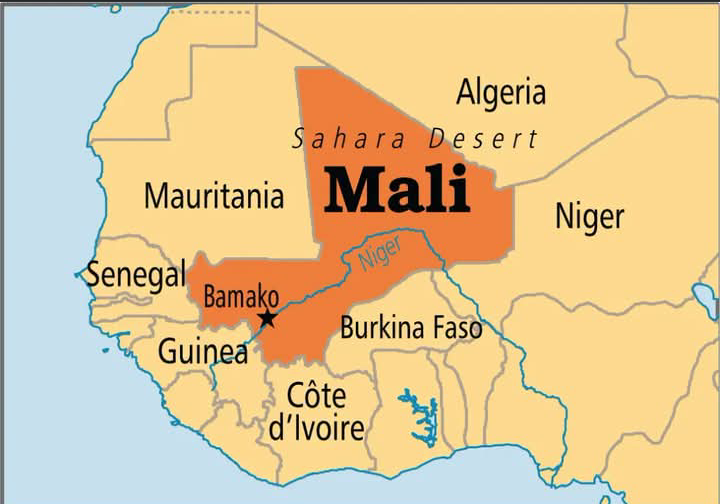
The attack, confirmed by Malian officials, involved a coalition of separatist Tuareg rebels and jihadist fighters who targeted military positions in the strategically important area of Anefis, located in the Kidal region of northern Mali. The incident marks another major setback for Mali’s armed forces as they continue to battle multiple insurgent groups despite years of military operations and shifting international security partnerships.
According to official statements, dozens of soldiers lost their lives during the assault, while several others were reported missing or injured. Military authorities acknowledged that the attack inflicted heavy casualties and significant material losses, making it one of the most devastating attacks against Malian government forces in recent memory.
A Coordinated Offensive
Security analysts say the assault demonstrated a high level of coordination, involving heavily armed fighters who overwhelmed military positions before taking control of parts of the area. Reports indicate that attackers seized military equipment and vehicles during the operation before withdrawing.
Although investigations are ongoing, authorities believe the assault involved members of the Permanent Strategic Framework (CSP) a coalition of predominantly Tuareg armed groups as well as jihadist elements operating in northern Mali. The complex security environment in the region has increasingly blurred the lines between separatist movements and extremist organizations, creating additional challenges for government forces.
The Malian Armed Forces (FAMa) later confirmed that reinforcements had been deployed to the affected area while operations were underway to recover the bodies of fallen soldiers, secure military installations, and pursue those responsible for the attack.
Strategic Importance of Anefis
Anefis occupies a crucial position along routes linking northern Mali’s key towns, including Gao and Kidal. Control of the area has long been contested due to its military and logistical significance.
Since the collapse of previous peace agreements and the resurgence of armed confrontations, the region has witnessed repeated clashes between government troops, separatist factions, and jihadist groups affiliated with al-Qaeda and the Islamic State.
Military experts note that attacks around Anefis often have broader implications for security across northern Mali because the town serves as an important gateway for troop movements and humanitarian access.
Mali’s Continuing Security Crisis
The latest attack highlights the deepening insecurity that continues to affect Mali more than a decade after insurgent groups first gained influence across the country’s north.
Despite successive military governments promising to restore stability, violence has spread from northern regions into central Mali and neighbouring Burkina Faso and Niger, creating one of Africa’s most challenging security environments.
Armed groups linked to extremist networks continue to carry out attacks against military bases, civilians, humanitarian workers, and local authorities. Separatist movements have also renewed armed campaigns following the breakdown of earlier ceasefire arrangements.
Security experts argue that the convergence of insurgency, ethnic tensions, organised crime, and weak governance has complicated efforts to achieve lasting peace across the Sahel.
Regional Implications
The deadly assault carries implications beyond Mali’s borders. The Sahel remains one of the world’s fastest-growing conflict zones, with insecurity affecting regional trade, humanitarian operations, and population displacement.
Neighbouring countries including Burkina Faso and Niger continue to face similar attacks by armed extremist groups, while cross-border movement of fighters has complicated regional counterterrorism efforts.
African and international observers have repeatedly warned that prolonged instability in Mali threatens broader regional security, increasing pressure on governments to strengthen intelligence sharing, border security, and coordinated military responses.
Humanitarian Concerns
Beyond its military significance, the attack is expected to worsen humanitarian conditions in northern Mali.
Communities in conflict-affected regions already face displacement, food insecurity, limited healthcare access, and disrupted education. Renewed fighting often forces civilians to flee while restricting humanitarian organisations from reaching vulnerable populations.
The United Nations and humanitarian agencies have consistently warned that continued violence could deepen existing humanitarian needs across the Sahel, where millions already require emergency assistance.
Political Context
The attack comes during a period of significant political and military transition in Mali. Since the withdrawal of several international military missions, Malian authorities have increasingly relied on national forces and new security partnerships to confront insurgent groups.
However, security challenges remain severe despite intensified military campaigns. Analysts caution that military victories alone may not resolve the conflict without parallel political dialogue, governance reforms, reconciliation efforts, and socio-economic development in affected communities.
The latest losses are also likely to intensify domestic discussions about military preparedness, intelligence capabilities, and the broader strategy for restoring stability across northern Mali.
International Reactions
While detailed international reactions continue to emerge, regional organisations and foreign governments have consistently condemned attacks targeting security forces and civilians in Mali.
Security observers have urged continued cooperation among Sahel nations to combat terrorism while encouraging renewed efforts toward political dialogue aimed at addressing the underlying causes of conflict.
International partners have also reiterated concerns over the deteriorating humanitarian situation and called for unhindered humanitarian access to affected communities.
Looking Ahead
As investigations continue, Malian authorities are expected to assess the full extent of casualties and material losses while reinforcing military positions across vulnerable areas.
The attack serves as another reminder that northern Mali remains a volatile theatre where government forces continue to confront multiple armed actors with differing objectives but overlapping operational areas.
For millions of civilians living across the Sahel, the priority remains the restoration of lasting peace, improved security, and conditions that allow communities to rebuild after years of conflict.
The coming weeks will likely determine whether Mali’s military can regain operational momentum while preventing further attacks on strategic positions. However, many analysts agree that sustainable stability will ultimately require a combination of strengthened security measures, inclusive political engagement, regional cooperation, and long-term investment in governance and development.
Sources
- Reuters
- Agence France-Presse (AFP)
- Associated Press (AP)
- Al Jazeera
- BBC News
- France 24