Reported by Weng Patrick Atokor | Journalist at Weng Global
The Supreme Court has overturned the judgment of the Court of Appeal and restored the final forfeiture of seven luxury properties linked to former Governor of the Central Bank of Nigeria (CBN), Godwin Emefiele, marking another significant milestone in Nigeria’s anti-corruption campaign.
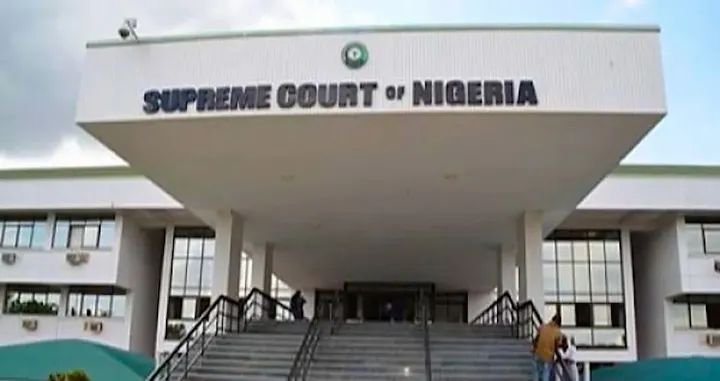
In a unanimous judgment delivered on Friday, the apex court ruled that the Court of Appeal erred when it set aside the Federal High Court’s order granting the Economic and Financial Crimes Commission (EFCC) final forfeiture of the properties.
The ruling effectively returns ownership of the properties to the Federal Government, affirming the powers of the EFCC to seek the forfeiture of assets established to be proceeds of unlawful activities under existing Nigerian laws.
Supreme Court Faults Appeal Court Decision
The Supreme Court held that the appellate court failed to properly evaluate the evidence presented before it and misapplied the law governing civil forfeiture proceedings.
The apex court found that the EFCC had sufficiently established a legal basis for the forfeiture after demonstrating that the properties were reasonably suspected to have been acquired with proceeds of unlawful activities.
The judgment reaffirmed that civil forfeiture proceedings are separate from criminal prosecution and do not necessarily require a criminal conviction before assets can be forfeited to the Federal Government.
Legal experts say the ruling strengthens Nigeria’s asset recovery framework by reinforcing the principle that illicitly acquired assets can be confiscated where sufficient evidence exists.
Background of the Case
The EFCC had approached the Federal High Court in Abuja seeking interim and later final forfeiture of the properties allegedly linked to Emefiele.
According to the anti-graft agency, investigations uncovered a network of companies and proxies allegedly used to acquire multiple luxury properties believed to have been funded with proceeds of unlawful activities.
Following publication of the interim forfeiture order and the absence of satisfactory explanations regarding ownership and sources of funds, the Federal High Court granted a final forfeiture order in favour of the Federal Government.
However, the Court of Appeal later overturned that decision after considering an appeal challenging the forfeiture process.
The appellate court ruled that certain issues surrounding ownership and fair hearing required further consideration, effectively setting aside the forfeiture.
The EFCC subsequently challenged the judgment at the Supreme Court.
Seven High-Value Properties Affected
The forfeited assets comprise seven high-value properties located in some of Abuja’s most exclusive districts.
Court documents indicate that the properties include luxury residential developments and other premium real estate allegedly acquired through fronts and corporate entities linked to the former CBN governor.
The properties are considered among the most valuable assets recovered in recent years by the EFCC.
With the Supreme Court’s judgment, the Federal Government now retains legal ownership of the properties, subject to applicable procedures governing recovered assets.
EFCC Welcomes Judgment
The EFCC described the judgment as a major victory for Nigeria’s fight against corruption and economic crimes.
The commission said the ruling validates its investigations and reinforces public confidence in the country’s judicial system.
Officials noted that the decision sends a strong message that illegally acquired wealth will not be protected regardless of the status of individuals involved.
The anti-corruption agency has consistently maintained that asset recovery remains one of its most effective tools for combating financial crimes and ensuring accountability in public office.
Emefiele Continues to Face Multiple Legal Battles
The Supreme Court decision comes as Godwin Emefiele continues to face several criminal charges before different courts following his suspension and subsequent removal as CBN Governor.
The former apex bank chief has denied all allegations brought against him.
He is currently facing prosecutions involving alleged abuse of office, procurement irregularities, conspiracy, and financial misconduct instituted by the Federal Government through relevant anti-corruption agencies.
His legal team has repeatedly argued that the charges are without merit and has continued to challenge various aspects of the prosecutions in court.
Legal Significance of the Judgment
Legal analysts say the Supreme Court ruling provides further judicial clarity on the distinction between criminal trials and civil asset forfeiture proceedings.
Under Nigerian law, authorities may seek forfeiture where assets are reasonably believed to represent proceeds of unlawful activities, even while criminal proceedings remain pending.
The decision is expected to serve as an important precedent for future asset recovery cases involving public officials and politically exposed persons.
Experts also believe the judgment could encourage stronger enforcement of anti-money laundering laws and improve Nigeria’s efforts to recover public assets.
Anti-Corruption Drive
The Tinubu administration has repeatedly pledged to strengthen institutions responsible for tackling corruption, improving transparency, and recovering stolen public assets.
Recent years have witnessed increased efforts by the EFCC and other agencies to identify, seize, and recover properties allegedly linked to financial crimes.
Supporters of the policy argue that asset recovery helps deter corruption and restores public confidence in governance, while critics continue to emphasize the need for strict adherence to due process and constitutional safeguards.
The Supreme Court’s latest judgment is therefore expected to influence future litigation involving forfeiture of assets connected with corruption investigations.
Looking Ahead
The reinstatement of the forfeiture order represents a significant legal victory for the EFCC and underscores the judiciary’s role in interpreting Nigeria’s anti-corruption laws.
While Emefiele’s criminal cases remain before various courts, the Supreme Court has now settled the question of ownership of the seven disputed properties, returning them permanently to the Federal Government.
The judgment is likely to shape future civil forfeiture proceedings and further define the standards required for recovering assets suspected to be proceeds of unlawful activities.
As Nigeria continues efforts to strengthen accountability and public sector integrity, the ruling is expected to remain one of the most consequential anti-corruption decisions delivered by the Supreme Court in recent years.
Sources: Supreme Court judgment; Economic and Financial Crimes Commission (EFCC); Federal High Court records; Court of Appeal proceedings.