Reported by Weng Patrick Atokor | Journalist at Weng Global
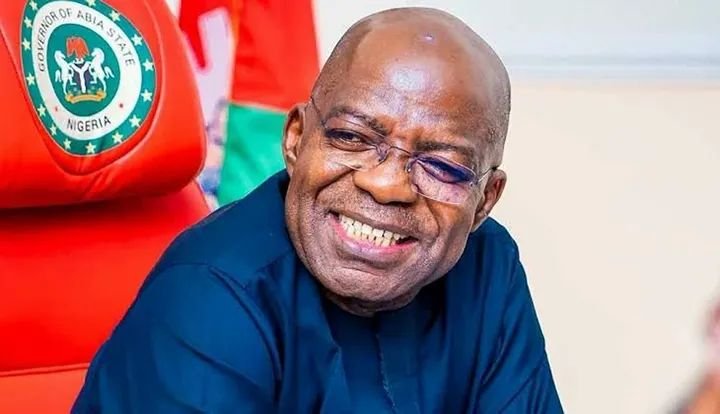
Abia State Governor, Alex Otti, has directed the immediate rehabilitation of Ibeama Primary School in Ndume Otuka, Umuahia North Local Government Area, the historic institution attended by Nigeria’s first indigenous Military Head of State, General Johnson Aguiyi-Ironsi. The governor also ordered the inspection and planned rehabilitation of the community road leading to the late military leader’s ancestral home, reaffirming his administration’s commitment to preserving historical landmarks while expanding infrastructure development across the state.
Governor Otti issued the directives during a civic reception held at Ibeama Primary School in honour of the Deputy Speaker of the Abia State House of Assembly, Austin Okezie Nmeregini. The event brought together community leaders, political stakeholders, and residents of Ndume Otuka, who appealed to the governor to restore critical public infrastructure that reflects the community’s historical significance.
Responding to the requests, Otti instructed the Commissioner for Works, Otumchere Oti, to immediately inspect the road leading to General Aguiyi-Ironsi’s residence and submit recommendations for its rehabilitation. He also directed the Chairman of the Abia State Universal Basic Education Board (ASUBEB) to commence plans for the speedy rehabilitation of Ibeama Primary School.
According to the governor, the rehabilitation aligns with his administration’s broader programme to upgrade public schools across Abia State and provide pupils with safer and more conducive learning environments. He assured residents that the school, given its educational and historical importance, would not be overlooked in the state’s ongoing education renewal agenda.
Governor Otti explained that his administration has prioritised education as a cornerstone of sustainable development, stressing that improved school infrastructure contributes significantly to better teaching standards, increased enrolment, and enhanced academic performance.
He noted that preserving institutions associated with notable national figures also serves as an investment in Nigeria’s historical heritage, allowing younger generations to appreciate the contributions of leaders who shaped the country’s development.
The governor further thanked the people of Ndume Otuka for recognising his administration’s achievements across various sectors, including road construction, education, healthcare, and governance. He assured the community that his government remains committed to fulfilling campaign promises through people-oriented projects rather than political rhetoric.
During the reception, community leaders praised the governor’s developmental initiatives and appealed for greater government attention to the area’s infrastructure needs. They argued that rehabilitating the primary school attended by General Aguiyi-Ironsi would not only improve education but also preserve an important symbol of Nigeria’s post-independence history.
The leaders also highlighted the deteriorating condition of the access road leading to the late military leader’s home, saying its reconstruction would ease transportation, improve economic activities, and attract visitors interested in the country’s historical heritage.
Deputy Speaker Austin Nmeregini expressed appreciation to Governor Otti for responding positively to the community’s requests. He noted that many of those who organised the civic reception had previously belonged to different political parties but were now united in their support for the governor because of what they described as visible improvements in governance and infrastructure across Abia State.
According to Nmeregini, the administration’s performance has continued to win public confidence through practical projects and reforms rather than partisan politics. He urged residents to continue supporting programmes aimed at accelerating development throughout the state.
General Johnson Thomas Umunnakwe Aguiyi-Ironsi occupies a unique place in Nigeria’s political history. He became the country’s first indigenous Military Head of State following the military coup of January 1966. Although his tenure lasted only a few months before he was overthrown and assassinated during the counter-coup of July 1966, his leadership remains a significant chapter in Nigeria’s history.
For many residents of Abia State, preserving institutions associated with the late Head of State represents both respect for history and an opportunity to promote cultural and educational tourism.
Analysts say projects such as the rehabilitation of Ibeama Primary School could also encourage historical preservation initiatives in other parts of the country, where schools, public buildings, and monuments linked to national figures have deteriorated due to years of neglect.
The decision also reflects the Abia State Government’s broader infrastructure renewal programme, which has seen investments in road reconstruction, healthcare facilities, educational institutions, and urban renewal since Governor Otti assumed office.
Education stakeholders have consistently argued that improved learning environments play a critical role in raising educational standards. Modern classrooms, renovated buildings, and better school facilities not only improve pupil attendance but also enhance teachers’ productivity and community confidence in public education.
Similarly, improved road infrastructure is expected to stimulate local economic activities by facilitating easier movement of people, agricultural produce, and commercial goods while reducing travel time and transportation costs.
Residents of Ndume Otuka welcomed the governor’s announcement, expressing optimism that the projects would improve living conditions and preserve the legacy of one of Nigeria’s most prominent historical figures.
The rehabilitation of Ibeama Primary School and the proposed reconstruction of the community road are expected to commence following technical assessments by the relevant government agencies, in line with Governor Otti’s directive for expedited implementation.
Sources: PUNCH, The Whistler.