Reported by Simon Yusuph | Journalist at WengGlobal
ILORIN, Nigeria — Kwara State Governor AbdulRahman AbdulRazaq has reaffirmed his administration’s commitment to strengthening the state’s judicial system through sustained investments in infrastructure, institutional independence, and improved working conditions for judicial officers.
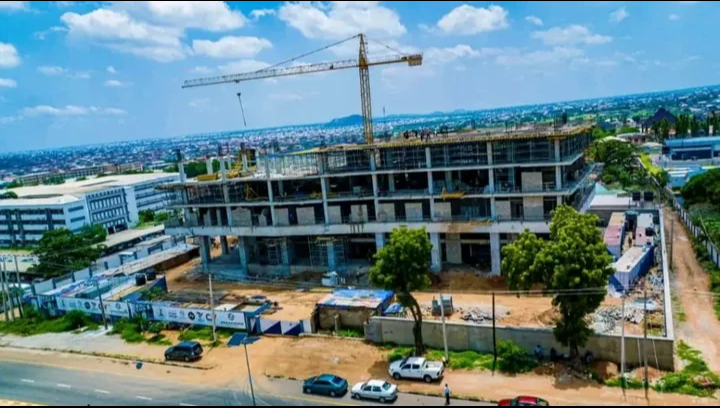
The governor made the pledge during an inspection visit to the newly constructed Justice Saidu Kawu Court Complex in Ilorin, a landmark judicial infrastructure project designed to modernize court operations and enhance access to justice across the state.
The inspection underscores the AbdulRazaq administration’s broader governance agenda of improving public institutions through strategic capital investments. According to the governor, a functional judiciary remains one of the most critical pillars of democratic governance, economic development, and public confidence in government institutions.
Speaking during the visit, AbdulRazaq said his administration recognizes the indispensable role of the judiciary in sustaining the rule of law and protecting the rights of citizens. He stressed that judges, magistrates, lawyers, court personnel, and litigants deserve a modern and efficient working environment capable of supporting timely justice delivery.
“The judiciary occupies a central position in our democracy. We remain committed to creating an environment where judicial officers can discharge their constitutional responsibilities efficiently and independently,” the governor stated.
He explained that the ongoing investment in judicial infrastructure is not merely about constructing buildings but about strengthening institutions that promote fairness, accountability, and justice.
Modern Judicial Infrastructure to Improve Justice Delivery
The new Justice Saidu Kawu Court Complex represents one of the most ambitious judicial infrastructure projects undertaken in Kwara State in recent years.
Designed with modern courtroom facilities, administrative offices, conference rooms, digital infrastructure, and improved security systems, the complex is expected to significantly improve operational efficiency within the state’s judicial system.
Legal practitioners have long argued that outdated court facilities, congested courtrooms, and inadequate administrative infrastructure contribute to delays in case management and judicial proceedings across many Nigerian states.
By investing in modern judicial facilities, the Kwara State Government hopes to create conditions that enable faster case processing, improved record management, greater convenience for litigants, and enhanced productivity among judicial workers.
Observers note that improved physical infrastructure also contributes to preserving judicial dignity and strengthening public confidence in the justice system.
Commitment Beyond Infrastructure
Governor AbdulRazaq emphasized that improving the judiciary extends beyond constructing court buildings.
According to him, his administration remains committed to supporting institutional reforms that promote judicial independence, staff welfare, and operational efficiency.
He reiterated that a conducive working environment includes reliable utilities, functional office spaces, modern technology, adequate security, and administrative support capable of enabling judges and court workers to perform their duties effectively.
The governor added that government would continue collaborating with the leadership of the judiciary to identify priority areas requiring intervention.
“Our objective is to build institutions that endure and continue serving generations of Kwarans. We believe investments in the judiciary ultimately strengthen governance and economic development,” he noted.
Honouring Justice Saidu Kawu’s Legacy
The court complex is named after Justice Saidu Kawu, a respected jurist whose contributions to Nigeria’s legal system continue to be recognized within judicial and legal circles.
Naming the facility after Justice Kawu reflects the state’s effort to preserve the legacy of distinguished legal figures whose professional careers exemplified integrity, fairness, and dedication to justice.
Public institutions named after eminent jurists often serve as reminders of the enduring principles of judicial independence, impartiality, and service to society.
Judiciary as a Pillar of Democratic Governance
Across democratic societies, the judiciary remains one of the three constitutionally independent arms of government alongside the executive and legislature.
An effective judicial system is essential for resolving disputes, interpreting laws, protecting constitutional rights, and ensuring accountability within public institutions.
Experts argue that inadequate court infrastructure can negatively affect judicial productivity, prolong litigation, and reduce public confidence in the legal system.
Consequently, investments such as the Justice Saidu Kawu Court Complex are increasingly viewed as long-term institutional reforms rather than ordinary construction projects.
Development economists also note that efficient justice systems contribute significantly to economic growth by improving contract enforcement, protecting investments, and reducing commercial disputes.
Kwara’s Broader Institutional Development Agenda
The inspection of the new court complex aligns with the AbdulRazaq administration’s wider programme of upgrading public infrastructure across key sectors, including education, healthcare, transportation, and governance.
Over recent years, the state government has undertaken multiple capital projects aimed at modernizing public service delivery and improving institutional efficiency.
Officials argue that investments in governance institutions complement physical infrastructure development by creating stronger systems capable of supporting sustainable economic growth.
For many governance analysts, strengthening the judiciary represents a critical component of institutional resilience because it enhances legal certainty, encourages investor confidence, and reinforces democratic accountability.
Expectations from the Legal Community
Members of Nigeria’s legal profession have consistently advocated increased investment in judicial infrastructure nationwide.
The Nigerian Bar Association (NBA) and judicial stakeholders have repeatedly emphasized that better court facilities, digital case management systems, continuous judicial training, and improved staff welfare are necessary to reduce case backlogs and improve justice delivery.
Although significant progress has been made in some states, experts believe sustained investment remains necessary to address longstanding infrastructure deficits affecting many courts across the country.
The completion of projects such as the Justice Saidu Kawu Court Complex may therefore serve as a model for other subnational governments seeking to modernize their judicial institutions.
Enhancing Public Confidence
Public confidence in the justice system depends not only on judicial decisions but also on the efficiency, transparency, and accessibility of court processes.
Modern court infrastructure helps create a professional environment that reflects the importance of judicial institutions while improving the experience of litigants, lawyers, witnesses, and court employees.
The new facility is expected to reduce operational challenges associated with older court buildings and provide judicial officers with an environment better suited for the administration of justice.
Citizens visiting the courts are also likely to benefit from improved accessibility, waiting areas, administrative support services, and enhanced security arrangements.
Looking Ahead
As construction progresses toward completion, expectations remain high that the Justice Saidu Kawu Court Complex will become a major milestone in Kwara State’s judicial development.
Governor AbdulRazaq reiterated that his administration will continue prioritizing investments that strengthen governance institutions and improve public service delivery.
He maintained that a modern judiciary is indispensable to democratic stability, economic progress, and the protection of citizens’ rights.
With increasing attention on institutional reforms across Nigeria, the Kwara government’s investment in judicial infrastructure reflects a growing recognition that effective governance depends not only on executive action but also on strong, independent, and well-equipped judicial institutions.
For residents of Kwara State, the project represents more than a new building. It symbolizes an ongoing effort to build a justice system capable of meeting contemporary legal challenges while preserving the constitutional principles of fairness, accountability, and the rule of law.
As the facility moves closer to full operational use, legal practitioners and citizens alike will be watching closely to see how the improved infrastructure contributes to faster justice delivery, enhanced judicial efficiency, and stronger public confidence in one of democracy’s most vital institutions.
Sources
- Kwara State Government (Official Government Communications)
- Kwara State Government Official Media Channels
- News Agency of Nigeria (NAN)
- The Punch
- Vanguard Nigeria
- The Guardian Nigeria
- Leadership Newspaper
- Daily Trust