Reported by Weng Patrick Atokor l Journalist at Weng Global
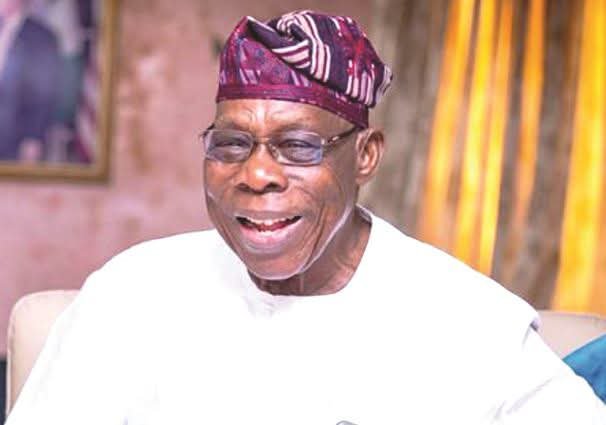
Former Nigerian President Olusegun Obasanjo has recounted how he rejected an offer of political asylum in the United States despite being warned that the military government of the late General Sani Abacha planned to arrest him if he returned to Nigeria.
The former president said the warning and asylum offer came from Walter Carrington, the then United States Ambassador to Nigeria, in 1995. Despite being advised to remain abroad, Obasanjo decided to return home, insisting that he had done nothing wrong to justify fleeing his country.
His decision was followed by his arrest and imprisonment under Abacha’s military administration, during one of the most politically turbulent periods in Nigeria’s history.
The account highlights the risks faced by political figures and critics during the Abacha era, when allegations of coup plotting were used in the prosecution and detention of prominent Nigerians.
How the US asylum offer came about
Obasanjo’s account dates back to 1995, when he travelled to Copenhagen, Denmark, to attend the World Social Summit as a Human Development Ambassador of the United Nations Development Programme.
While he was in Copenhagen, Carrington reportedly contacted him with a warning that he would be arrested if he returned to Nigeria.
According to Obasanjo, the American diplomat advised him against returning and went further by offering him political asylum in the United States.
In a condolence letter following Carrington’s death in August 2020, Obasanjo recalled that the offer was both reassuring and difficult to turn down.
However, he decided to return to Nigeria.
“I came back and was arrested and imprisoned by Abacha,” Obasanjo recalled in the letter, as reported by Nigerian media outlets.
He also expressed gratitude for Carrington’s support during his imprisonment, particularly the diplomat’s efforts to encourage his family while he was detained.
Obasanjo recounts decision to return to Nigeria
The decision to reject the offer was rooted in Obasanjo’s belief that he had committed no offence that warranted seeking protection outside Nigeria.
In an earlier account published in July 2017, Obasanjo explained that he had been informed about the alleged plan to arrest him while he was outside the country. He said he rejected the asylum offer because he believed he had done nothing wrong.
He also recalled that the late Ooni of Ife, Oba Okunade Sijuwade, advised him to seek an audience with Abacha and plead his case. Obasanjo said he declined because he did not believe he had any reason to beg the military ruler. Nigeria and World News
According to the former president, security personnel subsequently surrounded his farm in Ota, Ogun State, as the authorities moved against him.
Obasanjo says he drove himself to the police station
In a fresh account published on November 10, 2026, Obasanjo provided another detail about the circumstances surrounding his arrest.
He recalled that he drove himself to a police station after learning that security officers were looking for him.
“Na my own car I use drive myself go police station,” he said, describing how he reported himself rather than waiting for security operatives to arrive.
The account offers another perspective on how the former president experienced the events leading to his detention during Abacha’s military administration. TheStar
Walter Carrington’s role during the crisis
Walter Carrington, the former US ambassador to Nigeria, played an important role in Obasanjo’s account of the period.
Carrington was appointed ambassador to Nigeria in 1993 by then US President Bill Clinton and served until 1997.
Obasanjo recalled that the diplomat did more than warn him about the planned arrest. He also maintained contact with his family during his imprisonment.
According to the former president, Carrington regularly visited his wife to offer encouragement and check on his condition.
Obasanjo described the diplomat as a close friend whose assistance to his family during the difficult period remained deeply appreciated.
The former president made the revelations in a condolence letter to Carrington’s wife, Arese, following the diplomat’s death in August 2020. TheCable +1
The alleged 1995 coup plot and Obasanjo’s imprisonment
Obasanjo’s arrest occurred during the military government of General Sani Abacha, who ruled Nigeria from 1993 until his death in June 1998.
The military administration announced that it had uncovered an alleged plot to overthrow the government in 1995. Several military officers and civilians were arrested in connection with the case.
Among those detained was Major General Shehu Musa Yar’Adua, a former Chief of Staff, Supreme Headquarters, who had previously served as Abacha’s deputy in the military hierarchy.
Obasanjo was also arrested and accused of involvement in the alleged coup plot. He consistently maintained that he was innocent.
The case became one of the most controversial episodes of Abacha’s rule, attracting international attention over the treatment of political detainees and concerns about due process under military government. TheStar +2
Life imprisonment and international pressure
Following his arrest, Obasanjo was subjected to proceedings before a military tribunal and sentenced to life imprisonment over the alleged coup plot.
His detention generated international concern, with prominent figures and organisations calling attention to his situation.
Former United States President Jimmy Carter was among those who intervened on his behalf. Obasanjo later recalled that Carter visited Nigeria and appealed directly to Abacha for his release.
Yar’Adua, who was also convicted in connection with the alleged coup, died in detention in December 1997.
Obasanjo’s imprisonment became a significant part of Nigeria’s political history, particularly in discussions about military authoritarianism, political opposition and human rights during the 1990s. TheStar +1
Freedom after Abacha’s death
Obasanjo regained his freedom in June 1998 following Abacha’s sudden death earlier that month.
His release came under the administration of General Abdulsalami Abubakar, who succeeded Abacha and initiated a transition towards civilian democratic government.
Obasanjo subsequently entered electoral politics under the Peoples Democratic Party (PDP) and won the 1999 presidential election.
He served two consecutive terms as Nigeria’s civilian president between May 1999 and May 2007.
His political journey, from military leadership to imprisonment and eventually elected presidency, remains one of the most remarkable developments in Nigeria’s modern political history. TheStar +1
Why Obasanjo’s account matters
Obasanjo’s recollection provides an insight into the political atmosphere surrounding Nigeria under Abacha’s military administration.
His decision to reject political asylum and return home, despite warnings of arrest, illustrates the personal risks associated with political opposition during that period.
The account also highlights the role foreign diplomats played in supporting individuals facing political persecution and maintaining contact with their families.
Carrington’s intervention is particularly significant because it demonstrates how diplomatic relationships can extend beyond official government engagements to include humanitarian assistance during periods of political instability.
For Nigeria, the episode remains relevant to conversations about democratic institutions, constitutional government, political freedoms and the protection of citizens’ rights.
The historical record also requires an important distinction: Obasanjo’s imprisonment followed accusations of involvement in an alleged coup plot. His account of rejecting asylum does not establish that rejecting the offer was itself the reason for his arrest.
What Nigerians should know
The latest recollection, published on November 10, 2026, adds another detail to Obasanjo’s account of the events surrounding his arrest: his claim that he drove himself to the police station after learning that security operatives were looking for him.
His earlier statements establish that Walter Carrington had warned him against returning to Nigeria and offered him political asylum in the United States.
Obasanjo nevertheless returned, was arrested and imprisoned, regained his freedom after Abacha’s death and later became Nigeria’s elected president.
More than two decades after his presidency, the former leader’s recollections continue to provide material for understanding the country’s military past and its transition to democratic rule.
Weng Global – Stories beyond borders
Sources
- The Star Nigeria – ‘I drove myself to police station for Abacha’s arrest’ – Obasanjo (November 10, 2026).
- TheCable – Obasanjo: Carrington offered me asylum before Abacha arrested me (August 18, 2020).
- The Guardian Nigeria – I refused to beg Abacha, says Obasanjo (July 10, 2017).
- Punch Newspapers – Carrington offered me US asylum to escape Abacha’s arrest – Obasanjo (August 19, 2020).
- THISDAY – Reports on Obasanjo’s account of Abacha’s alleged plan to arrest him.