Reported by Simon Daniel Yusuph l Journalist at Weng Global
The Federal Government has intensified efforts to establish a coordinated national framework for conflict prevention and peacebuilding, as Nigeria seeks more sustainable ways to address insecurity, communal violence and other challenges threatening stability across the country.
The initiative is designed to improve collaboration among government institutions, security agencies, state and local authorities, civil society organisations and community leaders. It also aims to shift the country’s approach from responding to violence after it occurs towards identifying warning signs, addressing underlying grievances and preventing conflicts from escalating.
The process involves key institutions, including the Office of the National Security Adviser (ONSA), the Office for Strategic Preparedness and Resilience (OSPRE) and the Institute for Peace and Conflict Resolution (IPCR), alongside other peacebuilding stakeholders.
The renewed effort reflects growing recognition within government and the peacebuilding community that military and law-enforcement operations, although necessary in confronting immediate threats, cannot independently resolve all the social, economic, political and institutional problems that contribute to insecurity.
Government Seeks a Coordinated National Approach
One of the central objectives of the proposed framework is to establish a more organised system through which institutions responsible for security, governance, development and community relations can work towards shared peacebuilding objectives.
Nigeria’s security challenges cut across several areas, including terrorism, banditry, kidnapping, communal violence, farmer-herder disputes, separatist tensions and organised criminal activities.
These problems often have different causes and require responses that extend beyond conventional security operations.
In August 2026, the Office for Strategic Preparedness and Resilience and the Institute for Peace and Conflict Resolution, working with Triple Peace Africa, convened a three-day technical workshop to advance the development of a new National Peace Policy.
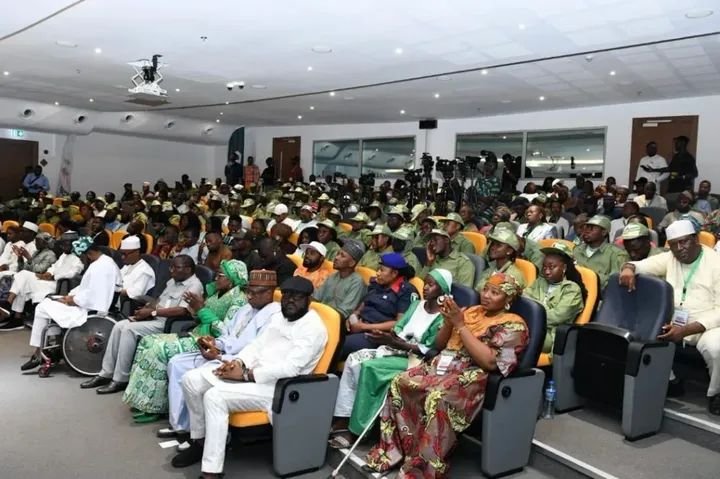
The workshop, held under the theme, “Building an Inclusive National Infrastructure for Peace and Resilience”, brought together representatives of federal ministries, departments and agencies, legislators, state peace commissions, civil society organisations, subnational institutions and peacebuilding practitioners.
The engagement was intended to create a shared understanding of how Nigeria’s peacebuilding institutions could operate more effectively and respond to contemporary security and social challenges.
The Director-General of OSPRE, Chris Ngwodo, explained that the process would take account of developments that had emerged since an earlier attempt to develop a National Peace Policy in 2012.
His counterpart at the Institute for Peace and Conflict Resolution, Dr Joseph Ochogwu, described the proposed policy as an important foundation for strengthening the country’s peacebuilding architecture.
The participation of different levels of government and non-governmental organisations highlights the intention to create a framework that extends beyond individual agencies or isolated interventions.
Moving From Reaction to Conflict Prevention
A major feature of the proposed approach is its emphasis on preventing conflicts before they develop into widespread violence.
For many years, responses to insecurity in several parts of Nigeria have depended heavily on military deployments, police operations, arrests and other interventions after violence has already occurred.
Although these measures remain important for protecting lives and restoring order, peacebuilding experts have consistently highlighted the need to address the conditions that make communities vulnerable to repeated conflict.
These conditions can include unresolved disputes over land and resources, unemployment, poverty, political exclusion, weak local institutions, limited access to justice and declining trust between communities and public authorities.
The Special Adviser to the President on Homeland Security, Major General Adeyinka Famadewa (retd.), said the proposed policy would provide a more systematic approach to conflict prevention by bringing relevant stakeholders into the process.
The objective, as explained during the August consultations, is to move away from responding only after crises have erupted towards anticipating threats and taking preventive action.
Such an approach would require institutions to share information, identify emerging tensions and coordinate interventions before disputes become difficult to contain.
It would also require stronger relationships between security agencies and communities, particularly in areas where local residents may be aware of developing tensions before they become visible to government authorities.
National Security Beyond Military Operations
The Federal Government’s peacebuilding efforts are also connected to a wider understanding of national security.
Nigeria’s security challenges cannot be separated entirely from questions of governance, economic opportunity, social inclusion and public confidence in institutions.
For example, communities affected by repeated violence may experience displacement, destruction of property, disruption of farming and commercial activities, school closures and reduced access to healthcare.
Even after security operations restore relative calm, affected communities may continue to face unemployment, trauma, damaged infrastructure and unresolved grievances.
Without addressing these consequences, the conditions for renewed violence may remain.
A broader national peace framework is therefore expected to encourage stronger connections between security interventions and development programmes.
This would involve government institutions working together to support community recovery, strengthen public services, improve access to justice and create opportunities for people affected by conflict.
The Office of the National Security Adviser has also been associated with the development of a National Framework for Non-Kinetic Approaches to Addressing Insecurity in Nigeria, commonly referred to as the National Peace Framework.
The initiative recognises that security operations need to be supported by measures addressing the underlying causes of violence.
An expert review team was inaugurated in August 2026 to refine the framework, with the National Security Adviser, Nuhu Ribadu, emphasising the importance of combining security operations with broader measures capable of producing lasting stability.
The framework’s approach does not remove the responsibility of the armed forces, police and intelligence services to confront immediate threats. Instead, it seeks to complement their work by strengthening the social and institutional conditions necessary for sustainable peace.
States, Local Governments and Communities Expected to Play Key Roles
A national peacebuilding system will depend significantly on the involvement of state and local institutions.
Although the Federal Government coordinates national security policy, many conflicts emerge within communities and are influenced by local circumstances.
Traditional rulers, religious leaders, community associations, women, young people and civil society organisations often have direct knowledge of tensions and disputes within their areas.
Their involvement can help government institutions understand local grievances, identify warning signs and develop responses that reflect the realities of affected communities.
The August consultations on the National Peace Policy recognised the importance of connecting federal institutions with state and local governments, state peace commissions and community-level organisations.
Participants supported a whole-of-government and whole-of-society approach, reflecting the understanding that peacebuilding cannot be left to security agencies or federal authorities alone.
The Director-General of the National Orientation Agency, Lanre Issa-Onilu, also urged stakeholders to ensure that the proposed policy was anchored in national values and used to promote civic responsibility and social cohesion.
The chairman of the House of Representatives Committee on Peacebuilding and Social Cohesion, Sadiq Abbas Tafida, pledged the legislature’s support for the initiative and stressed the importance of providing adequate resources for implementation.
These positions point to the need for sustained cooperation between government institutions and the communities they serve.
Women and Young People in Peacebuilding
The participation of women and young people is another important consideration in efforts to strengthen Nigeria’s peacebuilding system.
Women and children are frequently among those most affected by displacement, communal violence, terrorism and other forms of insecurity. Women also play important roles in community mediation, family support networks and local reconciliation initiatives.
Young people, meanwhile, can contribute to peacebuilding through education, civic engagement, community leadership and efforts to counter violence and divisive narratives.
However, young people can also become vulnerable to recruitment by criminal or violent groups where unemployment, exclusion and limited opportunities persist.
A framework that recognises these realities would need to provide meaningful opportunities for women and young people to participate in decisions affecting their communities.
The Federal Ministry of Information and National Orientation reported on October 29, 2026, that the government had reaffirmed its commitment to strengthening women’s participation in peacebuilding, national security and decision-making.
At an event marking the 26th anniversary of United Nations Security Council Resolution 1325 on Women, Peace and Security, the Minister of Women Affairs and Social Development, Imaan Sulaiman-Ibrahim, highlighted the importance of translating commitments into measurable national action.
She also discussed Nigeria’s Third National Action Plan on Women, Peace and Security, which includes prevention, protection, participation, relief and recovery, and crisis response among its pillars.
The development demonstrates that national peacebuilding efforts are also connected to broader commitments on inclusion and the protection of vulnerable groups.
Why the Framework Matters for Nigeria
The proposed framework could have important implications for Nigeria’s national stability if it is properly developed, funded and implemented.
First, improved coordination could reduce duplication among institutions working on conflict prevention and recovery.
When government agencies operate without sufficient communication, interventions may become fragmented, leaving important gaps in the response to insecurity.
A coordinated system could help establish clearer responsibilities, improve information-sharing and ensure that interventions complement one another.
Second, a stronger preventive approach could help reduce the human and economic costs of recurring violence.
Communal conflicts and other security emergencies frequently disrupt farming, trade, transportation, education and healthcare. They can also force families to abandon their homes and livelihoods.
Preventing violence before it escalates could help communities maintain economic activities and reduce the resources required for emergency response and reconstruction.
Third, stronger community participation could improve public confidence in government institutions.
Residents are more likely to support peacebuilding initiatives when they are consulted, treated fairly and given opportunities to participate in decisions affecting their safety and livelihoods.
However, such confidence will depend on whether government institutions respond to legitimate grievances and ensure accountability when rights are violated.
For Nigeria, the challenge is not simply to establish another policy document or institutional structure. It is to ensure that commitments translate into measurable improvements in the safety and wellbeing of citizens.
Implementation and Accountability Remain Critical
Despite the potential benefits, the success of the proposed framework will depend on its practical implementation.
Nigeria has introduced different policies, programmes and institutional arrangements aimed at addressing insecurity and promoting national unity. The effectiveness of such initiatives ultimately depends on whether they receive adequate funding, clear leadership, sustained political commitment and transparent monitoring.
The proposed peacebuilding framework will therefore need clear implementation responsibilities for participating institutions.
It will also require measurable targets to assess progress, identify weaknesses and determine whether interventions are producing meaningful results.
State and local governments will need the capacity and resources to participate effectively, while civil society organisations and community representatives should have opportunities to contribute to monitoring and evaluation.
Another important consideration is the relationship between peacebuilding and justice.
Dialogue and reconciliation can help rebuild relationships, but they cannot replace accountability for serious crimes or provide lasting solutions where victims’ grievances remain unaddressed.
Communities affected by violence need security, access to justice, support for recovery and confidence that future incidents will be handled fairly.
The government will also need to ensure that early-warning information leads to timely action. Identifying a developing conflict without responding effectively may undermine public confidence and allow tensions to escalate.
What Happens Next?
The National Peace Policy development process is expected to involve further consultations and technical work to produce a framework that reflects Nigeria’s current security and development realities.
The outcomes of the August 2026 technical workshop are expected to inform additional engagements across the country.
Participating institutions have expressed support for stronger collaboration and alignment of peacebuilding activities. The next important stage will be translating these commitments into a workable policy and implementation structure.
The separate National Peace Framework process led by the Office of the National Security Adviser also requires continued technical review and institutional coordination.
The extent to which these initiatives will improve security will depend on their ability to connect national policy with practical action at state, local government and community levels.
For Nigerians living in conflict-affected areas, the real measure of progress will be whether communities become safer, displaced families can rebuild their lives, children can return to school and residents can pursue their livelihoods without persistent fear of violence.
The Federal Government’s renewed focus on peacebuilding represents an effort to broaden the country’s response to insecurity. Its long-term value, however, will be determined not by the announcement of a framework but by the consistency, fairness and effectiveness of its implementation.
Weng Global – stories beyond borders
Sources
- Voice of Nigeria — Nigerian Government Engages Stakeholders on New National Peace Policy, August 13, 2026.
- Punch — FG, Stakeholders to Develop New National Peace Policy, August 15, 2026.
- The Guardian — FG Moves to Strengthen National Peace Framework for Security, Social Cohesion, August 17, 2026.
- TheCable — National Security: Building Sustainable Peace Through Nigeria’s National Peace Framework, August 16, 2026.
- Federal Ministry of Information and National Orientation — FG Strengthens Women’s Leadership in Peacebuilding, Approves Landmark Social Protection Policies, October 29, 2026.