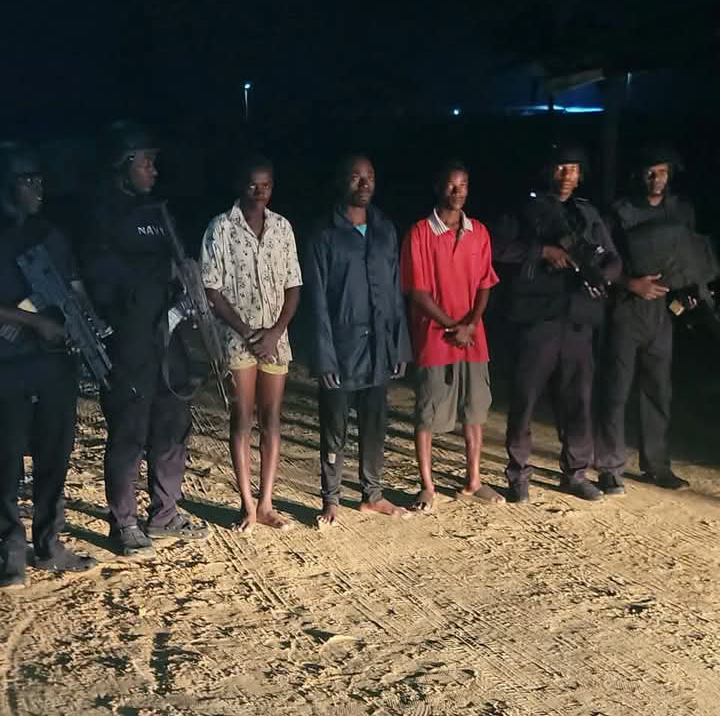
Headline: Military Rescues 397 Kidnap Victims, Neutralises Scores of Terrorists in July – DHQ
By Weng Patrick Atokor | Journalist at Weng Global
Nigeria’s military says it rescued 397 kidnapped victims and recorded significant operational successes against terrorists, bandits, oil thieves, and other criminal groups across the country during the month of July, underscoring continued efforts to restore security in troubled regions.
The Defence Headquarters (DHQ) disclosed that the achievements were recorded through coordinated operations conducted by troops across the country’s various theatres of operation. According to the military, the month also witnessed the surrender of 57 terrorists, while dozens of insurgents and armed criminals were neutralised during combat operations.
The update was provided during the weekly briefing on ongoing military operations, where the Director of Defence Media Operations, Major General Markus Kangye, outlined the armed forces’ achievements in the fight against terrorism, insurgency, banditry, kidnapping, crude oil theft, and other security threats.
397 Kidnapped Victims Regain Freedom
According to the Defence Headquarters, troops successfully rescued 397 people who had been abducted by terrorists, bandits, and criminal gangs operating across different parts of the country.
Kidnapping remains one of Nigeria’s most pressing security challenges, particularly in the North-West, North-Central, and parts of the South-East, where criminal groups continue to target communities, travellers, students, and commuters for ransom.
Military authorities said the rescued victims were freed during intelligence-led operations, clearance missions, ambushes, and coordinated assaults on criminal hideouts.
The DHQ noted that several victims were reunited with their families after receiving immediate medical attention and necessary support following their rescue.
57 Terrorists Surrender
In another major development, the military disclosed that 57 terrorists voluntarily surrendered to troops during the reporting period.
The Defence Headquarters attributed the growing number of surrenders to sustained military pressure on insurgent groups operating in the North-East, particularly within Borno, Yobe, and Adamawa States.
According to military authorities, the surrendering fighters also handed over various weapons and ammunition while expressing willingness to embrace the Federal Government’s deradicalisation and rehabilitation programmes.
Security analysts have consistently argued that sustained military offensives have weakened several terrorist camps, forcing many fighters to abandon armed struggle.
Troops Sustain Pressure Across Operational Theatres
The Defence Headquarters explained that military operations were simultaneously conducted under different operational commands across the country.
These include:
- Operation Hadin Kai in the North-East
- Operation Fansan Yamma in the North-West
- Operation Safe Haven in the North-Central
- Operation UDO KA in the South-East
- Operation Delta Safe in the Niger Delta
- Other joint security operations nationwide
The military said troops conducted fighting patrols, clearance operations, ambushes, air interdictions, and intelligence-driven raids targeting terrorist enclaves and criminal hideouts.
According to the DHQ, several notorious criminal camps were destroyed during these operations.
Terrorists, Bandits Neutralised
Although the Defence Headquarters emphasised the rescue of kidnapped victims and the surrender of terrorists, it also confirmed that many terrorists and armed criminals were killed during fierce engagements with troops.
Several suspects linked to terrorism, banditry, kidnapping, gun-running, and logistics support for criminal groups were arrested during the month.
The military added that a significant cache of weapons, ammunition, communication equipment, motorcycles, and vehicles used by criminal elements was recovered.
Recovered weapons included assault rifles, machine guns, locally fabricated firearms, explosives, magazines, and thousands of rounds of ammunition.
Blow Against Oil Theft
Beyond counter-terrorism operations, troops also intensified efforts against crude oil theft and illegal refining activities in the Niger Delta.
The Defence Headquarters reported that security forces discovered and destroyed numerous illegal refining sites while confiscating stolen crude oil, illegally refined petroleum products, pumping equipment, boats, storage tanks, and vehicles used by oil thieves.
Military authorities reiterated that crude oil theft remains a major threat to Nigeria’s economy and pledged continued collaboration with other security agencies and host communities to tackle the menace.
Intelligence-Driven Operations
The military attributed many of the successes recorded in July to improved intelligence gathering, enhanced surveillance, cooperation with local communities, and joint operations involving sister security agencies.
According to the DHQ, intelligence-led operations have enabled troops to locate criminal hideouts more effectively and carry out precision strikes that minimise civilian casualties.
The Defence Headquarters encouraged Nigerians to continue providing credible and timely intelligence that could assist security agencies in identifying terrorist movements and criminal activities.
Military Appeals for Public Cooperation
While acknowledging the progress made, the Defence Headquarters stressed that the fight against insecurity requires continuous public support.
The military urged citizens to remain vigilant and report suspicious movements, abandoned camps, or unusual activities within their communities.
Officials also advised residents not to shield criminal elements or spread unverified information capable of undermining ongoing security operations.
According to the DHQ, collaboration between security agencies and the public remains essential in achieving lasting peace across the country.
Security Challenges Persist
Despite the latest operational successes, security experts note that Nigeria continues to face multiple security threats, including terrorism, kidnapping, banditry, communal violence, and attacks on critical infrastructure.
Insurgent groups remain active in parts of the North-East, while armed bandits continue to carry out attacks in several North-West states.
Kidnapping for ransom has also spread to parts of the North-Central and South-East, posing significant security and economic challenges.
Analysts argue that sustained military operations, combined with improved intelligence, socio-economic development, judicial reforms, and stronger community policing, will be crucial in addressing the root causes of insecurity.
Government Reaffirms Commitment
The Federal Government has repeatedly pledged to strengthen Nigeria’s security architecture through increased funding, acquisition of modern military equipment, intelligence sharing, and improved welfare for security personnel.
The Defence Headquarters reiterated that troops remain committed to defending Nigeria’s territorial integrity and protecting citizens against terrorism and organised crime.
Military authorities assured Nigerians that operations against terrorists, bandits, kidnappers, and oil thieves would continue until criminal networks are dismantled and lasting peace is restored across the country.
Looking Ahead
As military operations continue nationwide, the rescue of nearly 400 kidnapped victims within a single month represents a significant humanitarian achievement and offers renewed hope to families affected by insecurity.
However, security observers caution that maintaining the momentum will require sustained operational pressure, improved intelligence, stronger inter-agency collaboration, and continued public cooperation to ensure lasting stability across Nigeria.
Sources: Defence Headquarters (DHQ), Defence Media Operations Briefing, Nigerian Armed Forces.