Reported by Simon yusuph,| Journalist at wengglobal
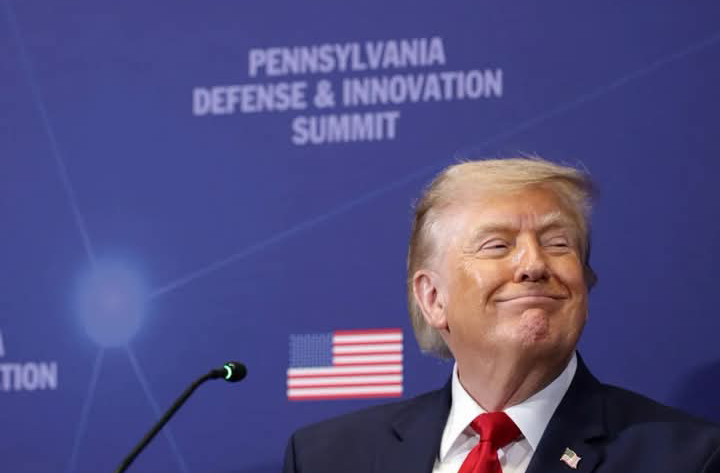
The administration of United States President Donald Trump has finalized a major immigration policy that introduces a fixed four-year limit on the stay of most international students in the country, replacing the decades-old “duration of status” system that previously allowed eligible students to remain in the United States for as long as they maintained lawful academic status.
The policy marks one of the most significant changes to the US student visa framework in years and is expected to affect hundreds of thousands of current and prospective international students, including many from Africa, Asia, Europe, and Latin America who choose the United States for higher education.
Under the revised rule, most students studying in the US on F and J visas, along with participants in certain exchange visitor programs, will receive permission to remain in the country for a maximum of four years. Individuals wishing to continue their studies beyond that period must apply for an extension through the US immigration system.
Previously, international students admitted under the “duration of status” (D/S) policy were permitted to remain in the United States indefinitely, provided they maintained full-time enrollment, complied with visa conditions, and continued making satisfactory academic progress. The new framework replaces that flexible arrangement with a fixed period of authorized stay, fundamentally altering how student immigration is managed.
According to the Trump administration, the policy is intended to strengthen oversight of the immigration system, improve compliance monitoring, and reduce the risk of visa overstays. Officials argue that assigning a definite period of admission will make immigration enforcement more efficient while ensuring that foreign nationals comply with US immigration laws.
Supporters of the measure maintain that a standardized period of stay provides greater administrative clarity and aligns student visas more closely with other temporary immigration categories. They also contend that the government requires stronger mechanisms to verify that foreign students remain engaged in legitimate academic activities throughout their stay.
However, the policy has generated significant debate across the higher education sector. Universities, education advocacy organizations, immigration attorneys, and student groups have expressed concern that the rule could increase uncertainty for international students pursuing lengthy academic programs such as doctoral degrees, medical education, scientific research, and other specialized fields that often extend beyond four years.
Experts note that while students will be able to seek extensions, the additional application requirements could introduce delays, administrative costs, and uncertainty into academic planning. Institutions that depend heavily on international enrolment have warned that the rule may make the United States a less attractive destination compared with competing education markets such as Canada, the United Kingdom, Australia, and several European countries.
International students contribute substantially to the US economy through tuition payments, housing, transportation, healthcare, and consumer spending. Many universities also rely on foreign students to strengthen research programmes, expand cultural diversity, and fill graduate-level positions in science, technology, engineering, and mathematics (STEM) disciplines.
Education analysts believe the new visa framework could influence future enrollment decisions, particularly among students weighing study opportunities in multiple countries. For many prospective applicants, visa certainty and predictable immigration policies remain important considerations alongside academic quality and employment opportunities after graduation.
The policy also carries implications for African students, including those from Nigeria, Ghana, Kenya, South Africa, and other countries that have increasingly viewed American universities as destinations for advanced education and research. A more restrictive visa environment may encourage some students to consider alternative study destinations offering longer or more flexible post-study immigration pathways.
Immigration lawyers have advised affected students to carefully monitor the expiration dates attached to their immigration records and begin extension applications well before the four-year limit where necessary. They also encourage universities to strengthen advisory services to help students navigate the revised regulatory environment.
The Trump administration has consistently emphasized immigration reform as a central element of its domestic agenda. Since returning to office, the administration has introduced a series of measures aimed at tightening immigration controls, enhancing border security, and reviewing visa categories across multiple sectors. The revised student visa rule reflects that broader policy direction by increasing federal oversight of temporary immigration programs.
Supporters argue that fixed admission periods improve accountability and simplify immigration administration. Critics, however, warn that additional bureaucratic requirements could discourage talented students from choosing American universities, potentially affecting the country’s long-standing position as the world’s leading destination for international higher education.
Academic leaders have also cautioned that uncertainty surrounding visa policies may have wider implications for research collaboration and innovation. International graduate students and researchers play an important role in laboratories, universities, healthcare institutions, and technology companies across the United States. Many contribute to scientific discoveries, medical advancements, and entrepreneurial ventures that benefit both the American economy and the global knowledge community.
Despite concerns, immigration experts stress that the rule does not prohibit international students from completing degrees lasting longer than four years. Instead, it establishes a new requirement for students to obtain formal authorization to extend their stay when necessary, provided they continue to meet eligibility requirements.
Universities are expected to issue updated guidance to current and prospective students regarding compliance procedures, extension timelines, and documentation requirements. Educational institutions are also likely to work closely with immigration advisers to minimize disruptions to ongoing academic programmes.
The policy is expected to remain closely watched by universities, foreign governments, education consultants, and international student organizations. Legal experts suggest aspects of the rule could face judicial scrutiny or future administrative review depending on evolving immigration priorities and political developments in Washington.
For students already studying in the United States, experts recommend maintaining full compliance with visa conditions, remaining in regular contact with designated school officials, and preparing well in advance for any extension process required under the new system.
As global competition for international students intensifies, the effectiveness and long-term impact of the revised policy will likely depend on how efficiently extension requests are processed and whether the new framework balances immigration enforcement with the educational and economic contributions international students make to the United States.
For universities across the world—including those in Africa seeking stronger academic partnerships with US institutions—the policy represents another reminder that immigration regulations remain a critical factor shaping global education mobility. The coming years will determine whether the revised visa framework strengthens administrative oversight without diminishing America’s appeal as one of the world’s foremost destinations for higher learning.
Sources:
- Reuters
- Associated Press (AP)
- The New York Times
- CNN
- BBC News
- The Washington Post
- U.S. Department of Homeland Security (DHS)
- U.S. Citizenship and Immigration Services (USCIS)